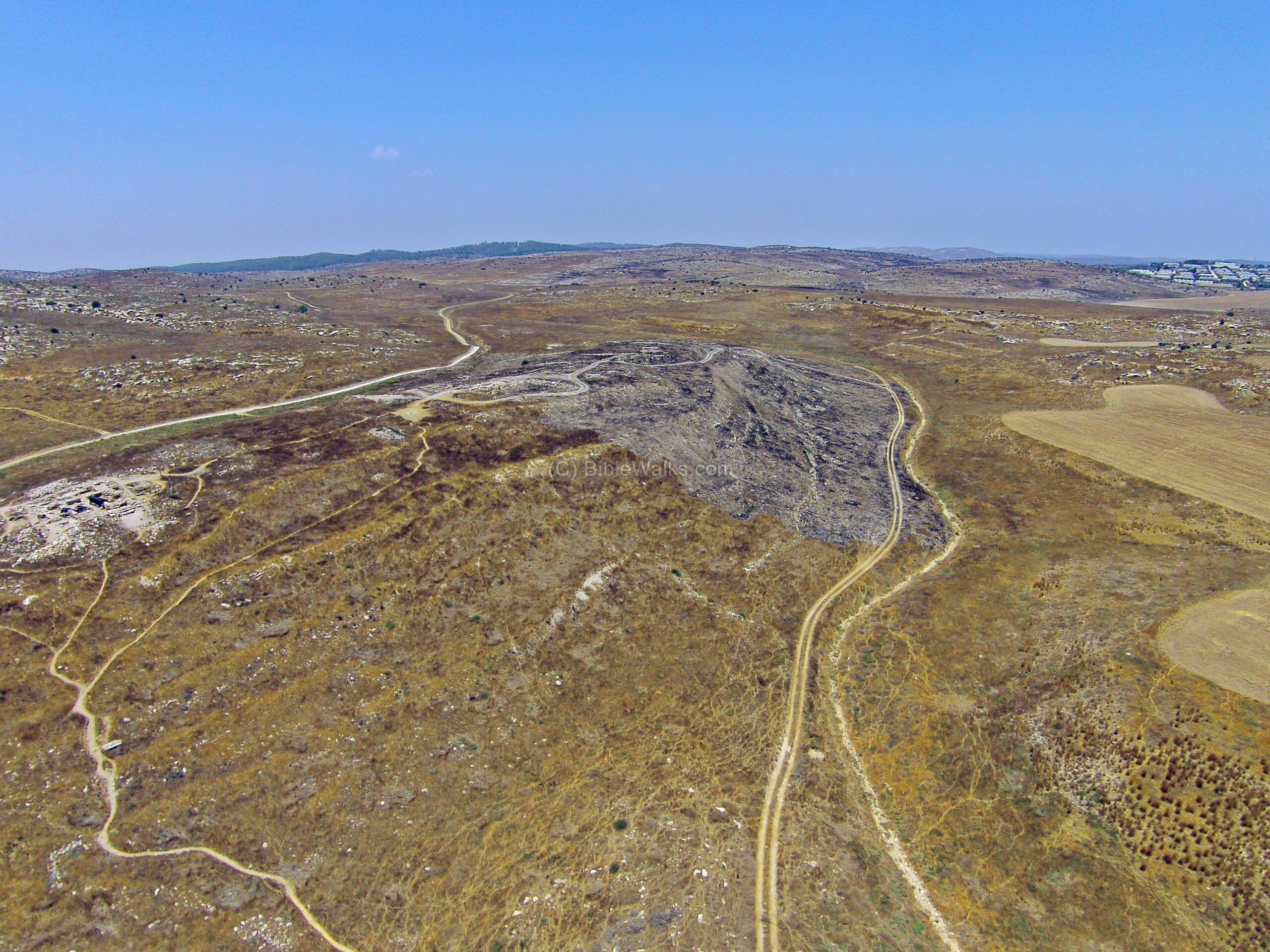
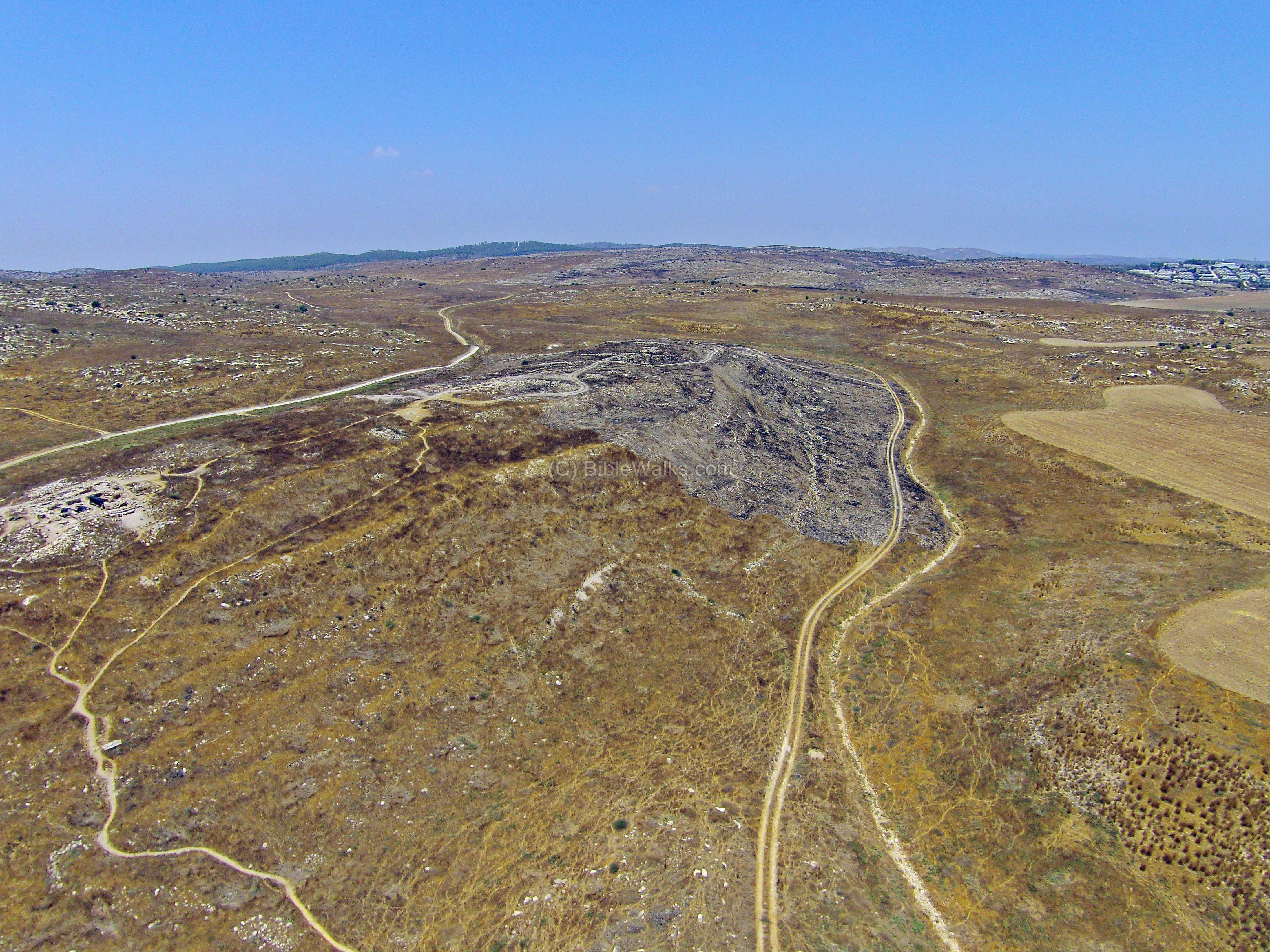
Aerial Drone shot of Tel 'Eton| Transliterated Name | Source | Name |
|---|---|---|
| Tel 'Eton | Hebrew | תל עיטון |
| Eglon | Hebrew | עֶגְלוֹן |
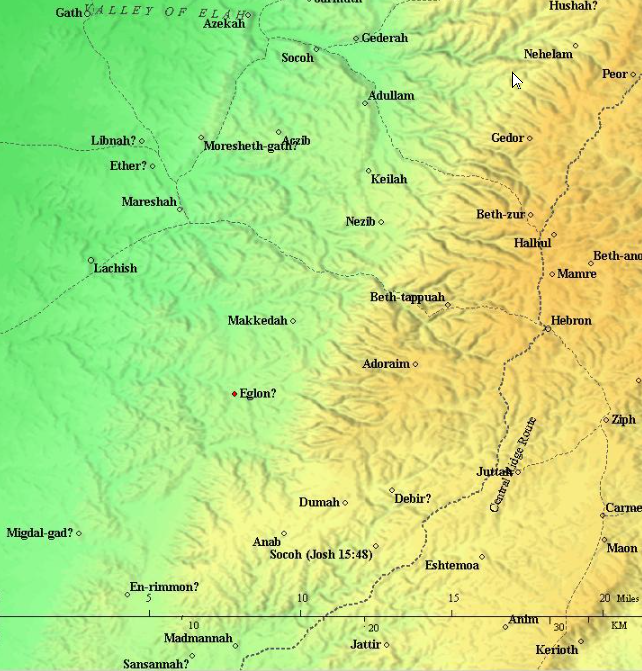
Map of the area around Eglon (red circle) – 20C BC through 6th C BC (based on Bible Mapper 3.0)
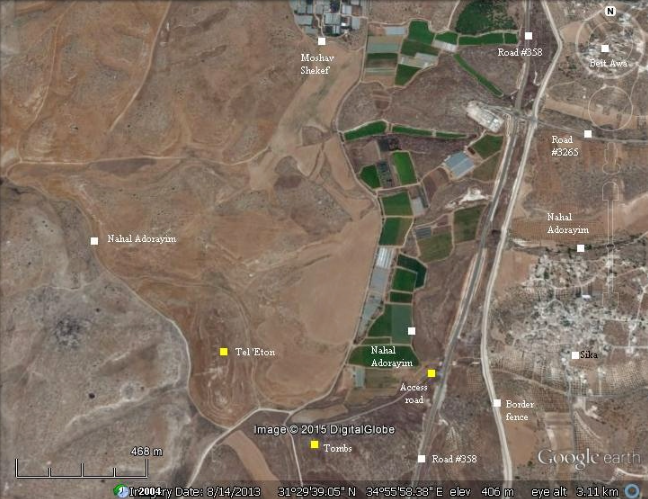
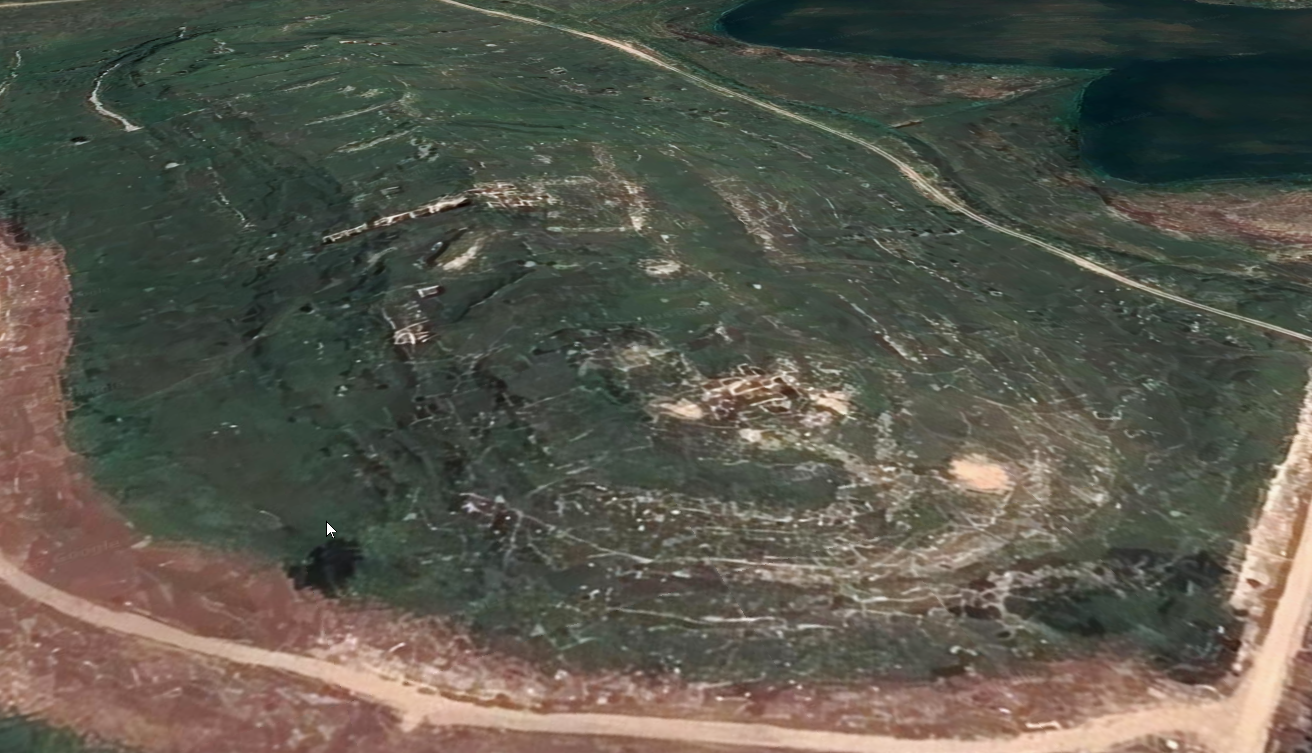
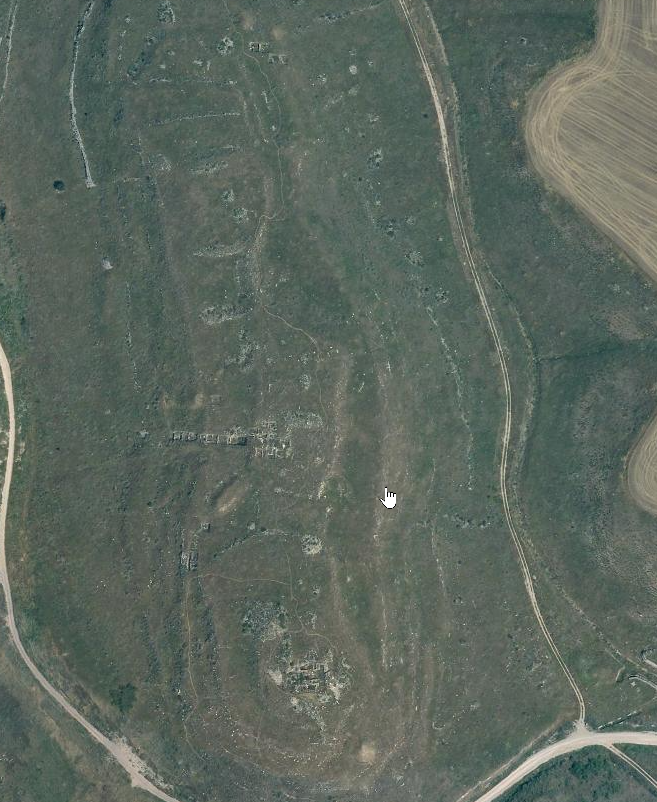
Annotated Satellite Photo of Tel 'Eton and environs
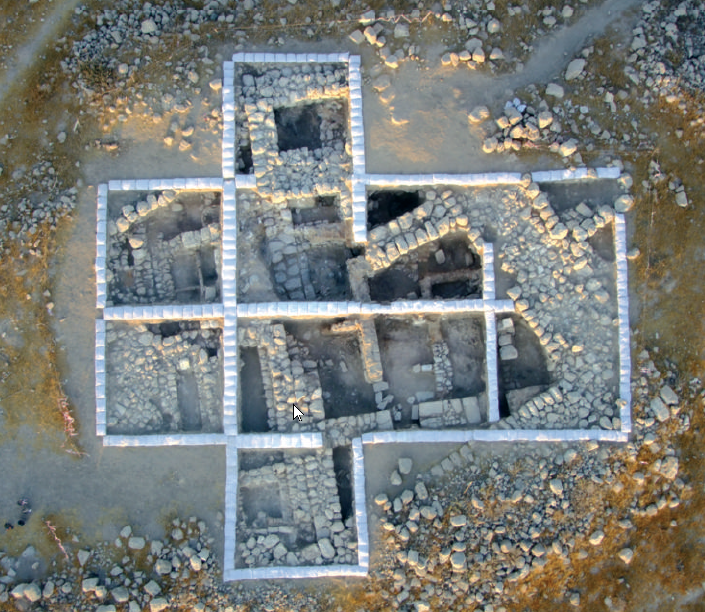
Aerial Drone shot of Tel 'Eton
Annotated Satellite Photo of Tel 'Eton and environs
Aerial Drone shot of Tel 'Eton
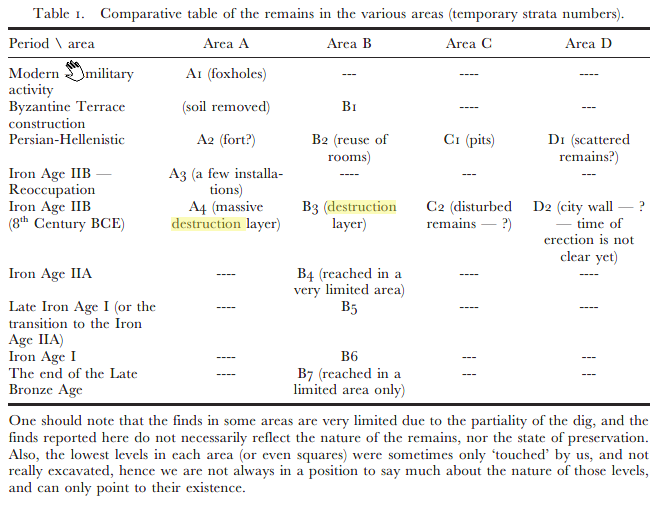
Table 1
Tel ‘Eton is a large site (approximately 60 dunams) in the southeastern Shephelah, just below the Hebron Hills. The site was densely occupied during the Iron Age II, and it appears that a large and probably planned town existed there at the time. This city was destroyed in the late eighth century BCE, like most sites in the Shephelah, and did not recover. The rich ceramic assemblage unearthed in the destruction layer is very similar to the one found at nearby Lachish (Level III), although some elements suggest that it could be a little earlier. The article discusses the assemblage and compares it to the relevant assemblages of other sites in order to assess the date of the destruction at Tel ‘Eton. At the present state of knowledge, we cautiously attribute the destruction to Sennacherib's campaign.
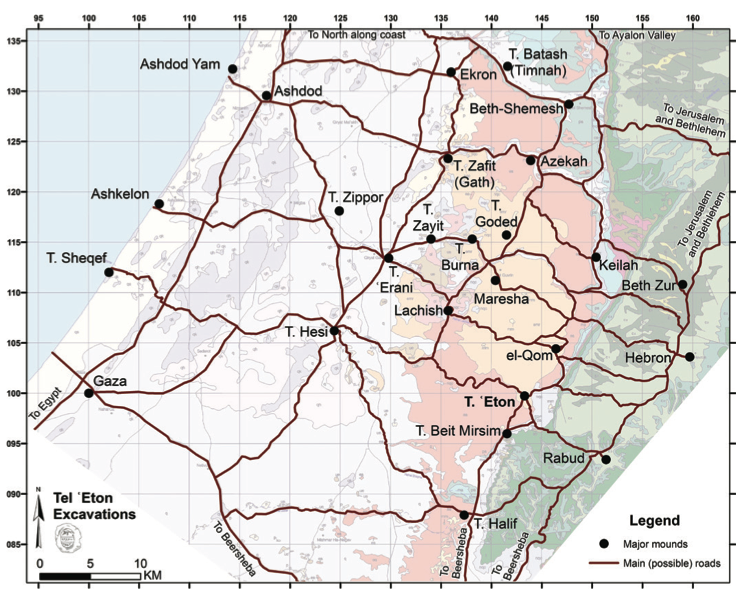
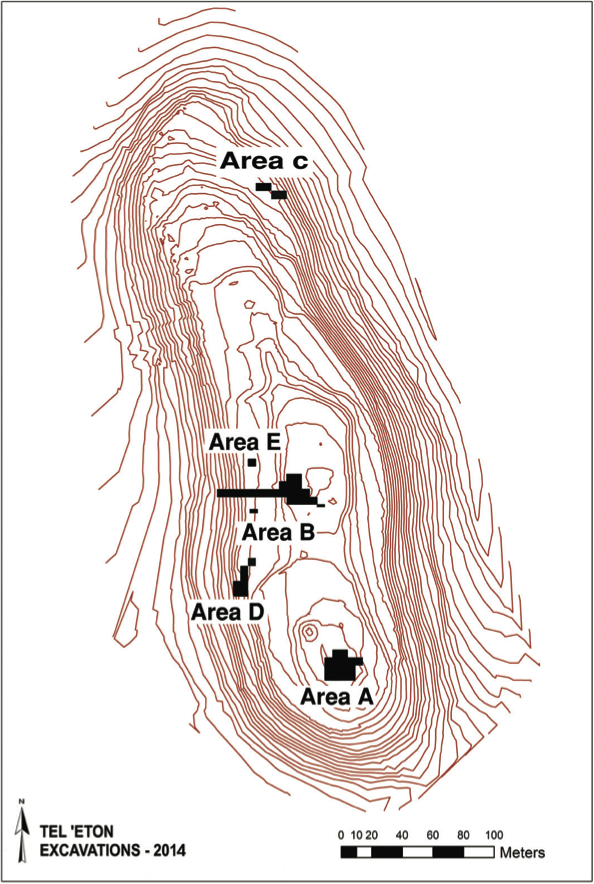
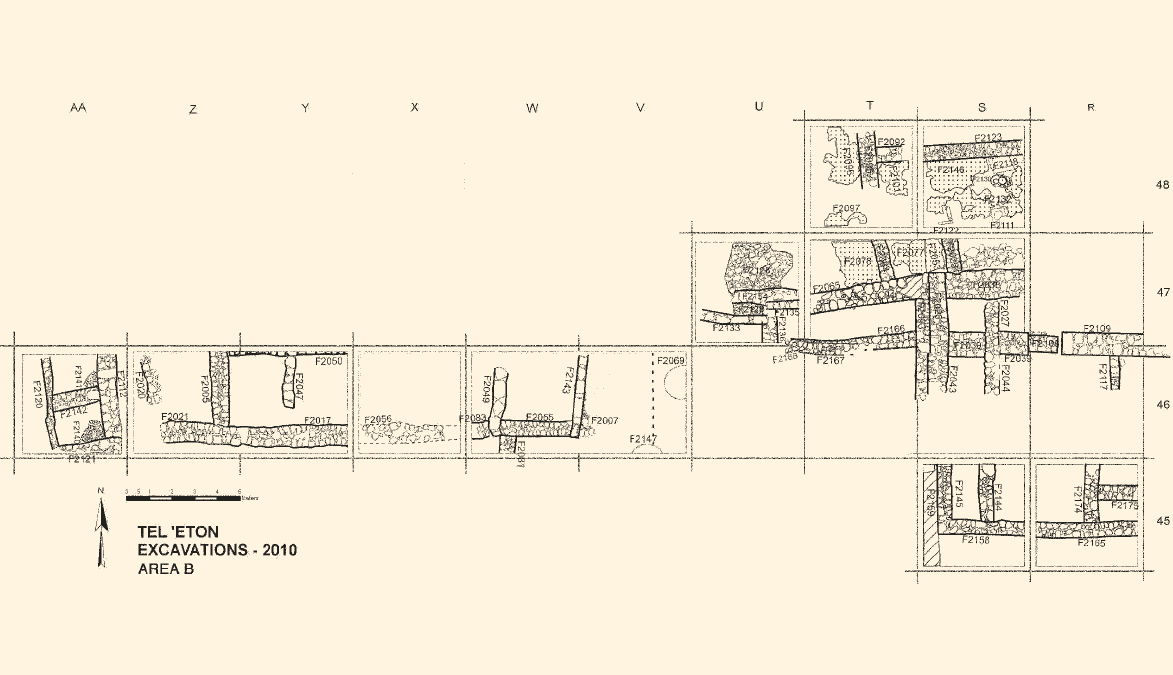
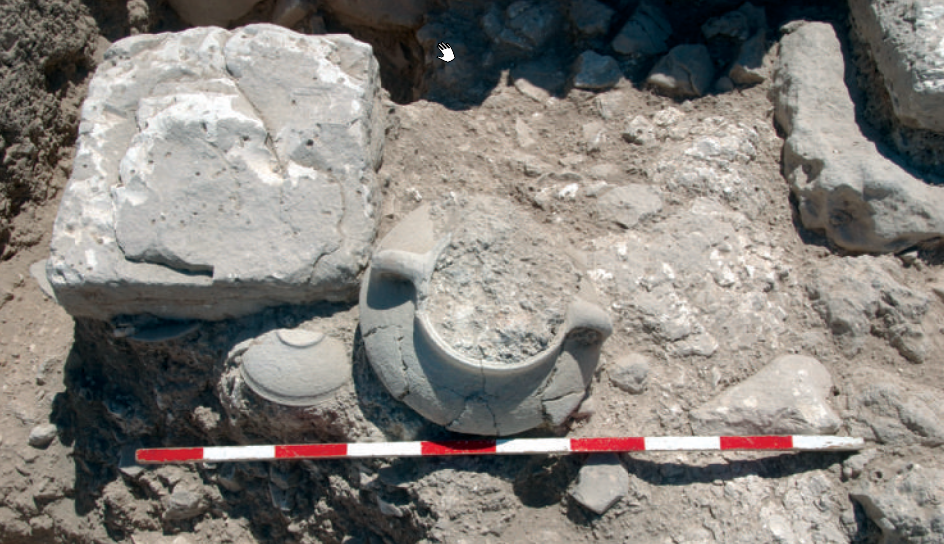
So far, excavations have been conducted in four areas (fig. 1). Below we summarise the findings from the two central areas: Area A, lying at the highest point of the mound, near its southern edge, and Area B, lying a few dozen metres north of it. In Area A (fig. 2), three main levels of occupations have thus far been uncovered (in addition to modern activity); at the lowest of them, several phases can be identified.
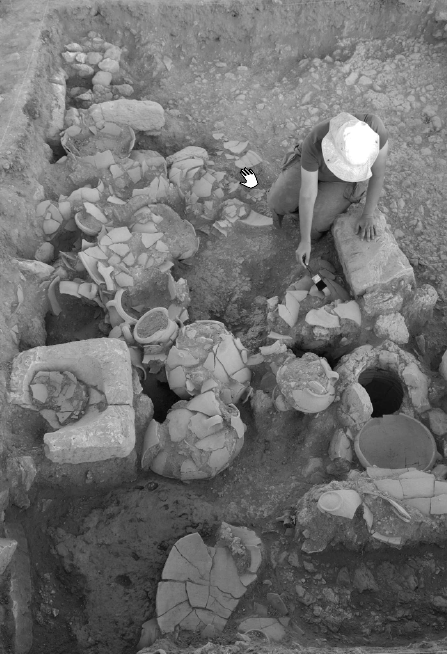
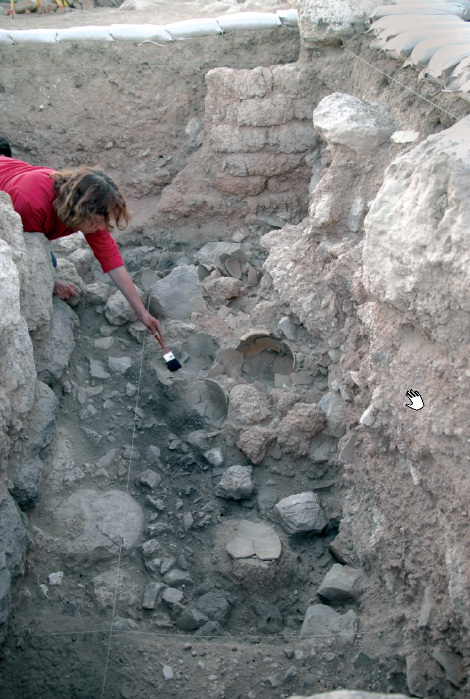
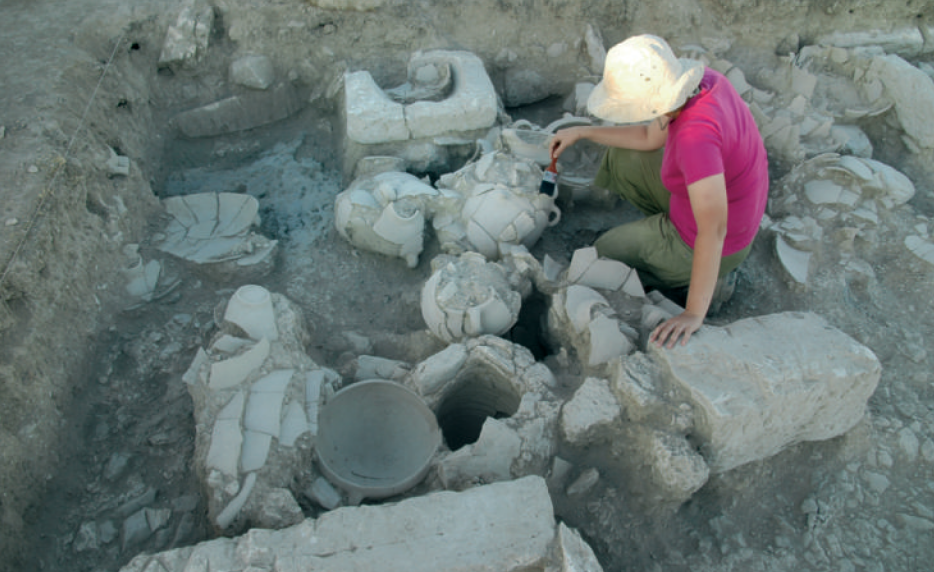
Analysis of the ceramic assemblage unearthed within the destruction stratum at Tel ‘Eton suggests that the final stage of the settlement's existence should be dated to the second half of the eighth century BCE (for the assemblage, see also fig. 13). The assemblage may be divided into three groups:
3 The term `eighth century BCE' is a general
term, encompassing the range of ceramics that
existed during that century (primarily during
its second half). Of course, many of the
vessels continued to exist into the beginning
of the seventh century; see also Finkelstein
and Na'aman 2004.
In its excavations at Tel ‘Eton, the Lachish expedition identified two strata. The earlier of the two was the more impressive and its destruction more evident; the later was relatively meagre (Ayalon 1985). Zimhoni, who published the ceramic assemblage from those excavations, noted the absence of any difference between the two strata (Zimhoni 1985: 87; 1997c: 207). She divided the assemblage into three groups, relating them to Levels III–IV at Lachish (Zimhoni 1985: 88; 1997c: 208):
4 Kraters resembling these were discovered in Strata III–IV at Timnah (Mazar and Panitz-Cohen 2001: KR 14); these kraters are mainly typical of Stratum IV, with the exception of 17 sherds found in Stratum III. It is worth noting, nevertheless, that none of them were discovered in the destruction layer of Stratum III, which is dated to 701 BCE (Mazar and Panitz-Cohen 2001: 63).
The above discussion suggests, at first glance, a divergence between Zimhoni's dating and ours. A closer look at the ceramic findings published by Zimhoni, however, shows that it is precisely the complete or nearly complete vessels found in Stratum I at Tel ‘Eton, as defined by the Lachish expedition, that clearly characterise Level III at Lachish. These vessels include a closed cooking pot (Zimhoni 1997c: fig. 4.5:11), a two-handled ovoid storage jar (Zimhoni 1997c: fig. 4.7:12) and a four-handled ovoid storage jar, evidently of the lmlk-like variety (Zimhoni 1997c: fig. 4.7:16). The types unearthed by the Lachish expedition at Tel ‘Eton that are characteristic solely of Lachish Level IV (and do not continue into Lachish Level III) are represented only by sherds (Zimhoni 1997c: 183; see also figs. 4.4:11–12, 8.4:6). It is, therefore, reasonable to infer that these sherds originated in an earlier stratum or in floors and are not associated with the destruction stage of Stratum II or with Stratum I (see Blakely and Hardin 2002: 35). When one disregards those sherds, a comparison of the assemblage of vessels found in the Tel Aviv University excavations at Tel ‘Eton to the assemblage of complete or nearly complete vessels that we uncovered shows a marked similarity between the two groups (although Zimhoni's claims about the differences between the Tel ‘Eton findings and those from Level III at Lachish merit detailed discussion; see below). The resemblance is evident in the following types: bowls with thickened or folded rim (bowl 7), a closed cooking pot (cooking pot 1), an open cooking pot (cooking pot 2), a lmlk-like storage jar (storage jar 2), a two-handled ovoid storage jar (storage jar 3), a holemouth storage jar (storage jar 5), and a jug with a broad neck (jug 1). Vessels of these types are characteristic of the assemblages of Lachish Level III, Tell Beit Mirsim Stratum A2, City of David Stratum 12 and Caves I–II, Beersheba Stratum II, Arad Strata X–VIII, and Tel ‘Ira Stratum VII. In this light, we may infer that the settlement at Tel ‘Eton came to its end during the second half of the eighth century BCE (and see further below).
Another matter to be considered in this comparison is the stratigraphy. The Lachish expedition found signs of destruction primarily at the earliest stage (Stratum II in their terminology); the final stage bore less evidence of actual destruction (Ayalon 1985: 61). That stage was also described as having been less well built (Ayalon 1985: 61). As we have seen, our excavation also identified a meagre stage of resettlement above the destruction stratum, but these remnants were identified only in Area A and not in Area B, which adjoined the area excavated by the Lachish expedition. Moreover, the settlement remains we identified are much more meagre than those described by the Lachish expedition as belonging to Stratum I.
5 Indeed, thus far, we have reached floors only
in areas north of those excavated by the
Lachish expedition.
6 Not only is it risky to draw general
conclusions on the basis of the limited area
excavated by the Lachish expedition, but
Ayalon himself had reservations about the
`meagerness' of the construction of Stratum I,
given, for example, the hewn stone
construction identified at this stage
(Ayalon 1985: 61). Moreover, in many ways the
construction at the later stage unearthed by
the Lachish expedition (Stratum I) seems more
substantial than at the early stage — for
example, the doubled wall separating the
structures, the larger courtyard, etc.
(Ayalon 1985).
7 After re-clearing the area, we found, in the
squares excavated by the Lachish expedition,
a late wall that penetrated walls that appear
to belong to the destruction stratum we
identified in our excavations. If that
identification was clear, it would suggest
that a construction stage in fact followed
the destruction; however, several problems
cast doubt upon that stratigraphic
relationship. First, we are dealing with
different structures — all the squares we
excavated and in which we reached floor
levels belong to structures other than those
excavated by the Lachish expedition. This
casts doubt on whether that wall can be used
as a basis for drawing stratigraphic
conclusions in Area B. Moreover, some 30
years had elapsed between the time of the
Lachish expedition at the site and our
excavations — a period during which the area
stood exposed. The fact that the relationship
of our wall to the walls uncovered by the
Lachish expedition appears to be at odds with
what has been published increases the
possibility that some `changes' occurred and
that walls may have collapsed. It is highly
problematic to postulate stratigraphic
connections on the basis of walls that have
stood exposed for several decades.
Until quite recently, the various destruction strata discovered in the Shephelah were conventionally dated to Sennacherib's campaign in 701 BCE. That consensus, however, has recently been challenged. Blakely and Hardin (2002) showed that there were two destruction strata at many sites in the Shephelah — generally (though not always) a stratum of massive destruction above which a more meagre stratum of destruction was found. That is the case, for example, at Tell Beit Mirsim, at Beth Shemesh, in the earlier excavations at Tel ‘Eton, and elsewhere. Blakely and Hardin (2002) proposed dating the first, more massive, destruction to the time of Tiglath-pileser III and the later one to the time of Sennacherib. That view was refuted by Finkelstein and Na'aman (2004), who proposed dating the first destruction to Sennacherib's campaign and the later stratum to the beginning of the seventh century BCE. It is not our intention here to enter the debate with regard to all the sites in the Shephelah but only to deal briefly with the relevant findings from Tel ‘Eton.
The primary question is whether it is possible to pinpoint when during the second half of the eighth century BCE the settlement at Tel ‘Eton was destroyed and if so, whether that destruction should be associated with Sennacherib's campaign (in 701) or whether it should be advanced all the way to the time of Tiglath-pileser III (734), or at least to the days of Sargon II (712).
8 Interestingly, in the Lachish expedition
excavations at Tel ‘Eton, 62.3% of the bowl and
krater fragments found in Stratum I are
hand-burnished, while 19.4% of these fragments
are wheel-burnished. In Stratum II, 61.9% of
the vessels are hand-burnished, while only
9.5% are wheel-burnished (Zimhoni 1997c: 180,
table 1). This shows both the similarity
between the ceramics of the two strata — a
similarity emphasised by Zimhoni — but also
the frequency of hand burnish on the one
hand, and on the other, the gradual increase
in wheel burnish over time. The fact that our
excavations uncovered somewhat fewer
hand-burnished vessels may be coincidental,
but may also follow from the fact that we
considered only complete vessels, whereas
Zimhoni's data pertained mainly to fragments,
some of which most likely came from earlier
phases.
9 The exterior treatment of vessels during the
Iron Age II is also evident in the red slip
characteristic primarily of bowls; the
percentage of slipped bowls can also be an
indicator for dating an assemblage. At
Lachish Stratum V, slipped bowls constitute
66% of the total; in Stratum IV they amount
to 62%; and in Stratum III, the figure is
only 25–30% (Zimhoni 1997b: 114–115, 117;
2004a: 1674–1676). Similar variation over
time in the percentage of slipped bowls is
evident at Timnah, where 64% of the Stratum
IV bowls are slipped, 30% are slipped in
Stratum III, and only 18% are slipped in
Stratum II (Mazar and Panitz-Cohen 2001: 146,
table 17). In Strata I–II at Tel ‘Eton,
Zimhoni found 70% of the bowls to be slipped
(Zimhoni 1985: 65; 1997c: 189). In the
assemblage of bowls drawn from the new
excavations at Tel ‘Eton, in contrast, the
percentage of slipped bowls is 36%. From
this perspective, the situation at Tel ‘Eton
corresponds to that of the late eighth
century BCE at Timnah and Lachish. As for
the difference between Zimhoni's figure and
ours, it probably stems from the fact that
she examined mainly fragments; many small
sherds may have originated from within
floors, thus dating the entire life-span of
a structure and not its end, as well as from
earlier phases.
10 The interpretation of Lipschits, Sergi and
Koch 2010 is fraught with problems, see,
e.g., Ussishkin 2011.
11 We noted earlier that for purposes of
dating the destruction, we should consider
only complete vessels. With respect to lmlk
impressions, however, fragments are
significant as well. While the absence of
impressions on complete vessels may be
attributed to mere chance, the absence of
impressions on the hundreds of broken
handles uncovered is significant.
12 In addition, one must take account of the
percentage of slipped bowls, which conforms
to the late eighth century BCE dating as it
emerges from other sites (see above, n. 9).
Stratigraphy also warrants attention here. The various historical reconstructions offered by Blakely and Hardin, on the one hand, and by Finkelstein and Na'aman, on the other, emphasise the existence of two strata — one of massive destruction and another, above it, of meagre habitation — at the range of sites considered here, especially at Tel ‘Eton. As we have seen, however, the debate, insofar as it pertains to Tel ‘Eton, is grounded in error. The final massive settlement at that site was destroyed at the end of the eighth century BCE, and no significant habitation seems to have followed it (the resettlement stage identified in our excavations seems not to suggest any significant habitation). From that perspective, the findings at Tel ‘Eton correspond more to the accepted reconstructions, according to which the Shephelah was laid waste at the end of the eighth century, for were we to advance that destruction to the time of an earlier Assyrian king, we would be bound to conclude that there was nothing for Sennacherib to destroy at Tel ‘Eton. That sort of reconstruction, though not impossible, strikes us as unreasonable, especially given the mark made by Sennacherib's campaign on the various historical sources and the descriptions, both in biblical and Assyrian texts, of the widespread ruin it caused. (The campaign is documented in Sennacherib's prism, of which several copies have been preserved, and its mark is clearly evident in the biblical books of 2 Kings, Isaiah, Micah and elsewhere, such as Jeremiah 26; see, recently, Faust 2008 and literature cited therein.) It thus appears that the new stratigraphic analysis, tentative though it may be, supports the conventional reconstruction (and thereby corresponds more to the thesis advanced by Finkelstein and Na'aman).13
13 Though not to their effort to date the
assemblage later, to the beginning of the
seventh century BCE.
While the ceramic evidence allows the update of the destruction of the city that existed at Tel ‘Eton to a time preceding the destruction of Lachish III, that is not a matter of certainty. On the other hand, the stratigraphic analysis, together with historical considerations, tend to support the later dating. Given these considerations, we remain inclined to date the destruction of the city at Tel ‘Eton to the time of Sennacherib's campaign. Still, if the ceramic picture remains unchanged after several additional seasons of excavations, it might become more reasonable to conclude that the site was destroyed before Sennacherib's campaign. Alternatively, we might have to reexamine some conventional notions regarding the use of lmlk storage jars and of regional phenomena.
The utter destruction, toward the end of the eighth century BCE, of the city that existed at Tel ‘Eton and the absence of any clear habitation in the seventh century fit well into the picture we have of settlement in the Judaean Shephelah.
14 Earlier publications dated the primary
stratum to the seventh century, but they seem
to have been based on the erroneous dating of
Lachish Level III (Defonzo 2005: 139–140).
15 According to the excavators, no
seventh-century pottery was found at
Beth-Shemesh, with the exception of some
vessels that were unearthed within the
water-system. They believe that this
represents a failed effort to settle the
site, and not an actual settlement
(Bunimovitz and Lederman 2003). In any case,
even if the site had been settled, the
meagre nature of its remains is not in
question (see also Stern 2001: 147–148).
16 Regardless of the exact dating of the
resettlement of Tell Beit Mirsim (which is a
matter of dispute), it is clear that even if
it was settled during the seventh century
this settlement was limited in scope.
During the eighth century BCE, a large, and perhaps even planned, city existed at Tel ‘Eton in the trough valley. The city was cataclysmically destroyed towards the end of the century and did not recover (although there are local indications of meagre resettlement above the ruins).
| Effect | Location | Image (s) | Comments |
|---|---|---|---|
|
Area A |
|
|
|
Area B |
Fig. 5 Fig. 6 |
|
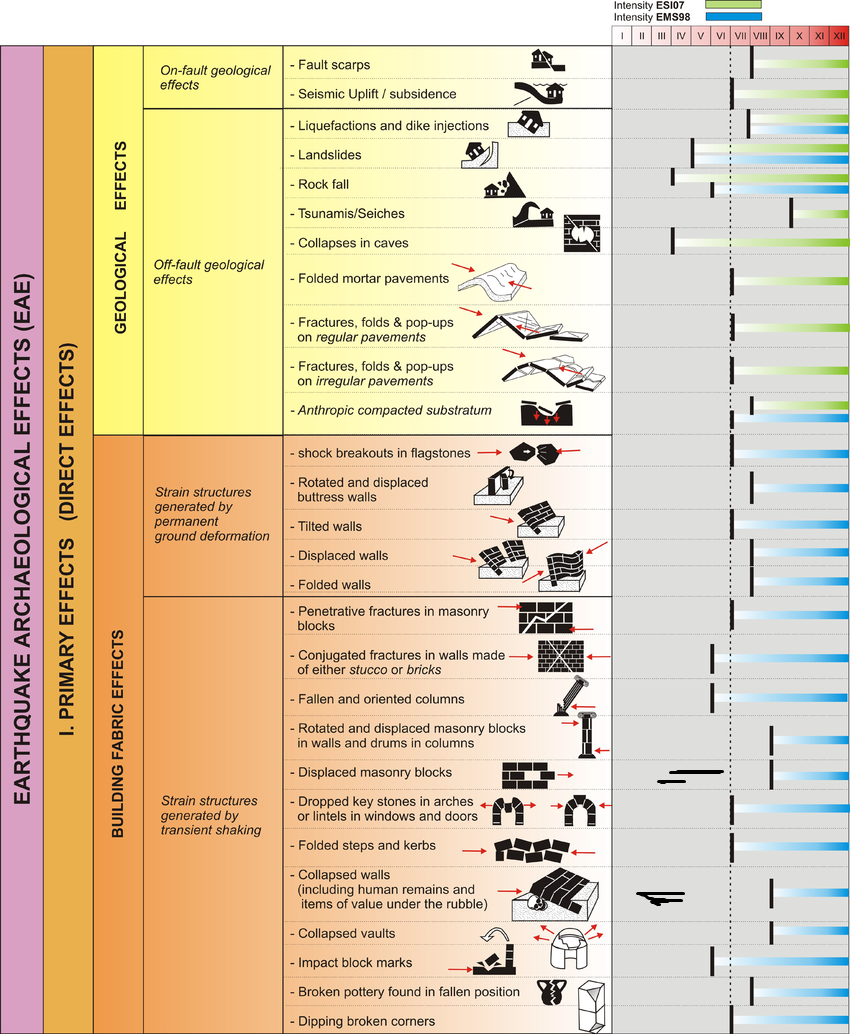
Earthquake Archeological Effects (EAE)| Effect | Location | Image (s) | Comments | Intensity |
|---|---|---|---|---|
|
Area A |
|
|
|
|
Area B |
Fig. 5 Fig. 6 |
|
|
Blakely, J.A., and Hardin, J.W. (2002) Southwestern Judah in the Late Eighth Century B.C.E.
, BASOR 326: 11–64. - at academia.edu
Faust, A. (2011) The Excavations at Tel ‘Eton (2006–2009): A Preliminary Report
, Palestine Exploration Quarterly 143/3: 198–224. - at academia.edu
Faust, A. (2012) The History of Tel 'Eton Following the Results of the First Seven Seasons of Excavations (2006-2012)
in Proceedings of the 8th International Congress on the Archaeology of the Ancient Near East Volume 2 Excavation and Progress Reports Posters,
30 April – 4 May 2012, University of Warsaw - at academia.edu
Finkelstein, I., and Na’aman, N. (2004) The Judahite Shephelah in the Late 8th and Early 7th Centuries BCE
, Tel Aviv 31: 60–79. - at academia.edu
Katz, H., and Faust, A. (2012) ‘The Assyrian destruction layer at Tel ‘Eton’
, Israel Exploration Journal 62, pp. 22-53 - at academia.edu
Zimhoni, O. (1997) The Iron Age Pottery of Tel ‘Eton and Its Relations to the Lachish, Tell Beit Mirsim and Arad Assemblages
, in Zimhoni, O., Studies in the Iron Age Pottery of Israel: Typological, Archaeological and Chronological Aspects, Tel Aviv:
Tel Aviv University, 179–210 (originally Tel Aviv 12 [1985]: 63–90).
Arensburg, B., and Belfer-Cohen, A. (1992) Human Remains from Tomb C1 at Tell ‘Eitun, Atiqot 21: 45–48.