Open this page in a new tab

Tel Yokneam

Tel Yokneam

click on image to open in a new tab

Emmanuel Cohen - www.mgketer.org - Wikipedia - CC BY-SA 4.0


Names
Transliterated Name Source Name
Tel Yokneam Hebrew תֵּל יָקְנְעָם
Yoqne'am, Jokneam Hebrew
Tell Qamun Arabic تل قامون
Caymont, Cain Mons, Kaym Mons, Kaim Monte Crusader Names
Chateau d'El Kireh French
'En-qn'mu
Kammona
Cimona
Qaymun Arabic
Introduction
Introduction

Tel Yokneam is a multi-period archaeological tell in northern Israel, located at the edge of the Jezreel Valley near Mount Carmel. The mound preserves nearly continuous occupation from the Chalcolithic period through the Middle and Late Bronze Ages, the Iron Age, Persian, Hellenistic, Roman, Byzantine, Islamic, and Crusader periods.

Its strategic position controlled routes linking the coastal plain with the inland valleys, including branches of the Via Maris. This location made Yokneam a key fortified center and repeatedly drew it into regional conflicts and imperial administrations.

Excavations have revealed substantial fortifications, domestic quarters, cultic installations, and later medieval remains. The archaeological sequence reflects cycles of destruction, rebuilding, and cultural transition characteristic of long-lived Levantine urban tells.

Identification

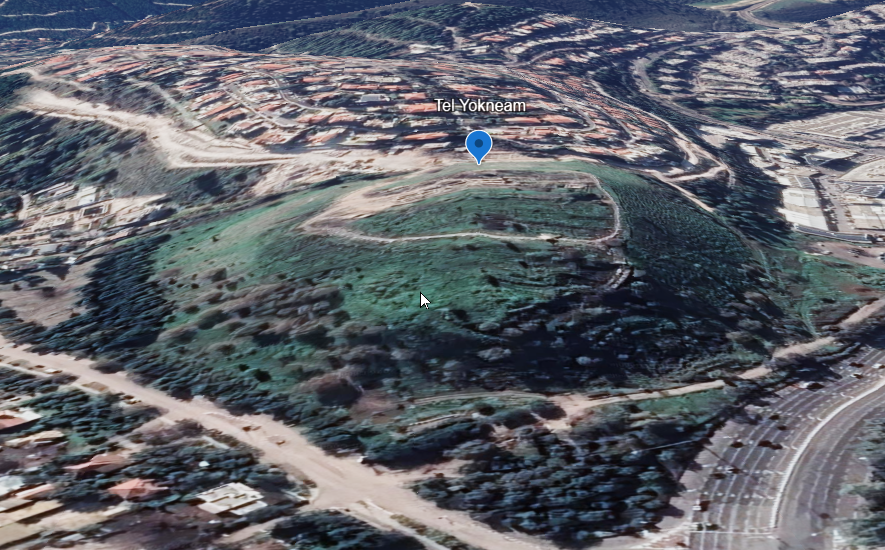
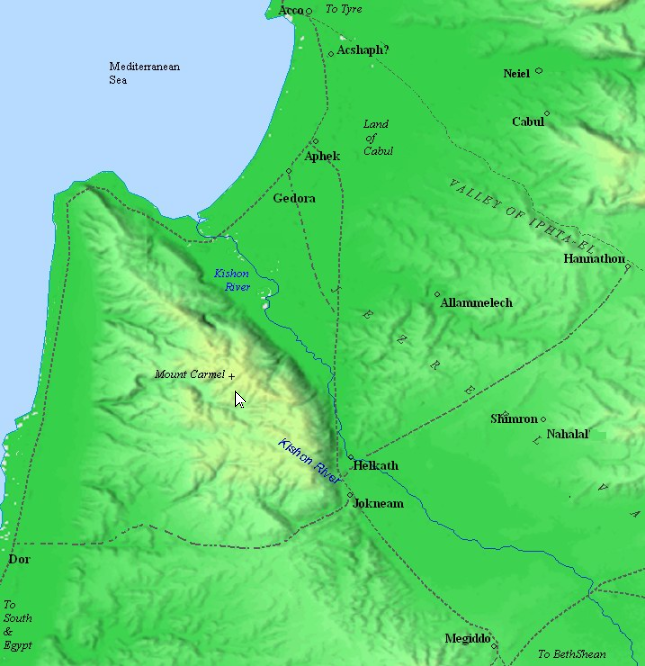
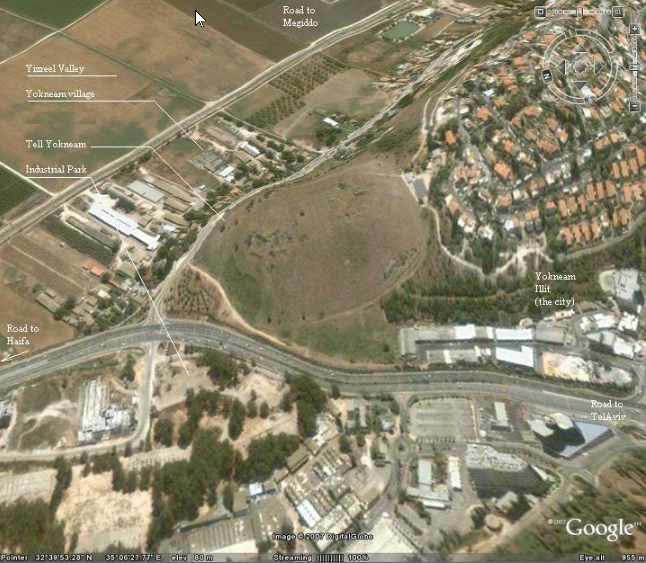
Jokneam (Tel Yogneʿam), a large mound rising above the surrounding plain and covering an area of 10 a., is situated at a point along the abutment of Mount Carmel and the Jezreel Valley, near the debouchment of Naḥal Yoqneʿam (map reference 1604.2289) and at the northern outlet of Wadi Milt (Naḥal Tut), on one of the major routes cutting across the Carmel Range. Via the Coastal Plain, the route passes close to Acco and then runs toward Phoenicia and other centers to its northwest.

Of the three major cities located in the western Jezreel Valley in antiquity — Jokneam, Shimron, and Megiddo — Jokneam was the smallest. It was continuously inhabited for an extremely long time: the survey conducted here, as part of a regional research project — the “Yoqneam Regional Project” — furnished evidence of a settlement on the mound from the Early Bronze Age to the Mameluke period, a span of nearly four thousand years, although the site was not fully occupied in all these periods. During the Arab and Crusader periods, Jokneam was the largest and most important center in the western Jezreel Valley. During the Roman period, the occupational sequence may have been interrupted, with the inhabitants moving to the nearby hill where modern Yokneam ʿIllit is situated.

The favorable environmental conditions prevailing in the Jezreel Valley made it a very densely populated region throughout most periods. Sites such as Tel Qiri, about 2 km (1 mi.) south of Jokneam, and Tel Qashish, some 2 km to its north, were undoubtedly satellite settlements linked to the major city of Jokneam. This region thus provides an opportunity to investigate the material cultural aspect of the relationship between a city and its satellite towns, through simultaneous excavations at the three adjacent sites.

Historical Sources and Exploration

Jokneam is first mentioned in a list recording Thutmose III's campaign in Canaan, conducted in the first third of the fifteenth century BCE. The site, number 113 on that list, is mentioned in the form ʿnqnʿm, apparently with reference to the spring or springs of Jokneam: there are two water sources near the site, one to the west and the other to the northeast.

Jokneam is mentioned three times in the book of Joshua: "The king of Jokneam, of Carmel" (Joshua 12:22) is included in the list of the thirty-one kings defeated by Joshua; "the river that is before Jokneam" (Joshua 19:11) is mentioned as the border of the tribe of Zebulun's territory; and the town itself is listed as a Levitical city within this tribe's territory (Joshua 21:34). Jokneam is identified with the Kammuna mentioned in Eusebius' Onomasticon (116:21) as a village situated on the road from Legio to Ptolemais (Acco), six miles from the former.

The place is also mentioned several times in documents from the Crusader period, under the names Caymont and Mons Cain, each deriving from a tradition identifying it with the place where Cain was killed by Lamech. Caymont was an administrative-legislative center, a bourg founded under King Baldwin I and raised to a seigneury under Fulk of Anjou. Several of its rulers between 1139 and 1260 are recorded by name. After 1263, it was held by the Templars for twenty years, after which it passed to the rule of Sultan Ibn Qalāʾūn, under an agreement between him and its Templar masters. The place is mentioned several times in documents from the Late Arab period and in the writings of such Arab historians as Yaqut and Ibn al-Athir, under its Arabic name, Qaymun.

After the Mameluke period, Jokneam no longer appears in the sources. U. Heyd has suggested identifying the remains of the monumental structure located on the acropolis of Jokneam with the caravanserai built at the site in the mid-eighteenth century by Dahir al-ʿOmar, ruler of the Galilee. The excavators prefer to attribute these remains to the Crusader period, mainly because of the absence of any finds from the Ottoman period. Despite its size and prominent location, little research was devoted to the site until the 1970s, although it was surveyed by the British Palestine Exploration Fund in the nineteenth century. It was surveyed again in the 1970s by an Israel Survey team, headed by A. Raban. Excavations at the site were begun in 1977 and continued for ten seasons until 1988, under the direction of A. Ben-Tor on behalf of the Institute of Archaeology at the Hebrew University of Jerusalem.

Maps, Aerial Views, Plans, and Photos

Maps

Normal Size

  • Biblical Location Map from BibleWalks.com
Magnified

  • Biblical Location Map from BibleWalks.com

Aerial Views

Normal Size

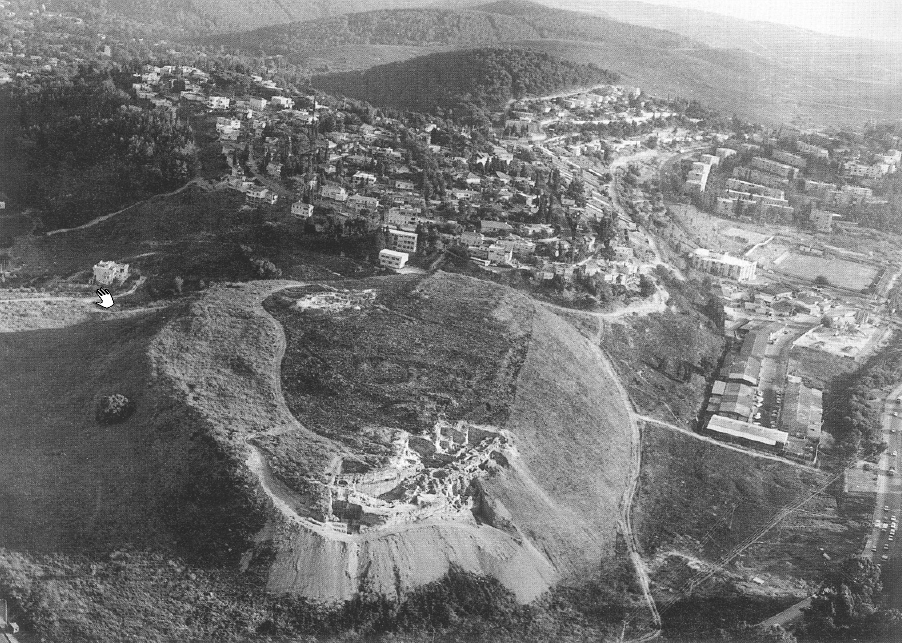
  • Photo I.1 Aerial View of Yoqne'am from Ben-Tor et al. (2005a)
  • Annotated Google Satellite View of Tel Yoknem from BibleWalks.com
  • Tel Yokneam in Google Earth
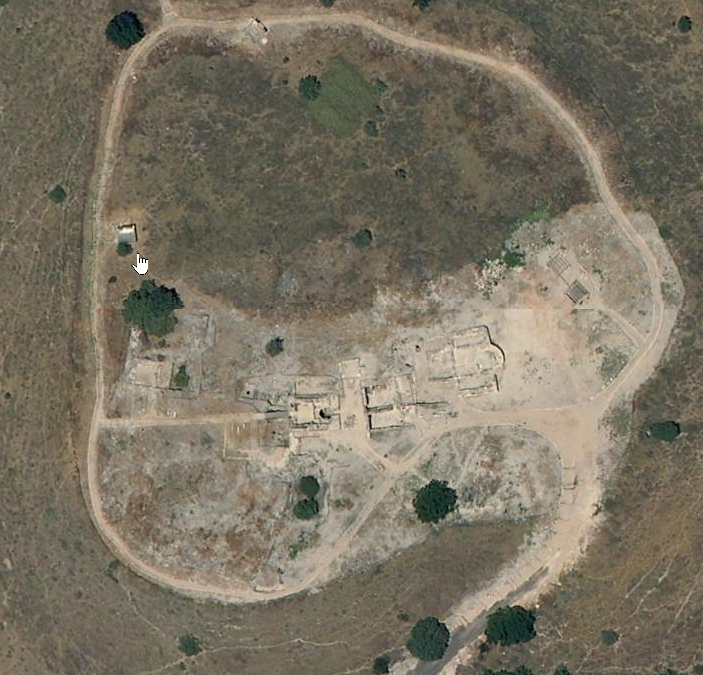
  • Tel Yokneam on govmap.gov.il

Magnified

  • Photo I.1 Aerial View of Yoqne'am from Ben-Tor et al. (2005a)
  • Annotated Google Satellite View of Tel Yoknem from BibleWalks.com
  • Tel Yokneam in Google Earth
  • Tel Yokneam on govmap.gov.il

Plans

Site Plans

Normal Size

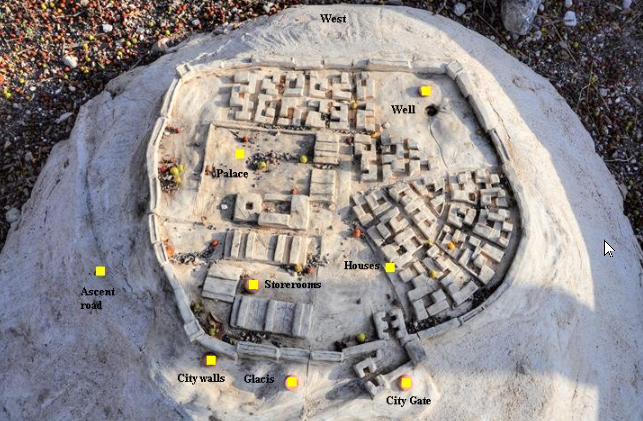
  • Biblical City Model of Tel Yoknem from BibleWalks.com
  • Map of the Mound and Excavation Areas from Stern et al. (1993 v.3)
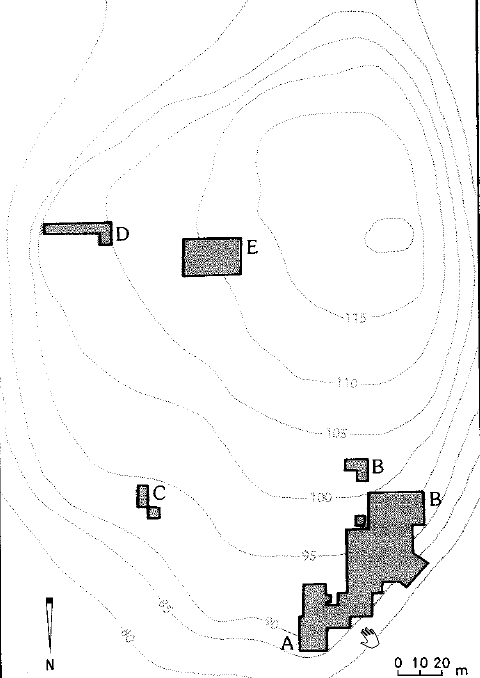
  • Fig. 1 topography, grid, and excavation areas from Ben-Tor et al. (1979)
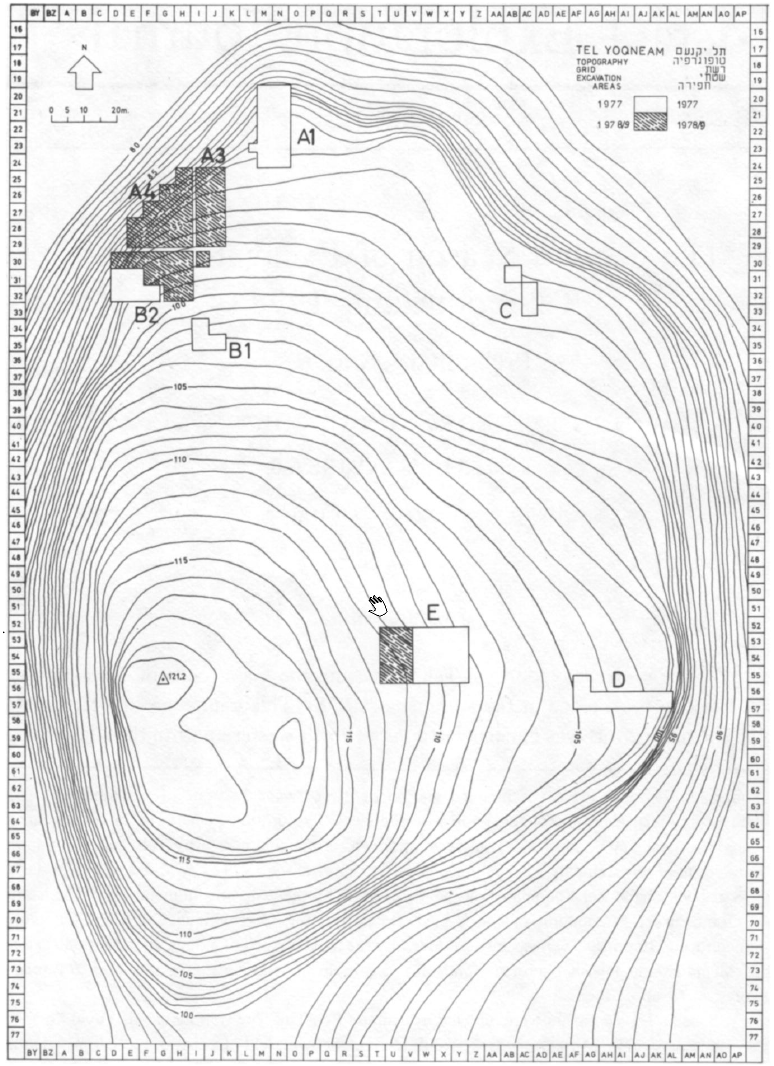
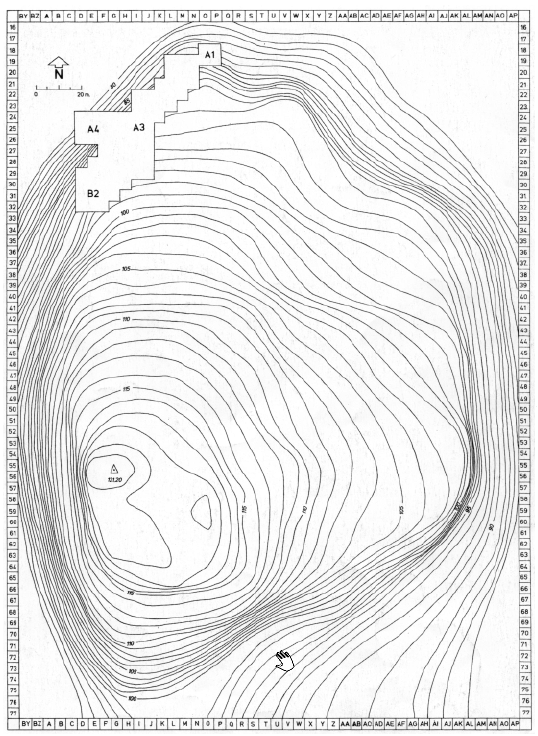
  • Plan I.1 topography, grid, and excavation areas from Ben-Tor et al. (2005a)
Magnified

  • Biblical City Model of Tel Yoknem from BibleWalks.com
  • Map of the Mound and Excavation Areas from Stern et al. (1993 v.3)
  • Fig. 1 topography, grid, and excavation areas from Ben-Tor et al. (1979)
  • Plan I.1 topography, grid, and excavation areas from Ben-Tor et al. (2005a)

Area Plans

Iron Age Strata

Normal Size

  • Plan I.2 Iron Age Strata at Tel Yoqne'am from Ben-Tor et al. (2005a)
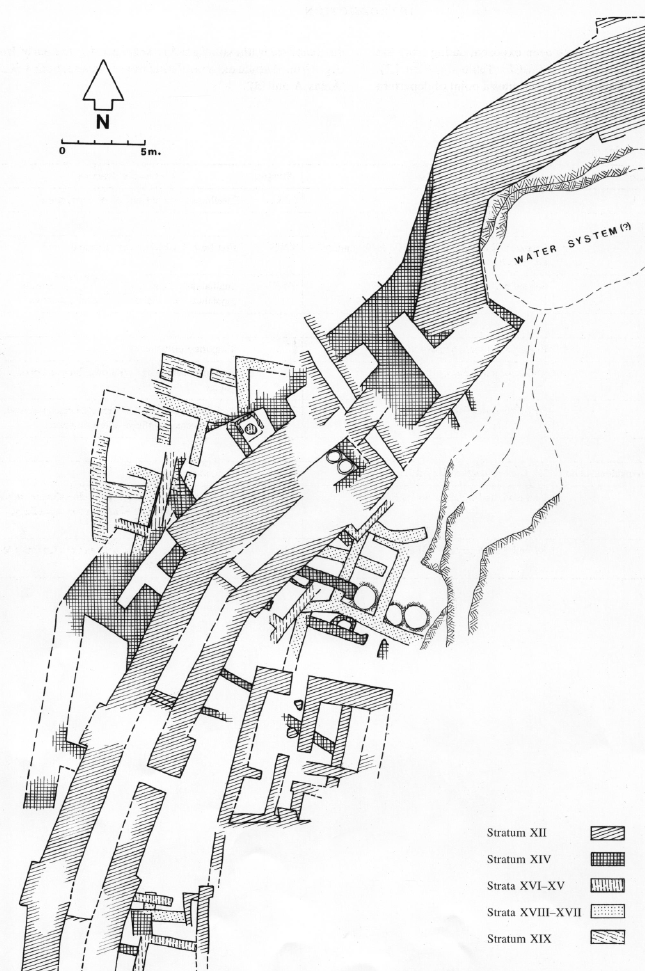
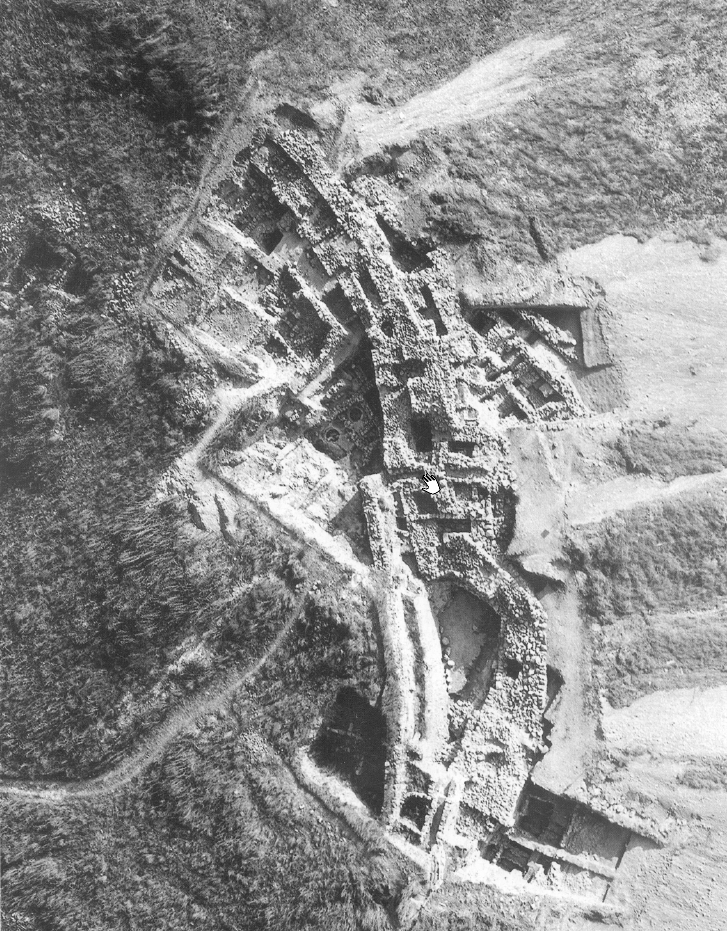
  • Photo I.2 Aerial View of Iron Age Strata (?) at Tel Yoqne'am from Ben-Tor et al. (2005a)
Magnified

  • Plan I.2 Iron Age Strata at Tel Yoqne'am from Ben-Tor et al. (2005a)
  • Photo I.2 Aerial View of Iron Age Strata (?) at Tel Yoqne'am from Ben-Tor et al. (2005a)

Area A1

Normal Size

  • Plan I.2 Iron Age Strata at Tel Yoqne'am from Ben-Tor et al. (2005a)
  • Photo I.2 Aerial View of Iron Age Strata (?) at Tel Yoqne'am from Ben-Tor et al. (2005a)
  • Plan I.3 Area A1 Schematic plan of Stratum XVIII-XVII from Ben-Tor et al. (2005a)
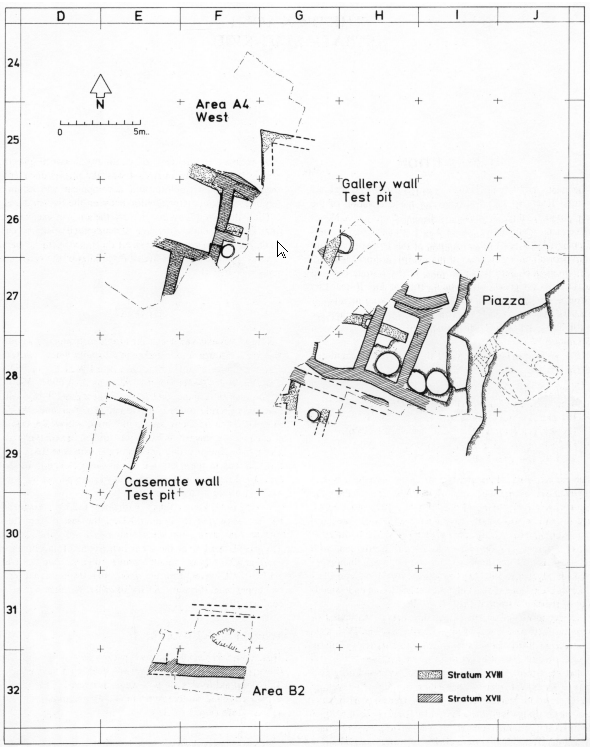
  • Plan I.4 Area A1 Stratum XVIII from Ben-Tor et al. (2005a)
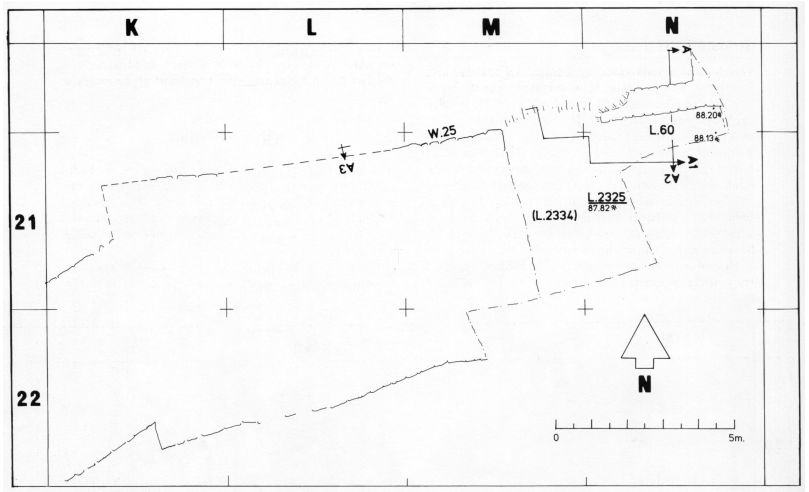
  • Plan I.5 Area A1 Stratum XVII from Ben-Tor et al. (2005a)
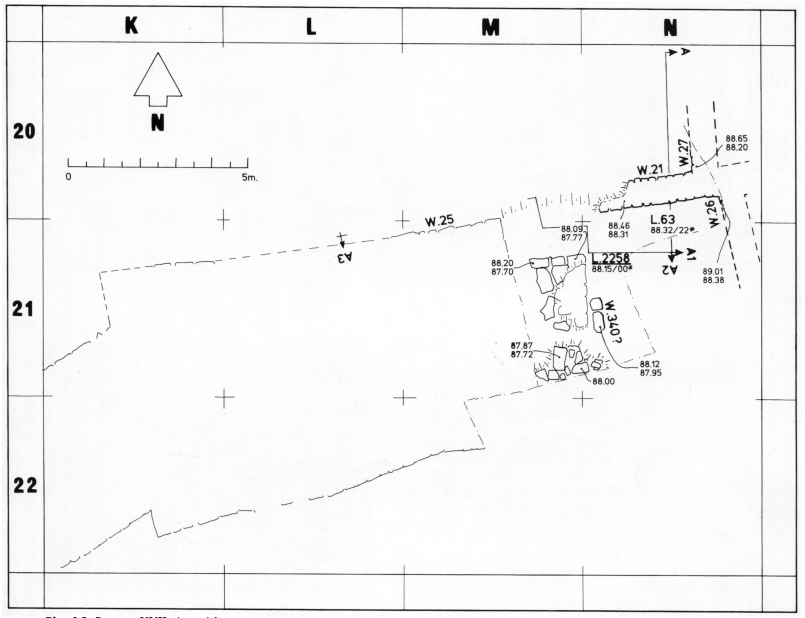
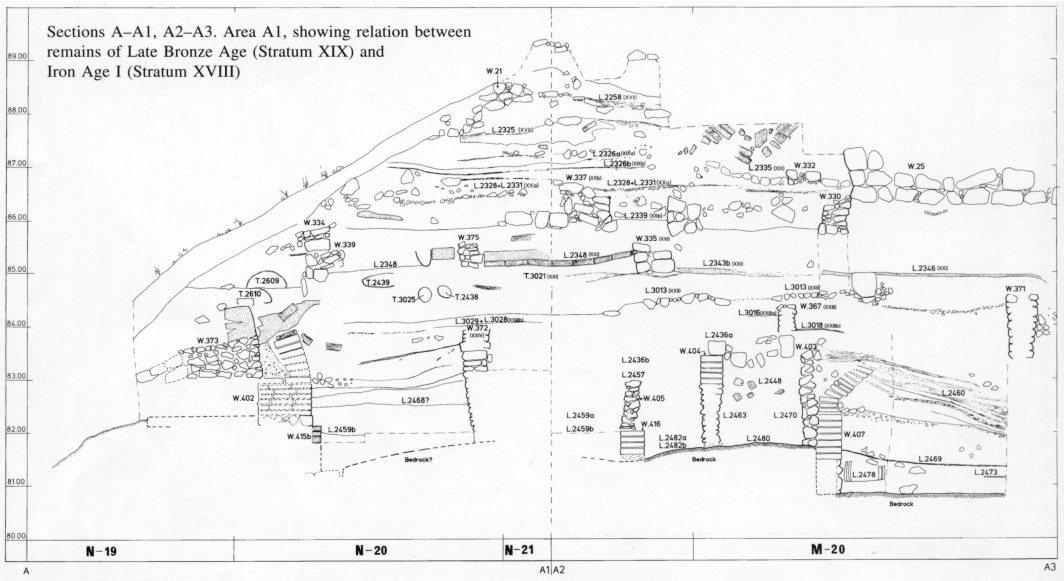
  • Plan I.5 Sections showing relation between remains of Late Bronze Age (Stratum XIX) and Iron Age I (Stratum XVIII) from Ben-Tor et al. (2005a)
Magnified

  • Plan I.2 Iron Age Strata at Tel Yoqne'am from Ben-Tor et al. (2005a)
  • Photo I.2 Aerial View of Iron Age Strata (?) at Tel Yoqne'am from Ben-Tor et al. (2005a)
  • Plan I.3 Area A1 Schematic plan of Stratum XVIII-XVII from Ben-Tor et al. (2005a)
  • Plan I.4 Area A1 Stratum XVIII from Ben-Tor et al. (2005a)
  • Plan I.5 Area A1 Stratum XVII from Ben-Tor et al. (2005a)
  • Plan I.5 Sections showing relation between remains of Late Bronze Age (Stratum XIX) and Iron Age I (Stratum XVIII) from Ben-Tor et al. (2005a)

Area A4

Normal Size

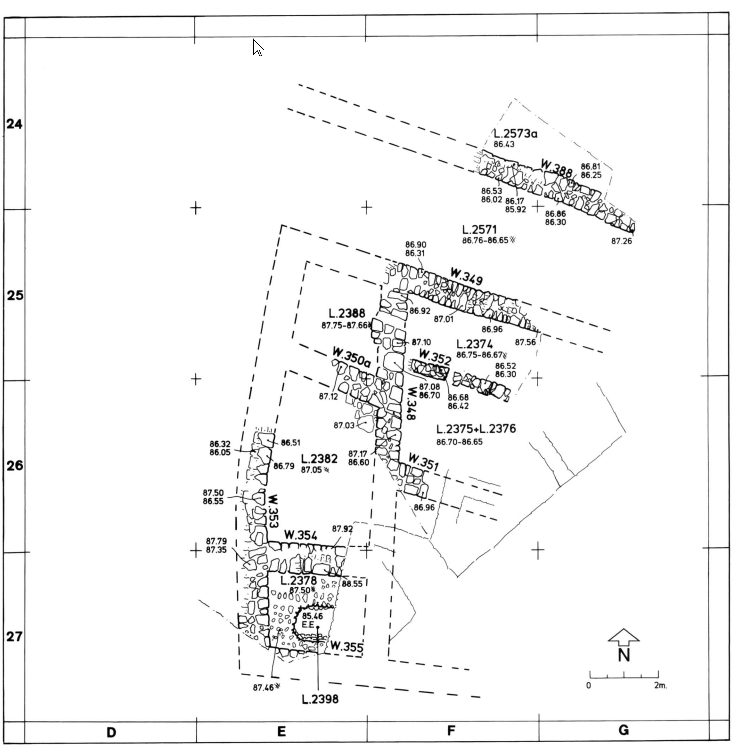
  • Plan III.5 Area A4, Stratum XIXa from Ben-Tor et al. (2005b)
Magnified

  • Plan III.5 Area A4, Stratum XIXa from Ben-Tor et al. (2005b)

Area A - Stratum IV - Early Islamic

Normal Size

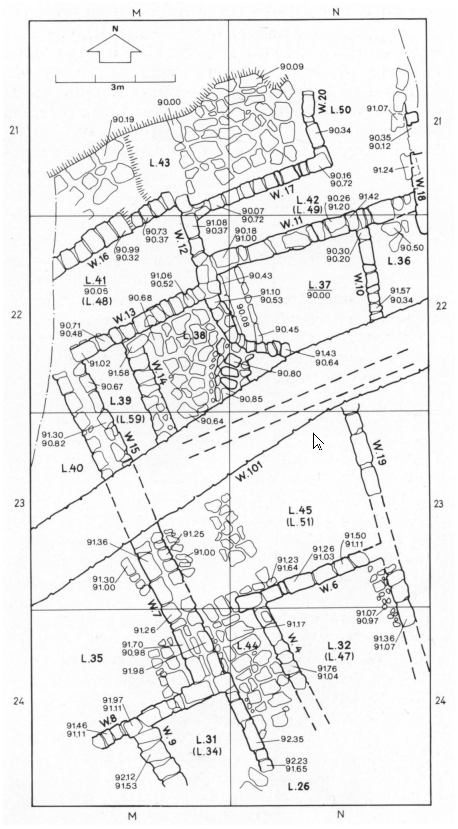
  • Plan IV.4 Area A, stratum IVa, northernmost section from Ben-Tor et al. (1996)
Magnified

  • Plan IV.4 Area A, stratum IVa, northernmost section from Ben-Tor et al. (1996)

Photos

Normal Size

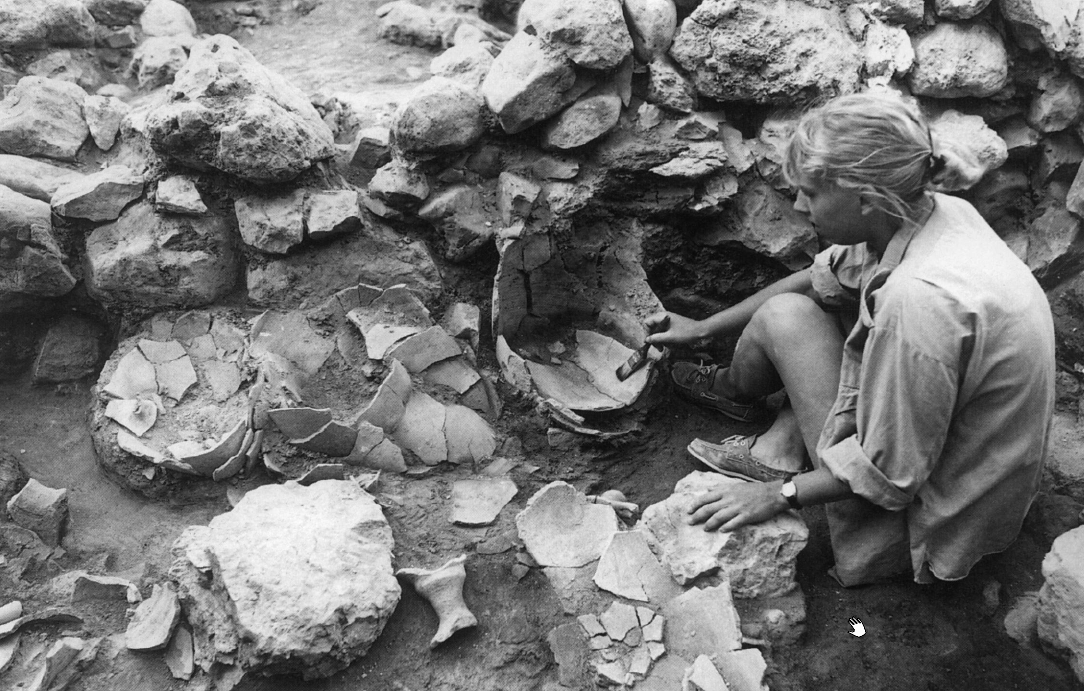
  • Photo I.11 Crushed pottery from Ben-Tor et al. (2005a)
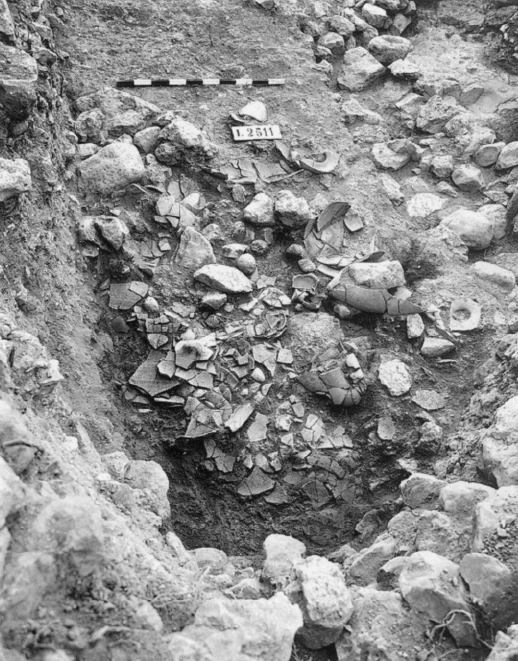
  • Photo I.12 Crushed pottery (closeup) from Ben-Tor et al. (2005a)
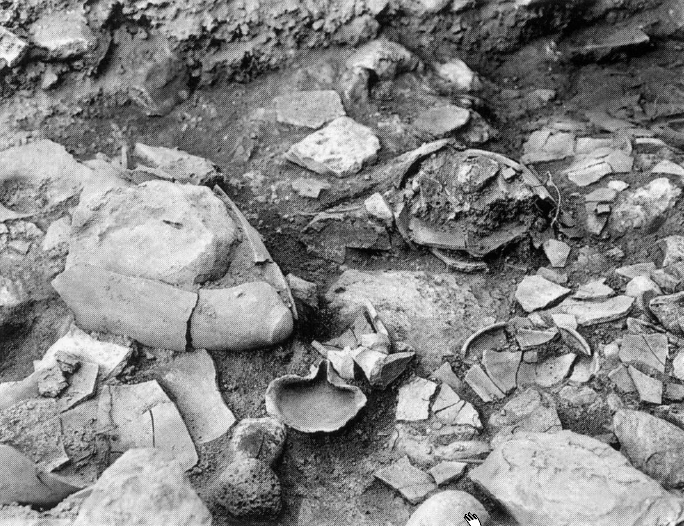
  • Photo I.23 Floor with some broken pots in locus L.3032 from Ben-Tor et al. (2005a)
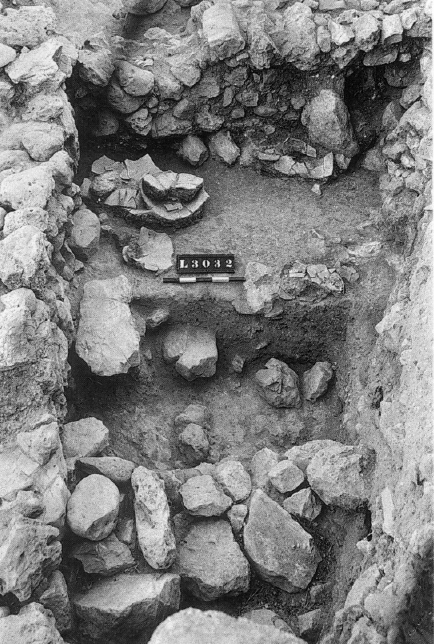
  • Photo I.24 More broken pottery in locus L.3032 from Ben-Tor et al. (2005a)
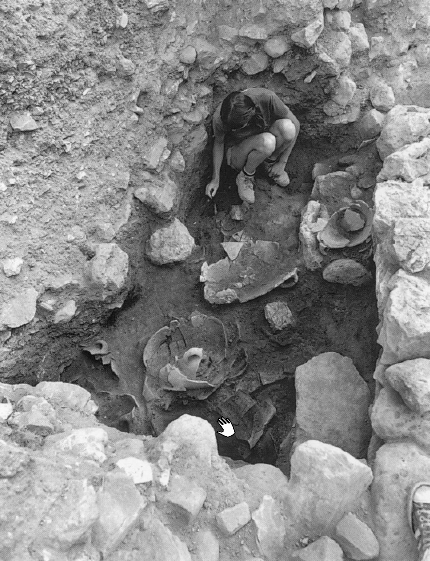
  • Photo I.26 Broken pottery in locus L.3036 from Ben-Tor et al. (2005a)
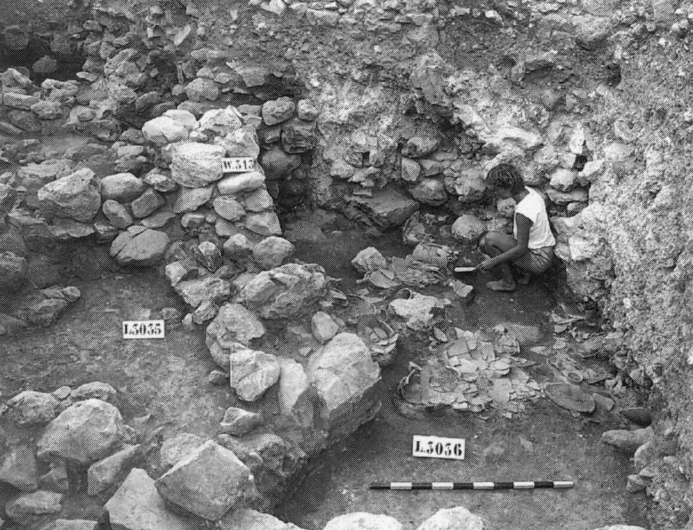
  • Photo I.29 Broken pottery in locus L.3036 from Ben-Tor et al. (2005a)
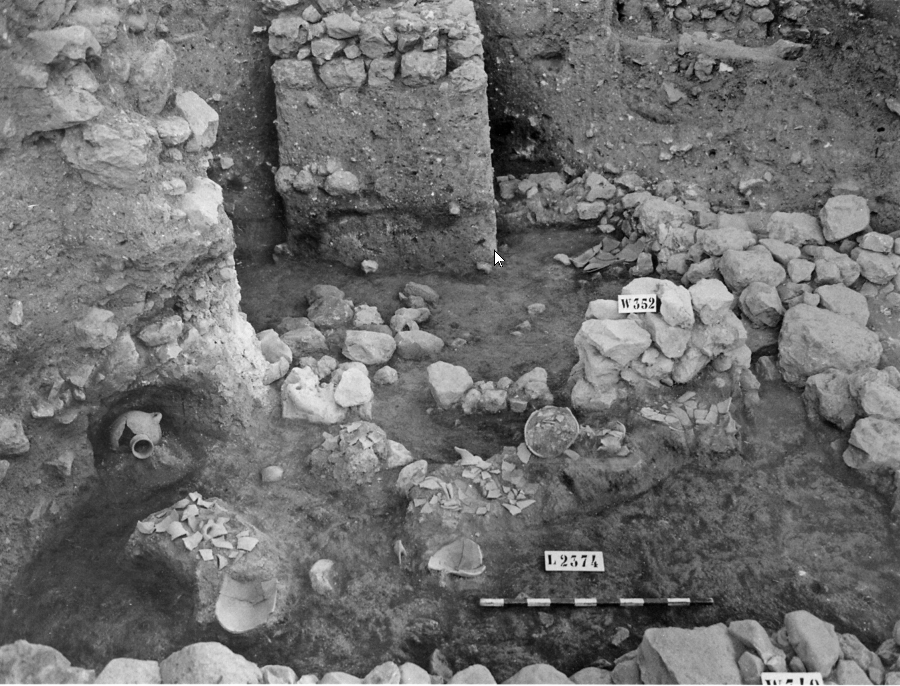
  • Photo III.20 Stratum XIXa destruction layer from Ben-Tor et al. (2005b)
Magnified

  • Photo I.11 Crushed pottery from Ben-Tor et al. (2005a)
  • Photo I.12 Crushed pottery (closeup) from Ben-Tor et al. (2005a)
  • Photo I.23 Floor with some broken pots in locus L.3032 from Ben-Tor et al. (2005a)
  • Photo I.24 More broken pottery in locus L.3032 from Ben-Tor et al. (2005a)
  • Photo I.26 Broken pottery in locus L.3036 from Ben-Tor et al. (2005a)
  • Photo I.29 Broken pottery in locus L.3036 from Ben-Tor et al. (2005a)
  • Photo III.20 Stratum XIXa destruction layer from Ben-Tor et al. (2005b)

Archaeoseismic Chronology
Stratigraphy

Site-Wide - Bronze and Iron Ages

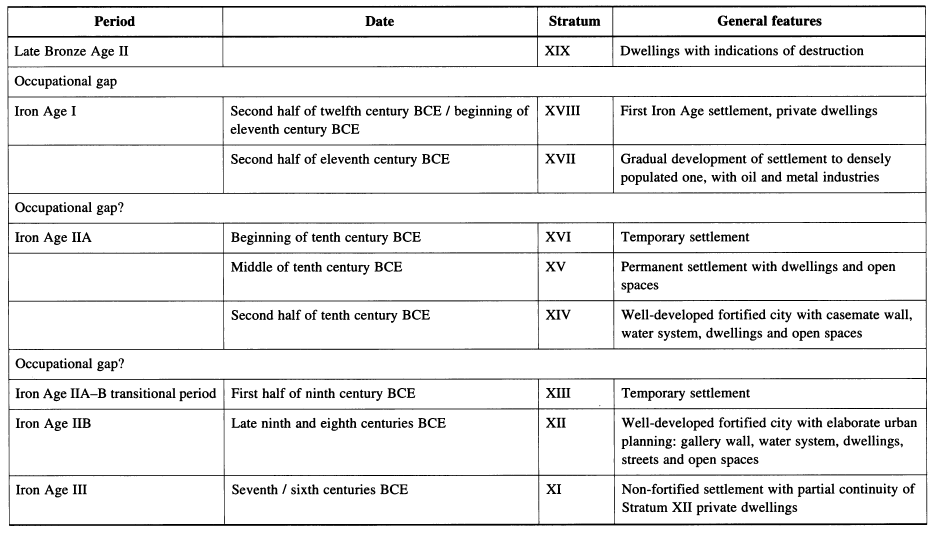
Table I.1

The stratigraphic sequence

click on image to open in a new tab

Ben-Tor et al. (2005a)

Site-Wide - All Periods

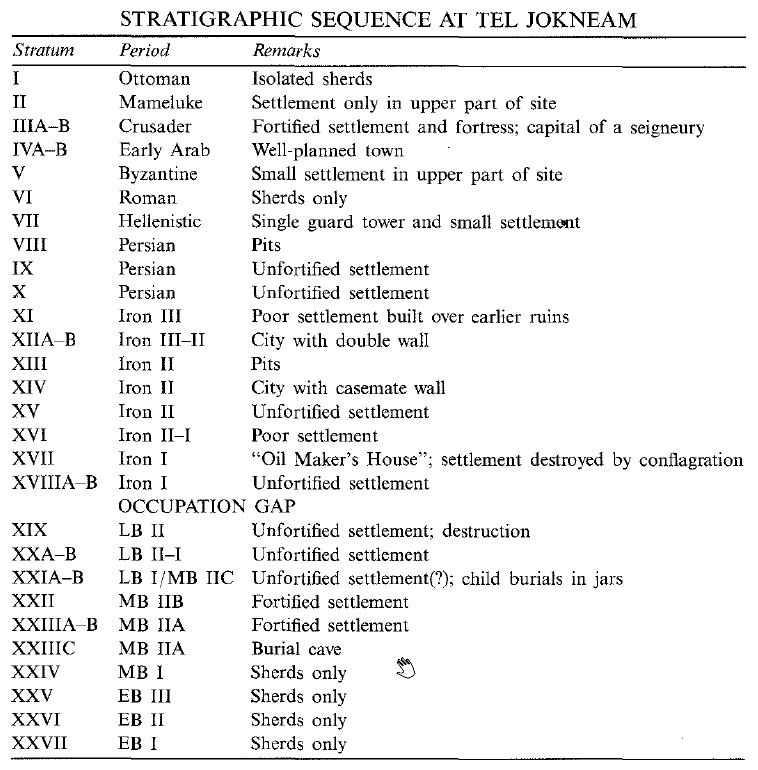
Stratigraphic Sequence at Tel JokneamTel Yokneam

click on image to open in a new tab

Stern et al. (1993 v.3)


Chronological Divisions

The Iron Age in the Southern Levant

Bronze Age of the Levant

Stratum XIXa Earthquake - Late Bronze II - 1400-1200 BCE

Discussion

Discussion

References
Ben-Tor et al. (2005b) - Yoqne'am III

Chapter 4 - The Architecture and Stratigraphy of the Late Bbronze Age

Area A4

Introduction

Area A4 (Plans III.I–5) is the more southerly of the two excavation areas opened on the western slopes of the mound outside the Iron Age fortification complex. Immediately below the remains of the earliest Iron Age I stratum (XVIII), two strata were exposed, both dated to the Late Bronze Age. Each of these strata revealed two construction phases: XXb–a and XIXb–a. The stratigraphic sequence, together with the ceramic assemblage, indicates that Stratum XXb should be dated to the MB IIC/LB I transition, and Stratum XXa within LB I. In contrast, both Strata XIXb and XIXa are dated to the second half of the Late Bronze Age. Because the Late Bronze Age architectural remains are better preserved in Area A4 than in Area A1, the discussion begins with the findings from Area A4 and then turns to the remains in Area A1.

The Late Bronze Age II: Stratum XIX

Introduction

The depth of the fill (about one meter) which accumulated over the remains of Stratum XX is an indication that after its destruction the site remained deserted for some time until its reoccupation during the LB II. Stratum XIX witnessed a completely new architectural complex built over the remains of the former settlement. As in Stratum XX, the architectural remains include a number of rooms comprising part of a large dwelling structure. Two phases of construction (Strata XlXa and XlXb) were discerned, the later phase characterized mainly by the raising of the floor level in c

Stratum XIXa: LB II (Plan III.5)

This phase represents the end of the Late Bronze Age at Yoqneʿam. Beneath about one meter of brick collapse and residues of conflagration, the Stratum XXa floors and structure were exposed. The structure preserves the plan of the previous phase, differing only in raised floor levels and minor architectural alterations.

In the large courtyard on the eastern side of the excavated area (L.2375/2376 + L.2374), a white plaster floor (#86.75/.65), sealing the benches of the previous phase, was exposed. W.356 was raised by the erection of W.352 directly above it. This wall continued to serve as a partition across the large space, but the opening within it was now substantially enlarged. ,The floor yielded a rich ceramic assemblage, including several storage jars, some found complete and in situ (Photo III.20; see also Photo III.37 below). The space was sealed by a thick layer of brick collapse.

The western wall (W.348) of this space was adjoined by a row of three rooms bordering the slope of the mound. Below the brick collapse covering the southernmost room (L.2378) was a cobblestone floor (#87.46)
, on which a large stone basin was found in situ. Within this room, adjoining W.355, was a stone-lined pit, probably a silo (L.2398). Large stone slabs lying near its aperture probably served as its cover (Photos III.21–22).

The central room (L.2382), measuring 4.50 × 3.50 m, was the widest in the row. In its northeastern corner were several flat stones (#87.06), the sole remains of the floor, which had otherwise eroded down the slope together with W.353 and W.350. Room L.2388 to the north was also severely damaged by erosion, and only its southeastern corner was preserved. Fragmentary patches of cobblestone (#86.75/.66) are all that survive of the floor.

The area demarcated by W.349 and W.388 was probably an alley dividing the structure from another, similar structure extending to the north. Its beaten-earth floor (#86.76/.65) was sealed by brick debris from the collapse of the walls. Although the area was carefully cleared, the floor yielded only a few sherds, supporting the interpretation of this space as a street rather than a room (Photo III.23).

Along the northern border of Area A4, a beaten-earth floor (#86.43) abutting W.388 was exposed. This floor (L.2573a), disturbed by a later pit, formed part of another structure oriented in the same direction as the structure to its east. Only a small section of this building was exposed, as its continuation lies beyond the excavated area.

The violent destruction that terminated the Stratum XIX settlement marks the end of the Late Bronze Age at Yoqneʿam. Brick and stone collapse from the house walls covered the room floors and bore clear signs of intense conflagration across the entire area. The foundations of a new settlement (Stratum XVIII), representing the beginning of Iron Age I, were dug into this debris.

Raphael and Agnon (2018)

LB II (1400-1200 BCE)

houses (Area A4, XIXa) found under 1 m of collapsed mudbrick and stone, intense burning (Ben-Ami in Ben-Tor et al. 2005b:141-156).

Stratum XVII Earthquake - Iron I - 1200-1000 BCE

Discussion

Discussion

References
Ben-Tor et al. (2005a) - Yoqne'am II

Chapter 3 - The Iron Age I (Strata XVIII-XVII)

Introduction

The location of the massive Iron Age IIA and B fortifications (Strata XIV and XII) has restricted the excavation of the early strata to limited, physically discontinuous areas. Nonetheless, the remains from Iron Age I strata, however fragmentary, allow for a reconstruction of the settlement during that period (the second half of the twelfth century BCE and the eleventh century BCE). In most of these strata (as well as in those assigned to the Middle Bronze Age II and Late Bronze Age), the inhabited areas extend beyond the boundaries of the Iron Age IIA and B cities; moreover, they are built along the same orientation, which changes only in Stratum XIV.

The areas in which Iron Age I remains were encountered (Plan 1.3) are:
  • Area A1 (Squares M–N/20, N/21);
  • Area A4 west (Squares E–F/25, E–F/26, E/27, G/25);
  • The piazza, Area A4 (Squares H–J/27–28, G/28);
  • The test pit in the gallery wall (Squares G–H/26);
  • The test pit in the casemate wall (Squares E/28–29);
  • Area B2 (Squares E–F/31–32).
The various areas, although not contiguous, have been linked together on stratigraphic grounds. At the end of the Late Bronze Age / beginning of the Iron Age I (Stratum XIX), the settlement was totally destroyed, and a hiatus precedes the later Stratum XVIII settlement built above it. In most areas, Stratum XIX terminates in a great destruction, with an extensive fill above it, ca. 50–100 cm thick, indicating that the place had probably been abandoned for a considerable length of time. This is of significance for an understanding of the site's stratigraphy.

Evidence of yet another great destruction, attributed to terminal Iron Age I, was encountered in Stratum XVII. This destruction is the second stratigraphic marker used in linking the physically disconnected areas of excavation
.

Between these two destruction layers several Iron Age I phases have been identified, varying in number as well as in nature in the various areas. In most areas — Area A1, the test pit in the gallery wall, the piazza (mainly in the upper terrace), and possibly Area B2 as well — two principal strata, Strata XVIII and XVII, were clearly identified, occasionally including sub-phases. In contrast to the lack of continuity between phases evident in most areas, in Area A4 west the phases discerned exhibit continuous architectural development and do not permit a clear-cut differentiation between the two strata.

The following discussion presents the areas of excavation from north to south, providing a representation of the ceramic assemblages and other small finds, according to each stratum and/or phase as appears in Part II.

Area A1

Introduction

This area was excavated with the aim of exposing early Iron Age I and Bronze Age remains in a locality where excavation was not restricted by the Iron Age IIA or B city wall (Squares M–N/20–21; Plan 1.4; Sections A–A1, A2–A3).

The area begins in the south, at the point where the city-wall line turns sharply toward the center of the mound (W.; Plan 1.4). The northern part of the area, where the Iron Age I strata are not damaged, is extremely limited in size (only 5 m²). Consequently, the remains of the Iron Age IIA and B fortifications in the south are at the same elevation as the Iron Age I remains in the north. The western part of the area has been washed down the slope.

Paving L.2335 and a tilting earth floor, L.2326 (see Yoqneʿam III) are attributed to Stratum XIXa, the last of the Late Bronze Age strata. An accumulation, ca. 70 cm high, of collapsed burnt bricks and other indications of an immense conflagration was found above them. Two strata, XVIII–XVII, were identified above this destruction layer, the upper one (Stratum XVII) likewise terminating in a conflagration.

Stratum XVIII (Plan 1.4)

This stratum is represented by a packed earth floor, L.2325 (incorporating L.60; Fig. 1.11), tilted steeply to the west. No walls ascribed to this stratum were uncovered. Several objects were found on this floor, including a cooking jug and an iron knife (Fig. 1.1).

Stratum XVII (Plan 1.5)

This stratum is represented by architectural remains of a fragmentary nature, displaying no continuity with the previous stratum. These include several walls: W.21, running east–west, perpendicular to W.26 to the south and W.27 to the north. It is difficult to determine the plan of this structure. A floor of pebbles and packed earth, L.2258 (incorporating L.63; Fig. 1.2), was also exposed, with stone paving to the south. Part of the latter may have functioned as a foundation for a mudbrick wall (a great number of such bricks were found within collapses all around); such a wall, however, could not be readily discerned. This floor, like the one from the previous stratum, is tilted westward.

Most of the area was covered by a thick fill of crumbled burnt bricks, suggesting that it had been abandoned for a considerable length of time. However, the slope on which Area A lies should be borne in mind, as well as the fact that it drains rainwater from the mound’s top
.

Raphael and Agnon (2018)

Iron I (1200-1100 BCE)

Stratum XVII exhibited limited evidence (Ben-Tor 2005a:13).

Stratum IV Earthquake (?) - 11th century CE

Discussion

Discussion

References
Ben-Tor et al. (1996) - Yoqne'am I

Chapter 4 Area A (Plans IV.1-7)

Stratum IV: The Early Islamic Period (Plans IV.2-4)

Introduction

This stratum is clearly distinguishable from the previous Persian and Hellenistic strata, as well as from the succeeding Crusader strata, in three important respects. First is the overall settlement plan, i.e. the orientation of buildings and streets and the extent of the built-up area. Second, the architecture and methods of construction are characteristic: the buildings of this period not only differ from those of the strata immediately above and below (see Plan IV.7), but are in fact unique in the entire architectural history of Tel Yoqne'am. Third, there is not a single instance in which an Early Islamic structure makes use of a previous period's wall as a foundation, or, for that matter, functions as a foundation for a wall of a later period. This seems to reflect the fact that, with the exception of two isolated buildings of the Hellenistic period, no construction had taken place in this area since the end of the Persian period, some 1000 years earlier. On the other hand, it indicates an occupational gap, though not nearly as long as the previous one, between the Early Islamic settlement of stratum IV and the Crusader one of stratum III.

Stratum IV is subdivided into two phases (see Plan IV.2), of which IVb represents the poorly preserved early stage and IVa the major later phase of occupation. The better state of preservation of buildings in squares E-H/28-32 results from the fact that in this area stratum IV buildings extend westward beyond W.101, the wall enclosing the city of stratum III, and consequently were not subjected to damage by the foundations of later structures. It is therefore only here that a discussion of a general plan as well as an architectural reconstruction are possible.

Stratum IVa

No city wall belonging to this Early Islamic settlement has been discovered, and the settlement seems to have been unfortified (Plans IV.2, IV.4). Indeed, the absence of such a wall, which would have served at the same time as a retaining wall, resulted in the complete erosion of the buildings which originally stood at the edge of the slope. This Early Islamic settlement was however not a sparsely populated one: the impression is of a centrally planned settlement, though it is not clear so far whether the excavated remains in area A represent part of an urban settlement extending over the entire surface of the mound, or whether this settlement was confined to the northwestern part of the mound. A final resolution of this question will be possible only after more extensive excavations in other parts of Tel Yoqne'am are carried out.

The impression of a centrally planned settlement is apparent from several features: the order and symmetry of the street system, the uniqueness and uniformity of the construction methods, and the scale and extent of the infrastructure (Photo IV.3).

... A rather thick layer of sterile accumulation was observed to rest on top of the stratum IV walls and below the base of the stratum III city wall (see Photo IV.8). It appears to indicate a gap in occupation between the end of the Early Islamic and the beginning of the Crusader settlements (see below, Part Three, Chapters XIII–XIV, for discussions of the pottery).

The Historical Setting of Stratum IV

The ceramic evidence (see Chapter XIII) indicates that Stratum IV was constructed sometime in the second half of the 9th century CE. It may be connected with one of several efforts by Egyptian rulers to stabilize their control over the coastal zone of Palestine and adjacent regions. For much of this period the country experienced political instability, partly due to frequent conflicts between Egyptian rulers and their northern opponents.

Since Yoqneʿam in Stratum IV was an unwalled settlement, it may reflect one of the brief intervals of relative political tranquility. A likely candidate is the period of Ibn Tulun, who occupied Syria in 878 and made it dependent on his Egyptian principality. Several building initiatives, including the restoration of the harbor at Acre, are attributed to him. The general impression from both the pottery and the architectural remains suggests that Stratum IV was of relatively short duration.

Pottery evidence indicates that the site was gradually abandoned, as reflected in the glazed bowls of Types 25–30 and cooking pots of Type 6 (Chapter XIII). An earthquake in 1033 CE devastated the region, causing severe damage to coastal cities from Gaza to south of Haifa and as far east as Tiberias. The tilting of some Stratum IV walls, such as the pronounced lean of W.18 in square N/21, suggests that Yoqneʿam was also affected. However, very few restorable vessels were found on the floors of the Stratum IV houses, implying that the settlement had been deserted shortly before the earthquake. The duration of Stratum IV may therefore be estimated at approximately 100–150 years, from the late 9th to early 11th centuries CE.

Historical sources and ceramic evidence indicate that the succeeding Crusader settlement, Stratum III, was established in the early 12th century. An occupational gap of roughly 100 years likely separated Strata IV and III. The sterile accumulation covering the Stratum IV remains in Area A beneath the Crusader fortification wall supports this conclusion.

A final caution is warranted: although it is possible that the entire site was occupied during Stratum IV, only the northwestern corner was extensively excavated. The situation observed in this area may not necessarily represent the whole site
.

Archaeoseismic Effects
Stratum XIXa Earthquake - Late Bronze II - 1400-1200 BCE

Effect                            Location Image(s) Description(s)
  • Collapsed Walls
  • Crushed Pottery (due to collapsed walls)
  • Fire
Area A4

  • "Paving L.2335 and a tilting earth floor, L.2326 (see Yoqneʿam III) are attributed to Stratum XIXa, the last of the Late Bronze Age strata. An accumulation, ca. 70 cm high, of collapsed burnt bricks and other indications of an immense conflagration was found above them. Two strata, XVIII–XVII, were identified above this destruction layer, the upper one (Stratum XVII) likewise terminating in a conflagration." - Ben-Tor in Ben-Tor et al. (2005a:10)

  • "This phase represents the end of the Late Bronze Age at Yoqneʿam. Beneath about one meter of brick collapse and residues of conflagration, the Stratum XXa floors and structure were exposed.

    In the large courtyard on the eastern side of the excavated area (L.2375/2376 + L.2374), a white plaster floor (#86.75/.65), sealing the benches of the previous phase, was exposed. ... The floor yielded a rich ceramic assemblage, including several storage jars, some found complete and in situ (Photo III.20; see also Photo III.37 below). The space was sealed by a thick layer of brick collapse.

    ... The area demarcated by W.349 and W.388 was probably an alley dividing the structure from another, similar structure extending to the north. Its beaten-earth floor (#86.76/.65) was sealed by brick debris from the collapse of the walls. ...

    The violent destruction that terminated the Stratum XIX settlement marks the end of the Late Bronze Age at Yoqneʿam. Brick and stone collapse from the house walls covered the room floors and bore clear signs of intense conflagration across the entire area. The foundations of a new settlement (Stratum XVIII), representing the beginning of Iron Age I, were dug into this debris." - Ben-Ami in Ben-Tor et al. (2005b:154)

  • "houses (Area A4, XIXa) found under 1 m of collapsed mudbrick and stone, intense burning (Ben-Ami in Ben-Tor et al. 2005b:141-156)" - Raphael and Agnon (2018:775)

Stratum XVII Earthquake - Iron I - 1200-1000 BCE

Effect                            Location Image(s) Description(s)
  • Tilted Floor ?
  • Collapsed Walls ?
  • Fire
Area A1


  • "Paving L.2335 and a tilting earth floor, L.2326 (see Yoqneʿam III) are attributed to Stratum XIXa, the last of the Late Bronze Age strata. An accumulation, ca. 70 cm high, of collapsed burnt bricks and other indications of an immense conflagration was found above them. Two strata, XVIII–XVII, were identified above this destruction layer, the upper one (Stratum XVII) likewise terminating in a conflagration." - Ben-Tor in Ben-Tor et al. (2005a:10)

  • "A floor of pebbles and packed earth, L.2258 (incorporating L.63; Fig. 1.2), was also exposed, with stone paving to the south. Part of the latter may have functioned as a foundation for a mudbrick wall (a great number of such bricks were found within collapses all around); such a wall, however, could not be readily discerned. This floor, like the one from the previous stratum, is tilted westward.

    Most of the area was covered by a thick fill of crumbled burnt bricks, suggesting that it had been abandoned for a considerable length of time. However, the slope on which Area A lies should be borne in mind, as well as the fact that it drains rainwater from the mound’s top." - Ben-Tor in Ben-Tor et al. (2005a:10)

  • "Stratum XVII exhibited limited evidence (Ben-Tor 2005a:13)" - Raphael and Agnon (2018:775)

Stratum IV Earthquake (?) - 11th century CE

Effect                            Location Image(s) Description(s)
  • Tilted Walls
Area A

  • "An earthquake in 1033 CE devastated the region, causing severe damage to coastal cities from Gaza to south of Haifa and as far east as Tiberias. The tilting of some Stratum IV walls, such as the pronounced lean of W.18 in square N/21, suggests that Yoqneʿam was also affected. However, very few restorable vessels were found on the floors of the Stratum IV houses, implying that the settlement had been deserted shortly before the earthquake." - Ben-Tor et al. (1996:19-20)

Archaeoseismic Intensity Estimates
Stratum XIXa Earthquake - Late Bronze II - 1400-1200 BCE

Effect                            Location Image(s) Description(s) Intensity
  • Collapsed Walls
  • Crushed Pottery (due to collapsed walls)
  • Fire
Area A4

  • "Paving L.2335 and a tilting earth floor, L.2326 (see Yoqneʿam III) are attributed to Stratum XIXa, the last of the Late Bronze Age strata. An accumulation, ca. 70 cm high, of collapsed burnt bricks and other indications of an immense conflagration was found above them. Two strata, XVIII–XVII, were identified above this destruction layer, the upper one (Stratum XVII) likewise terminating in a conflagration." - Ben-Tor in Ben-Tor et al. (2005a:10)

  • "This phase represents the end of the Late Bronze Age at Yoqneʿam. Beneath about one meter of brick collapse and residues of conflagration, the Stratum XXa floors and structure were exposed.

    In the large courtyard on the eastern side of the excavated area (L.2375/2376 + L.2374), a white plaster floor (#86.75/.65), sealing the benches of the previous phase, was exposed. ... The floor yielded a rich ceramic assemblage, including several storage jars, some found complete and in situ (Photo III.20; see also Photo III.37 below). The space was sealed by a thick layer of brick collapse.

    ... The area demarcated by W.349 and W.388 was probably an alley dividing the structure from another, similar structure extending to the north. Its beaten-earth floor (#86.76/.65) was sealed by brick debris from the collapse of the walls. ...

    The violent destruction that terminated the Stratum XIX settlement marks the end of the Late Bronze Age at Yoqneʿam. Brick and stone collapse from the house walls covered the room floors and bore clear signs of intense conflagration across the entire area. The foundations of a new settlement (Stratum XVIII), representing the beginning of Iron Age I, were dug into this debris." - Ben-Ami in Ben-Tor et al. (2005b:154)

  • "houses (Area A4, XIXa) found under 1 m of collapsed mudbrick and stone, intense burning (Ben-Ami in Ben-Tor et al. 2005b:141-156)" - Raphael and Agnon (2018:775)
  • VIII+
  • VIII+
  • ?
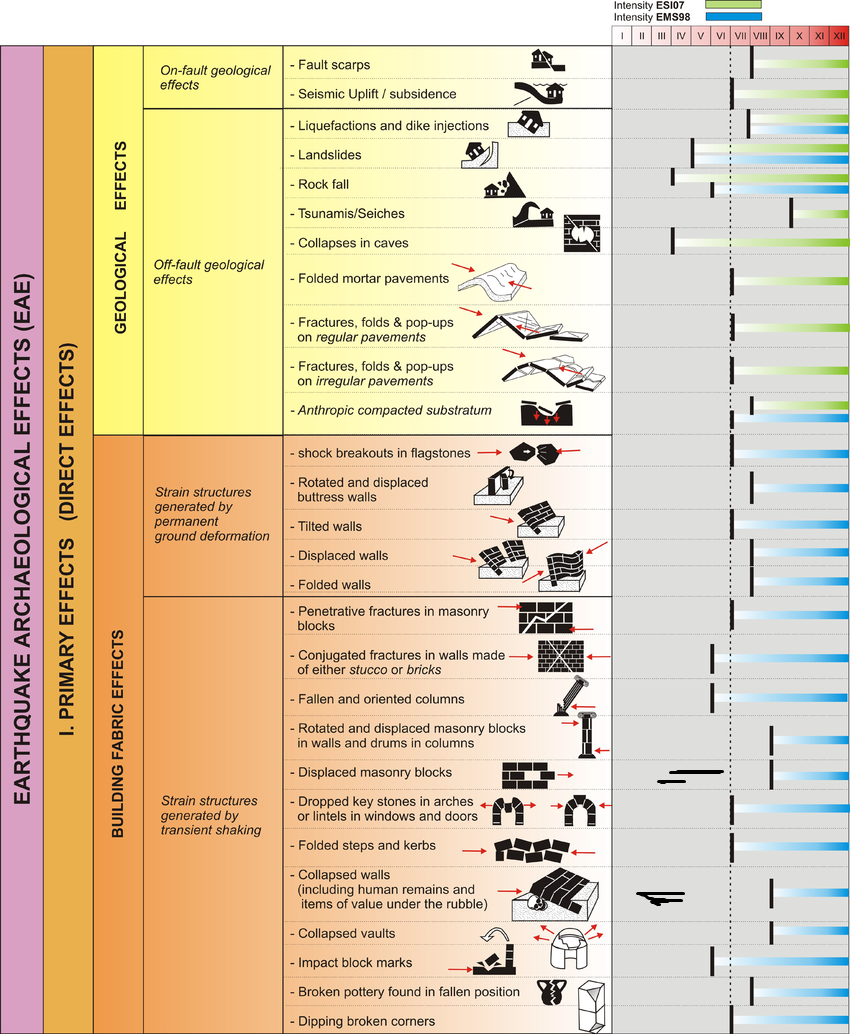
This archeoseismic evidence requires a minimum Intensity of VIII (8) when using the Earthquake Archeological Effects chart of Rodríguez-Pascua et al (2013: 221-224).

Stratum XVII Earthquake - Iron I - 1200-1000 BCE

Effect                            Location Image(s) Description(s) Intensity
  • Tilted Floor ? (uplift/subsidence ?)
  • Collapsed Walls ?
  • Fire
Area A1


  • "Paving L.2335 and a tilting earth floor, L.2326 (see Yoqneʿam III) are attributed to Stratum XIXa, the last of the Late Bronze Age strata. An accumulation, ca. 70 cm high, of collapsed burnt bricks and other indications of an immense conflagration was found above them. Two strata, XVIII–XVII, were identified above this destruction layer, the upper one (Stratum XVII) likewise terminating in a conflagration." - Ben-Tor in Ben-Tor et al. (2005a:10)

  • "A floor of pebbles and packed earth, L.2258 (incorporating L.63; Fig. 1.2), was also exposed, with stone paving to the south. Part of the latter may have functioned as a foundation for a mudbrick wall (a great number of such bricks were found within collapses all around); such a wall, however, could not be readily discerned. This floor, like the one from the previous stratum, is tilted westward.

    Most of the area was covered by a thick fill of crumbled burnt bricks, suggesting that it had been abandoned for a considerable length of time. However, the slope on which Area A lies should be borne in mind, as well as the fact that it drains rainwater from the mound’s top." - Ben-Tor in Ben-Tor et al. (2005a:10)

  • "Stratum XVII exhibited limited evidence (Ben-Tor 2005a:13)" - Raphael and Agnon (2018:775)
  • VI+?
  • VIII+?
  • ?
This archeoseismic evidence requires a minimum Intensity of VIII (8) when using the Earthquake Archeological Effects chart of Rodríguez-Pascua et al (2013: 221-224).

Stratum IV Earthquake (?) - 11th century CE

Effect                            Location Image(s) Description(s) Intensity
  • Tilted Walls
Area A

  • "An earthquake in 1033 CE devastated the region, causing severe damage to coastal cities from Gaza to south of Haifa and as far east as Tiberias. The tilting of some Stratum IV walls, such as the pronounced lean of W.18 in square N/21, suggests that Yoqneʿam was also affected. However, very few restorable vessels were found on the floors of the Stratum IV houses, implying that the settlement had been deserted shortly before the earthquake." - Ben-Tor et al. (1996:19-20)
  • VI+
This archeoseismic evidence requires a minimum Intensity of VI (6) when using the Earthquake Archeological Effects chart of Rodríguez-Pascua et al (2013: 221-224). Since the site was believed to have been abandoned, or largely so, at the time the wall tilting occurred, the deformation may reflect a construction-related site effect.

Notes and Further Reading
References

Bibliography from Stern et al. (1993 v.3)

Ben-Tor, A. (1970). 'Atiqot 6: 9*–10*.

Ben-Tor, A. & Rosenthal, R. (1978). Israel Exploration Journal 28: 57–82.

Ben-Tor, A. et al. (1979). Israel Exploration Journal 29: 65–83.

Ben-Tor, A. (1983). Israel Exploration Journal 33: 30–54.

Ben-Tor, A. (1978). Revue Biblique 85: 96–100.

Ben-Tor, A. (1980). Biblical Archaeology Review 6/2: 30–44.

Ben-Tor, A. Recherches Archéologiques en Israel: 149–154.

Ben-Tor, A. (1987–1988). Excavations and Surveys in Israel 6: 103–106.

Ben-Tor, A. & Zarzeeld, A. (1988–1989). Excavations and Surveys in Israel 7–8: 195–196.

Applebaum, S. et al. (1981–1982). Scripta Classica Israelica 6: 100.

MdB 23 (1982): 38.

Hunt, M. L. (1985; 1991). The Iron Age Pottery of the Yokneam Regional Project (Ph.D. diss., Berkeley; Ann Arbor).

Weippert (1988). Ortsregister.

Poulin, J. (1989). MdB 61: 58–61.

Bibliography from Stern et al. (2008)

Van Beek, G. W. (1991). Excavations and Surveys in Israel 10: 52, 170–171.

Van Beek, G. W. (1992). Anchor Bible Dictionary, vol. 3. New York: 676–678.

Van Beek, G. W. (1992). Eretz-Israel 23: 4*–9*.

Van Beek, G. W. (1996). Eretz-Israel 25: 1*–8*.

Van Beek, G. W. (1993). BATH. Jerusalem: 575–580.

Van Beek, G. W. (1997). The Oxford Encyclopedia of Archaeology in the Near East, vol. 3. New York: 213–215.

Melson, W. G. & Van Beek, G. W. (1992). Geoarchaeology 7: 121–147.

Naveh, J. (1992). Atiqot 21: 49–53.

Milevski, I. (1993). Revista de Arqueologia 13/142: 60–61.

Tsoar, H. & Yekutieli, Y. (1993). Israel Journal of Earth-Sciences 41: 209–216.

Renz, J. (1995). Die Althebräischen Inschriften I (Handbuch der Althebräischen Epigraphik). Darmstadt: 176–177, 253–256, 443–445.

Reich, R. (1996). Eretz-Israel 25: 98*.

Wapnish, P. (1996). Retrieving the Past. Winona Lake, IN: 285–296.

Wapnish, P. (1997). The Hyksos: New Historical and Archaeological Perspectives, ed. E. D. Oren. Philadelphia: 336–367.

Lemaire, A. (1999). Zeitschrift des Deutschen Palästina-Vereins 115: 12–23.

Bienkowski, P. (2000). The Archaeology of Jordan and Beyond. Winona Lake, IN: 41–58.

Bietak, M. & Kopetzky, K. (2000). Synchronisation. Wien, vol. III.

Kolska Horowitz, L. & Milevski, I. (2001). Studies in the Archaeology of Israel and Neighboring Lands. Chicago, IL: 283–305.

Herzog, Z. (2003). Saxa Loquentur. Münster: 85–100.

Goren, Y. et al. (2004). Inscribed in Clay. Tel Aviv: 299–301.

Manuelli, F. (2004). Orient Express: 49–52.

Na'aman, N. (2004). N.A.B.U. 2004/3: 73.

Hassell, J. (2005). Levant 37: 133–162.

Wikipedia pages

Tel Yokneam