Open this page in a new tab

Tell el-Far’ah North
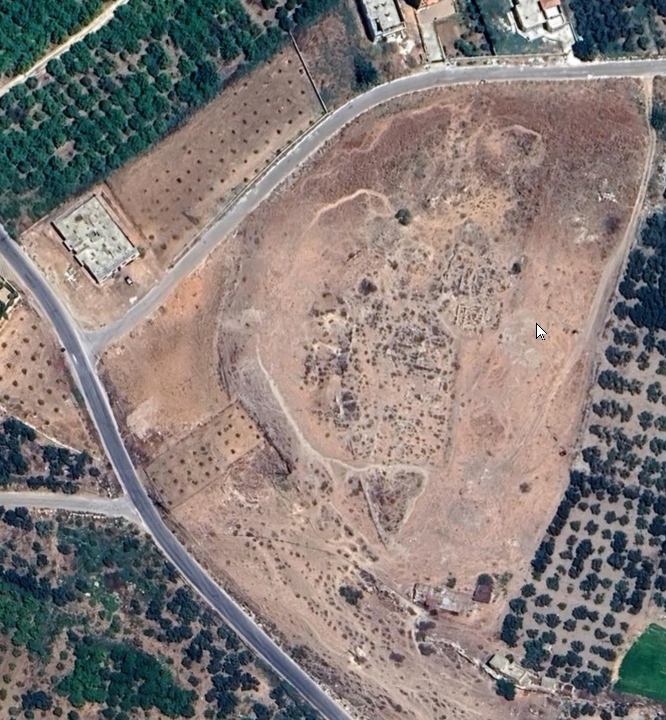
 Tell el-Far’ah North

click on image to explore this site on a new tab in Google Earth


Names
Transliterated Name Source Name
Tell el-Far’ah Arabic تلّ الفارعة
Tirzah Hebrew תִּרְצָה
Introduction
Identification and History

Finkelstein (2012)

The biblical town of Tirzah — the early capital of the Northern Kingdom, probably during the reign of its first seven kings — is safely identified at Tell el-Farʿah (North), northeast of Shechem.1 The mound is set in a fertile valley near two rich springs, at the head of Wadi Fareah, which leads to the Jordan Valley.

The Bible lists Tirzah as one of the Canaanite cities conquered by Joshua (Josh 12:24) and refers to Tirzah as one of the daughters of Zelophehad (Nu 26:33, 27:1; Josh 17:3). The Book of Kings (12:25) says that Jeroboam I built Shechem, but also hints (14:17) that he later moved to Tirzah. 1 Kings specifically mentions Tirzah as the capital of the Northern Kingdom in the days of Baasha (15:21, 33; 16:6), Elah (1 Kings 16:8–9), Zimri (1 Kings 16:15) and the first half of the reign of Omri (1 Kings 16:23). Assuming that Jeroboam ruled at least part of his reign from Tirzah and that his son Nadab, as well as Tibni, also ruled from there, Tirzah was the seat of the first seven kings of the northern kings, during a period of ca. 50 years in the late 10th and early 9th centuries BCE. There is no reason to doubt the authenticity of the consistent and deeply rooted information on Tirzah as the capital of Israel, which probably reached the author of Kings from northern sources and traditions.2 Archaeology seems to support the biblical account that Samaria was built only in the days of the Omrides,3 and this provides additional support for the Tirzah tradition.
Footnotes

1 W.F. Albright, "The Site of Tirzah and the Topography of Western Manasseh", JPOS 11 (1931) 241–251; R. de Vaux, "Les fouilles à Tell el-Farʿah, près Naplouse, cinquième campagne. Rapport préliminaire", RB 62 (1955) 541–589; idem, "The Excavations at Tell el-Farʿah and the Site of Ancient Tirzah", PEQ 88 (1956) 135–140; J. Briend, "Tell el-Farʿah et son identification ancienne", in P. Amiet et al., Tell el-Farʿah: Histoire, glyptique et céramologie (Orbis Biblicus et Orientalis 14; Fribourg, 1996) 5–14.

Several scholars have suggested the possibility that biblical Thebez is a copying error for Tirzah (without the mater lectionis he), perhaps due to the similarity of resh and bet in the First Temple period (see Y. Aharoni, The Land of the Bible [Philadelphia, 1979] 265). Tubas did not yield Iron Age finds and Khirbet Eynun produced only a small number of Iron II sherds (A. Zertal, The Manasseh Hill Country Survey: The Eastern Valleys and the Fringes of the Desert [Tel Aviv, 1996] 202–203, 211–214). Archaeology also dismisses Tayasir and Talluzeh (Zertal, The Manasseh Hill Country Survey: The Shechem Syncline [Tel Aviv, 1992] 476–477).

2 Especially that Tirzah does not play an important role in the rest of the Deuteronomistic History.

3 I. Finkelstein, "Observations on the Layout of Iron Age Samaria", Tel Aviv 38 (2011) 194–207.

de Vaux (1993)

Tell el-Farʿah (in the north, as distinct from the southern site, which is also called Tel Sharuhen) lies 11 km (7 mi.) northeast of Shechem, on the Nablus–Tubas road (map reference 1823.1822). The mound stands near the source of the Farʿah brook, which flows down to the Jordan River. It is situated on a rocky ridge that slopes in a southwest–northeast direction. Two springs, ʿAin Farah to the north and ʿAin Daleib to the south, supply the site with ample water. The fertile valley of Wadi Farah is the main thoroughfare between the Jordan Valley and the western mountain district.

Various scholars have attempted to identify the site with a biblical town. K. Budde, G. Dalman, and A. Alt considered it to be the Ophrah of Abiezer; F. M. Abel suggested Beth-Barah (Jg. 7:24); and W. F. Albright identified it with Tirzah. The latter view has been borne out by the excavations and is accepted today by most scholars. It is an identification based on the following considerations: Tell el-Farʿah is situated in the territory of Manasseh, which included Tirzah. In the biblical account of the daughters of Zelophehad (Num. 26:33, 36:10–11; Jos. 17:3), Tirzah and Hoglah are mentioned together, and the Samaria ostraca enable locating Hoglah not far from Tell el-Farʿah. Moreover, the archaeological finds at Tell el-Farʿah agree with Tirzah’s biblical history. In the beginning, Tirzah was a Canaanite town (like Tell el-Farʿah). The stratum attributed to the Late Bronze Age shows signs of destruction, which can be regarded as the result of the Israelite conquest. Tirzah, as the capital of the kingdom of Israel, corresponds to stratum III at Tell el-Farʿah. This level was devastated during the Omrid capture of the town, subsequent to Zimri’s seizure of power (c. 885 BCE). The fortress in the northwestern corner may be the king’s castle mentioned in 1 Kings 16:15–18, which Zimri himself set on fire and in which he met his death. Omri was able to rebuild Tirzah and to set up his residence there only at the end of a four-year struggle with his rival, Tibni. The foundations sunk into level III probably belong to his structures. However, after two years, Omri transferred the capital to Samaria (cf. 1 Kg. 16:23–24). This explains why there are buildings in the area that were never completed. The royal household and military and state officials left Tirzah, undoubtedly followed by the artisans and merchants. It is quite possible that the town was completely abandoned for some time. This would explain the paucity of the interim stratum, apparently constructed after a short period of settlement. As the Northern Kingdom flourished under Joash and Jeroboam II, Tirzah, too, enjoyed a measure of prosperity. It is from this town that Menahem launched his attack on Samaria (2 Kg. 15:14). Stratum II represents this era with its magnificent structures and administrative headquarters. As some have suggested, these may have served Menahem, if indeed he held sway at Tirzah. During the Assyrian invasion of the Northern Kingdom (c. 732 BCE), the town was captured. The destruction in stratum II dates from that time.

The École Biblique et Archéologique Française in Jerusalem conducted nine seasons of excavations at the site, between 1946 and 1960, under the direction of R. de Vaux.

Excavations

The Site, Its Excavation And Stratigraphy

Tell el-Fareah was explored by Roland de Vaux between 1946 and 1960. De Vaux excavated four fields, three of them (Chantiers II, III and IV) on the western side of the mound and one (Chantier I) in the north. Five sections were dug on the northeastern slope, between Chantier I and Ein el-Fareah. Admittedly, much of the site — especially its heart and eastern sector — has not been investigated.4 Still, the information from Tell el-Fareah is significant: the mound spreads across ca. five hectares,5 of which 0.5 hectare was dug in Chantier II alone.6 This means that the total area excavated in the three western fields seems to make up ca. 15% of the mound7 — more than the relative proportion of the excavated fields in most biblical mounds.
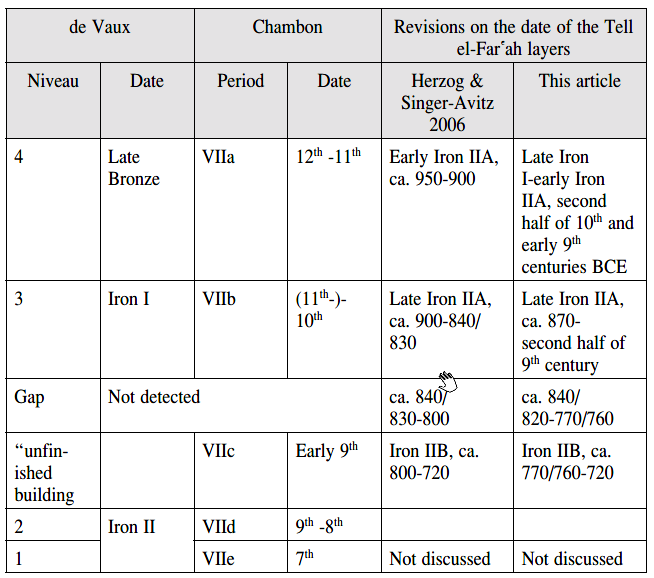
 Table 1

The stratigraphy of Tell el-Far'ah – from de Vaux to the current article

click on image to open in a new tab

Finkelstein (2012)


De Vaux published a series of preliminary reports on the results of his dig in Revue biblique.8 He described continuous occupation from the Late Bronze II through the Iron I to the Iron II, with Niveau 4 standing for the Late Bronze Age and Niveaux 3–1 covering the Iron Age.9 The final report of the Late Bronze finds has not been published to date. The final report of the Iron Age finds was published by Chambon10 many years after the conclusion of the dig. Chambon introduced a new stratigraphic system, with Period VI standing for the Late Bronze Age and Period VII with five phases standing for the Iron Age.11 A new, short evaluation of the stratigraphy and chronology of Tell el-Fareah in the Iron Age has recently been presented by Herzog and Singer-Avitz.12 ...
Footnotes

4 A. Chambon, Tell el-Farah I, L'âge du Fer (Éditions Recherche sur les Civilisations 31; Paris, 1984) 151; idem, "Farʿah, Tell el- (North)", in E. Stern (ed.), The New Encyclopedia of Archaeological Excavations in the Holy Land, vol. 2 (Jerusalem, 1993) 433.

5 W.F. Albright, "The Site of Tirzah and the Topography of Western Manasseh", p. 245; R. de Vaux, "Farʿah, Tell el- (North)", p. 433.

6 Chambon, Tell el-Farah I, p. 19.

7 Ibid., p. 151.

8 For the periods discussed here see :R. de Vaux and A.M. Steve, "La première campagne de fouilles à Tell el-Farʿah, près Naplouse, rapport préliminaire", RB 54 (1947) 394–433, 573–589; R. de Vaux and A.M. Steve, "La seconde campagne de fouilles à Tell el-Farʿah, près Naplouse, rapport préliminaire", RB 55 (1948) 544–580; R. de Vaux, "La troisième campagne de fouilles à Tell el-Farʿah, près Naplouse, rapport préliminaire", RB 58 (1951) 393–430, 566–590; idem, "La quatrième campagne de fouilles à Tell el-Farʿah, près Naplouse, rapport préliminaire", RB 59 (1952) 551–583; idem, "Les fouilles à Tell el-Farʿah, près Naplouse, sixième campagne. Rapport préliminaire", RB 64 (1957) 552–580; idem, "Les fouilles à Tell el-Farʿah, rapport préliminaire sur les 7e, 8e, 9e campagnes, 1958–1960", RB 68 (1961) 557–592.

9 Table in Chambon, Tell el-Farah I, p. 11; Table 1 below.

10 Chambon, Tell el-Farah I.

11 Ibid., pp. 11–12; Table 1 here.

12 Z. Herzog and L. Singer-Avitz, "Sub-Dividing the Iron IIA in Northern Israel: A Suggested Solution to the Chronological Debate", Tel Aviv 33 (2006) 163–195.

Maps, Aerial Views, and Plans

Maps

Normal Size

  • Fig. 4 - Location Map from Tappy (2014)

Magnified

  • Fig. 4 - Location Map from Tappy (2014)

Aerial Views

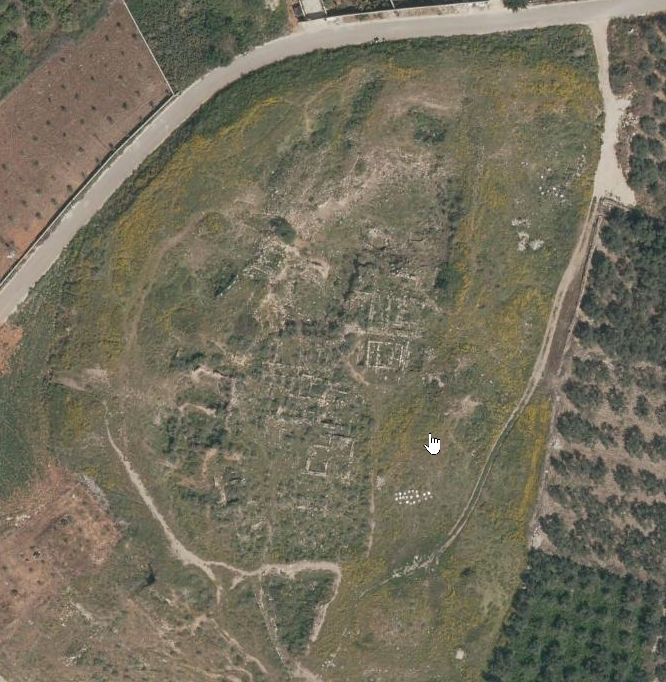
  • Tell el-Far’ah North in Google Earth
  • Tell el-Far’ah North on govmap.gov.il

Plans

Site Plans

Normal Size

  • Plan of the mound and excavation areas from Stern et al. (1993 v.2)
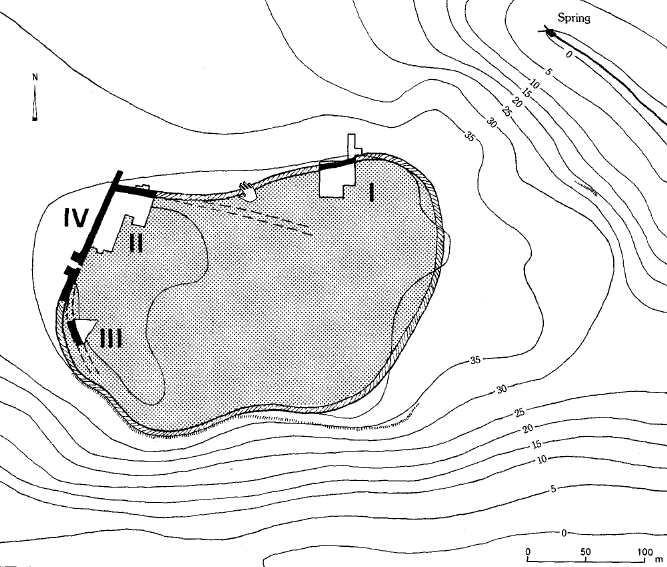
  • Fig. 2 Period VIIa Site Plan from Finkelstein (2012)

Magnified

  • Plan of the mound and excavation areas from Stern et al. (1993 v.2)
  • Fig. 2 Period VIIa Site Plan from Finkelstein (2012)

Archaeoseismic Chronology
Stratigraphy

Neolithic to Middle Bronze - Strata I-V - Areas I, II, III, and IV - Chambon

 Stratigraphy at Tell el-Far'ah North from Neolithic to Middle Bronze in Areas I, II, III, and IV

click on image to open in a new tab

Stern et al. (1993 v.2)


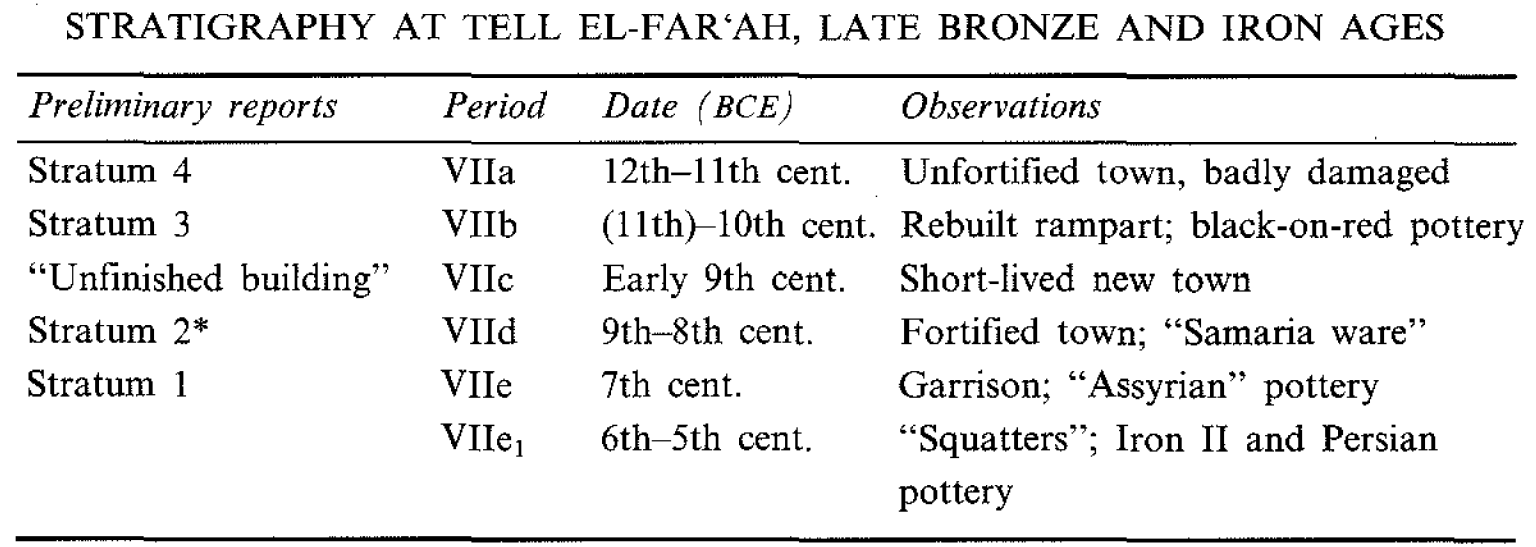
Late Bronze and Iron Age - Stratum VII - Site Wide - Chambon

 Stratigraphy at Tell el-Far'ah North, Late Bronze and Iron Ages

click on image to open in a new tab

Stern et al. (1993 v.2)


Late Bronze and Iron Age - Site-wide - de Vaux, Chambon, Herzog, Singer-Avitz, and Finkelstein Comparison

  • from Finkelstein (2012)
  • "De Vaux published a series of preliminary reports on the results of his dig in Revue biblique. He described continuous occupation from the Late Bronze II through the Iron I to the Iron II, with Niveau 4 standing for the Late Bronze Age and Niveaux 3–1 covering the Iron Age. The final report of the Late Bronze finds has not been published to date. The final report of the Iron Age finds was published by Chambon many years after the conclusion of the dig. Chambon introduced a new stratigraphic system, with Period VI standing for the Late Bronze Age and Period VII with five phases standing for the Iron Age. A new, short evaluation of the stratigraphy and chronology of Tell el-Fareah in the Iron Age has recently been presented by Herzog and Singer-Avitz." Finkelstein (2012:334-335)
 Table 1

The stratigraphy of Tell el-Far'ah – from de Vaux to the current article

click on image to open in a new tab

Finkelstein (2012)
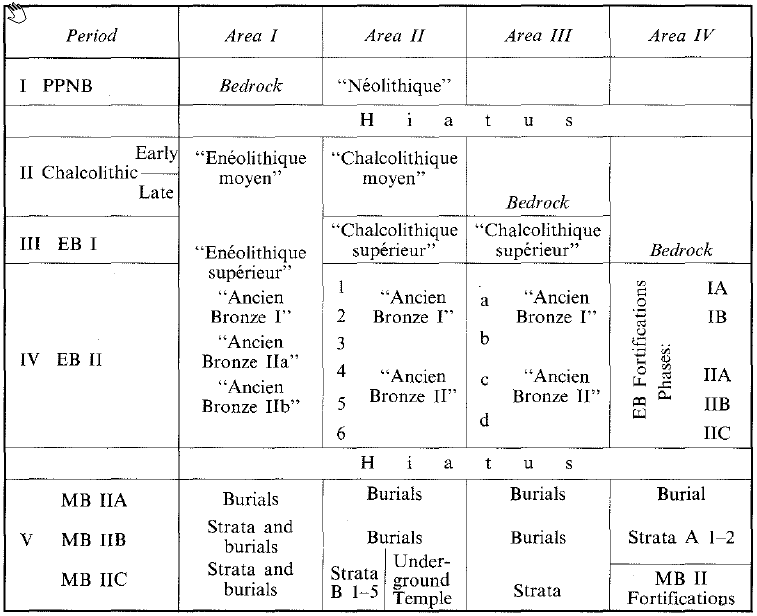

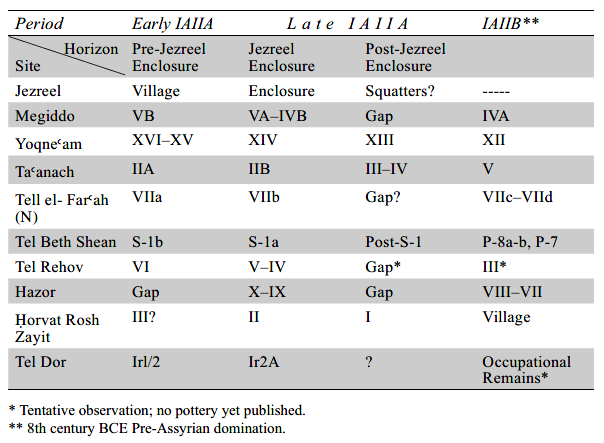
Comparitive Iron Age Stratigraphy with Other Sites In Northern Israel

 Table 1

Stratigraphic Sequence And Settlement Pattern Of Sites In Northern Israel

click on image to open in a new tab

Herzog and Singer-Avitz (2006)


Chronological Divisions

The Iron Age in the Southern Levant

Bronze Age of the Levant

Notes and Further Reading
References

Bibliography from Stern et al. (1993 v. 2)

Early excavation reports

Albright, W.F. (1931) JPOS 11, 241–251.

de Vaux, R. and Steve, A.M. (1947) RB 54, 394–433, 573–589.

de Vaux, R. (1948) RB 55, 544–580.

de Vaux, R. (1949) RB 56, 102–138.

de Vaux, R. (1951) RB 58, 393–430, 566–590.

de Vaux, R. (1952) RB 59, 551–583.

de Vaux, R. (1955) RB 62, 541–589.

de Vaux, R. (1957) RB 64, 552–580.

de Vaux, R. (1961) RB 68, 557–592.

de Vaux, R. (1962) RB 69, 212–253.

de Vaux, R. (1967) “Archaeology and Old Testament Studies,” in Thomas, D.W. (ed.), Oxford, 371–383.

Main publications

Mallet, J. (1973) Tell el-Farʿah (Région de Naplouse): L’Installation du Bronze Moyen antérieure au rempart (Cahiers de la Revue Biblique 14), Paris.

Chambon, A. (1984) Tell el-Farʿah 1: L’Âge du Fer (Recherches sur les Civilisations – Mémoires 31), Paris.

Mallet, J. (1987) Tell el-Farʿah 2: Le Bronze Moyen. Stratigraphie des vestiges du Bronze Moyen II (Recherches sur les Civilisations – Mémoires 66), 3 vols., Paris.

Other studies

Wright, G.E. (1949) BA 12, 66–68.

Gray, J. (1952) PEQ 84, 110–113.

de Vaux, R. (1956) PEQ 88, 125–140.

de Vaux, R. (1958) Von Ugarit nach Qumran (Beihefte zur ZAW 77), Berlin, 250–265.

Picard, C. (1958) RAr A, 91–93.

Joachims, U. (1960) ZDPV 76, 73–96.

Huot, J.L. (1967) RB 74, 517–554.

de Miroschedji, P. (1976) Contribution à l’étude de l’urbanisation en Palestine à l’Âge du Bronze Ancien I–II (Ph.D. diss., Univ. of Paris), 13–24, 74–81, 90–95, 97–99, 115–119, 179, 183–184.

Otto, E. (1978) ZDPV 94, 108–118.

Amiran, R. (1979) R. Hecht Festschrift, Jerusalem, 115–118.

Biblical Archaeology Society Newsletter 2/2 (1981), 1–2.

Fowler, M.D. (1981) PEQ 113, 27–31.

Chambon, A. (1984) Syria 61, 339–340.

Chambon, A. (1985) ZDPV 101, 178–183.

Chambon, A. (1987) BASOR 267, 84–86.

Chambon, A. (1988) Archiv für Orientforschung 35, 236–237.

Chambon, A. (1986) Buried History 22/1, 14–24.

Weippert (1988) Ortsregister.

Brodsky, H. (1989) Bible Review 5/1, 38–44.

Bibliography from Stern et al. (2008)

Studies

Goren, Y. (1991) Eretz Israel 21, 105.

Goren, Y. and Zuckerman, S. (2000) in Ceramics and Change, Sheffield, 165–182.

Manor, D.W. (1992) ABD 6, New York, 573–577.

Zwickel, W. (1994) Der Tempelkult in Kanaan und Israel (Forschungen zum Alten Testament 10), Tübingen.

Galil, G. (1993) ZDPV 109, 49–53.

Schwartz, G.M. (1993) JNES 52, 151–153 (Review).

Naʿaman, N. (1995) JSOT 65, 37–53.

Braun, E. (1996) Cultural Diversity and Change in the Early Bronze I of Israel and Jordan (Ph.D. diss.), Tel Aviv.

Flucault-Forest, C. (1996) L’Habitat, Oxford.

Joffe, A.H. (1997) OEANE 2, New York, 303–304.

Bernett, M. and Keel, O. (1998) Mond, Stier und Kult am Stadttor: Die Stele von Betsaida (et-Tell) (Orbis Biblicus et Orientalis 161), Göttingen, 53–59.

Haettner Blomquist, T. (1999) Gates and Gods: Cults in the City Gates of Iron Age Palestine (Coniectanea Biblica, Old Testament Series 46), Stockholm, 86–93.

Mallet, J. (1998) Orientalia 30, 511–514.

Mallet, J. (2000) Orientalia 32, 297–338.

Mallet, J. (1999) Orient Express, 55–57.

Bietak, M. and Kopetzky, K. (2000) Synchronisation, Wien, 105.

Nur el-Din, H. (2000) ICAANE I, Roma, 1225–1233.

Schloen, J.D. (2001) The House of the Father as Fact and Symbol (Studies in the Archaeology and History of the Levant 2), Winona Lake, IN, 147–183.

Yekutieli, Y. (2001) Studies in the Archaeology of Israel and Neighboring Lands, Chicago, 659–688.

Beck, P. (2002) Imagery and Representation, Tel Aviv, 228–251.

Caquot, A. (2002) CRAIBL 2002/3, 995–997.

Paz, Y. (2002) Tel Aviv 29, 240, 242.

Bloch-Smith, E. (2004) IEJ 54, 77–91.

Miller, R.D., II (2004) BASOR 333, 55–68.

Wikipedia pages

Tirzah (Tell el-Farah North)


Wadi al-Far'a


Wadi al-Far'a (river)