363 CE Earthquake



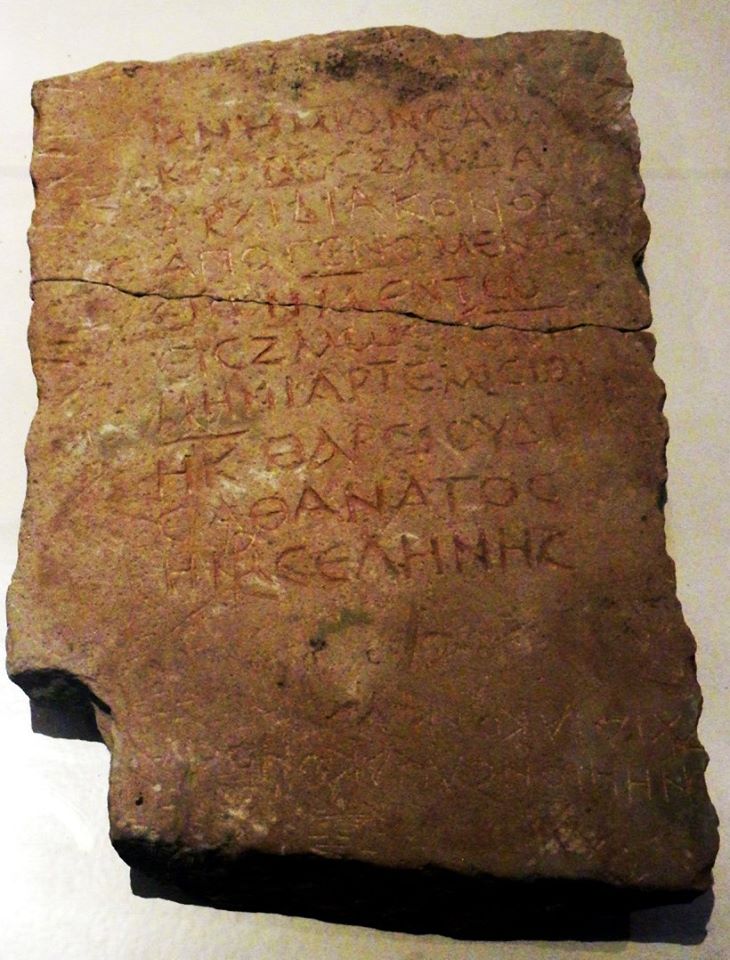
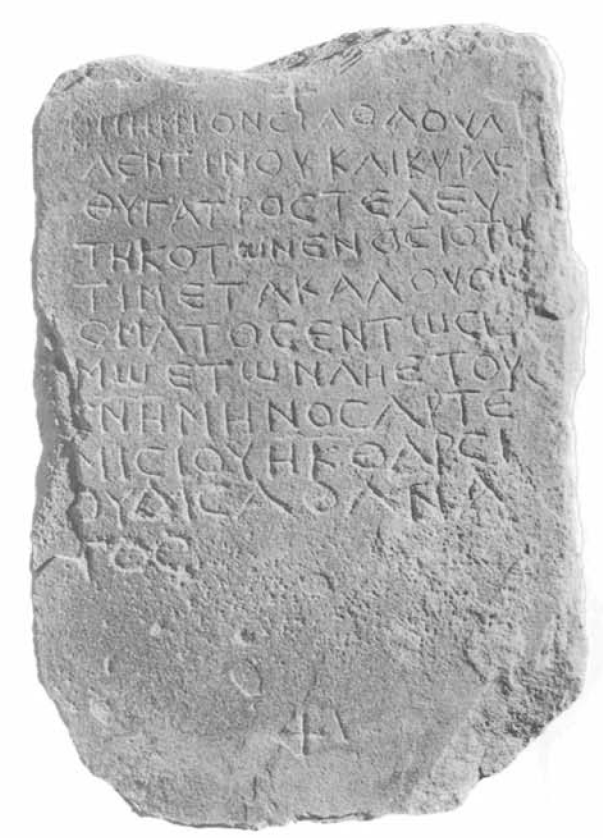
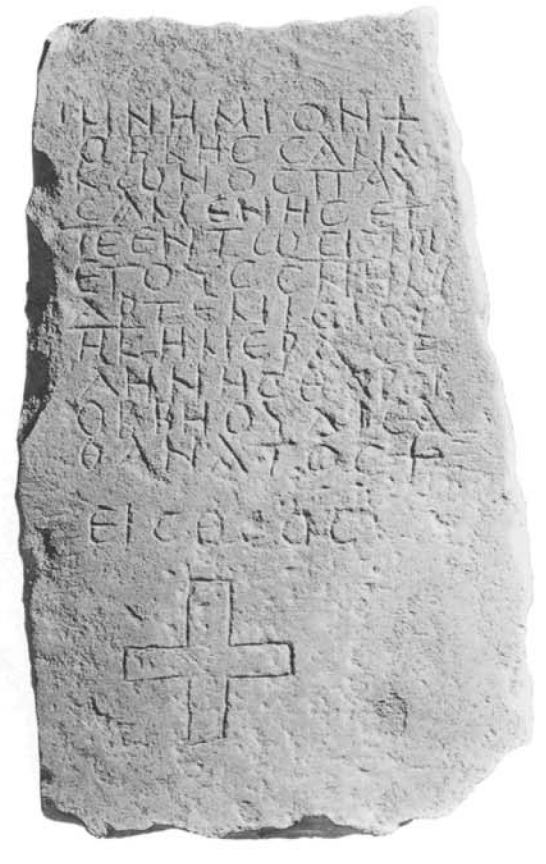
Three tombstones discovered in Ghor es-Safi (Byzantine
Zoara) provide an explicit date for one of the
Cyril
Quakes. All three state that the victims died "during
the earthquake". The chronological information can be
summarized as follows:
- All three tombstones specify the same calendar
date: 28
Artemisios, which corresponds
to 18 May.
- All three specify the year 258 of the
Era of Provincia Arabia calendar, which ran from 22 March 363 to
21 March 364 CE (calculated using CHRONOS). This fixes the
event to 18 May 363 CE.
- Two tombstones also specify Monday as the day of
the week, while the third does not. However,
18 May 363 CE in the Julian calendar fell on a Sunday and
19 May 363 CE fell on a Monday (using
CHRONOS). Such inconsistencies are
not unusual.
Meimaris and Kritikakou (2005:51)
note that 47 out of 151 epitaphs from Ghor es-Safi
record a day of the week incompatible with the
date, and that "these incongruities are more
frequent from the early fourth until the early
fifth centuries."
The individual tombstone inscriptions record the
following:
- Siltha and Kyra died during the earthquake on
28 Artemisos (18 May). No day of the week is
specified.
- Obbe died during the earthquake on Monday,
28 Artemisos (18 May).
- Samakon died during the earthquake on Monday,
28 Artemisos (18 May).
The
Letter attributed to Cyril of Jerusalem states that the
earthquake struck on Monday, 19
Iyyar
. This corresponds
to Monday 19 May. This creates a potential discrepancy
of one day if only the calendar date is considered:
18 May in the tombstones vs. 19 May in Cyril’s letter,
but no discrepancy if the day of the week is used:
Monday in the tombstones vs. Monday in Cyril’s
letter.
The discrepancy could be resolved if the day of the
week was reckoned in Safi using the same
A.G. calendar convention used in
Cyril’s letter, while the calendar date was
reckoned according to the standard of the Julian
calendar.
In the A.G. calendar and many local Near Eastern
calendars, the new day began at sundown, whereas in
the Julian calendar the new day began at midnight.
According to Cyril’s letter, the first earthquake
struck around 10:30 pm (the third hour of the
night) on Monday 19 Iyyar, i.e. Monday 19 May.
If the date is instead reckoned according to the
Julian calendar, that moment would fall on
18 May. If the day of the week, however, was
counted using a sundown-based system, the day
would be Monday. Such a reckoning could
account for the tombstones’ combined date and
weekday: Monday, 18 May.
Under this interpretation, the first shock of
the southern
Cyril quake
occurred around 10:30 pm on 18 May 363 CE,
causing deaths at Safi and extensive damage
in Jerusalem. It would have been followed by
the northern shock at about 4:30 am (the
ninth hour of the night) on 19 May 363 CE.