
Manbij
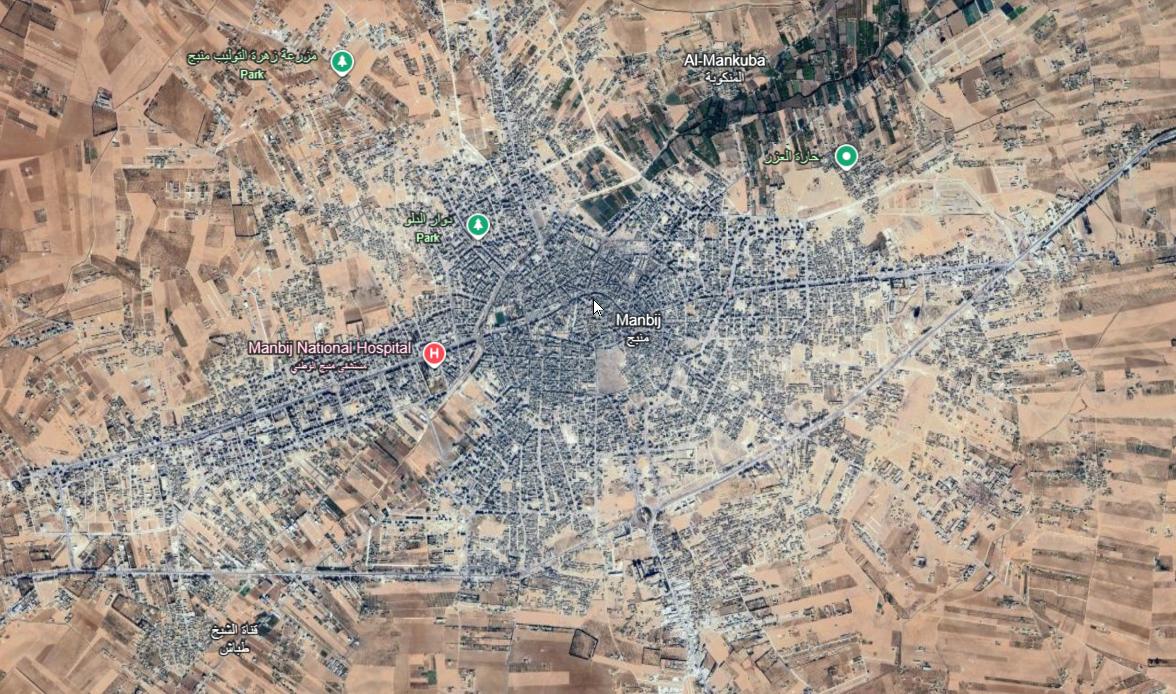 Manbij
click on image to explore this site on a new tab in Google Earth
| Transliterated Name | Source | Name |
|---|---|---|
| Manbij | Modern English | |
| Manbij | Arabic | منبج |
| Mabbug | Syriac | ܡܒܘܓ |
| Mabug, Mabog, Mabbog, Mabbogh | Late Classical / Syriac | |
| Manbug | Aramaic (Iron Age) | 𐡌𐡍𐡁𐡂 |
| Nappigu, Nanpigi | Neo-Assyrian | |
| Bambyce, Bambyke | Greek | Βαμβύκη |
| Hieropolis | Greek | Ἱερόπολις |
| Hierapolis | Greek | Ἱεράπολις |
| Membij, Mambeg | Medieval Latin / European | |
| Menbiç | Turkish |
- Manbij in Google Earth
Manbij
click on image to explore this site on a new tab in Google Earth
- Simple MMI Intensity Scale
 Simple MMI Intensity
Scale
Click on image to open in a new tab - More Subjective MMI Intensity Scale
 More Subjective MMI Scale
Click on image to open in a new tab
| Effect | Location | Image(s) | Description | Intensity |
|---|---|---|---|---|
|
Mabbug (Manbij) |
|
|
- Earthquake Archeological Effects chart
of Rodríguez-Pascua et al (2013: 221-224)
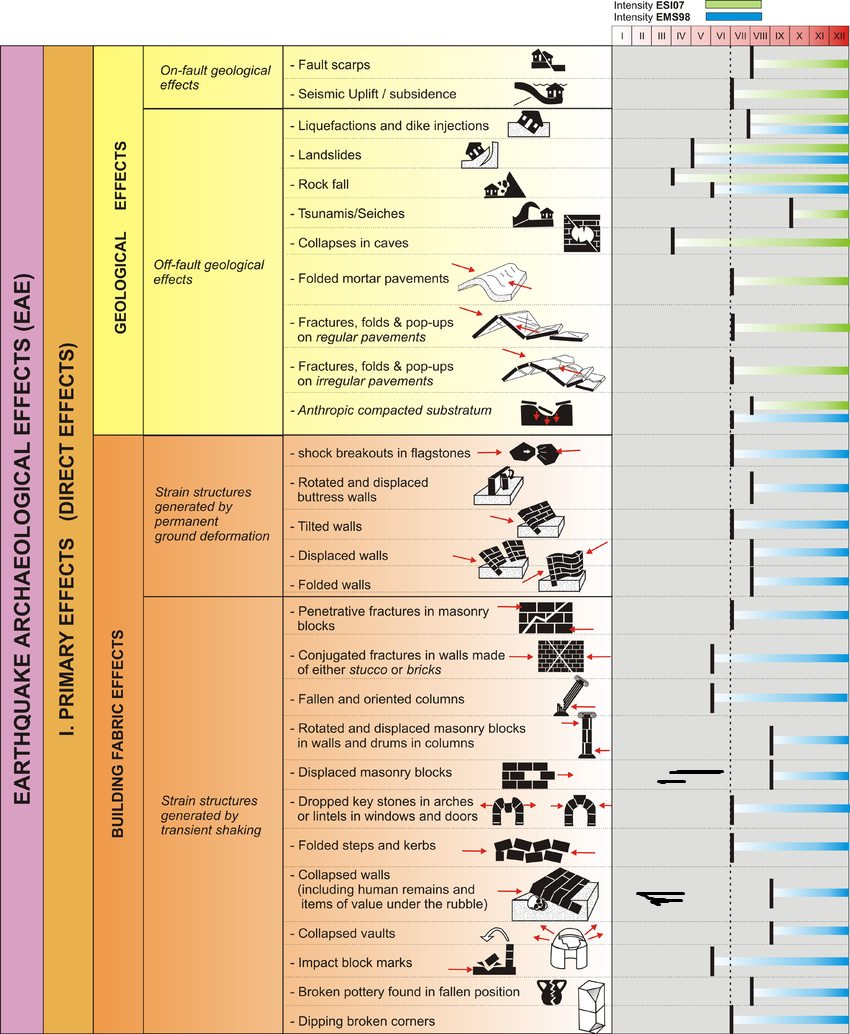 Earthquake Archeological Effects (EAE)
click on image to open a higher resolution version in a new tab
Rodríguez-Pascua et al (2013: 221-224)
| Effect | Location | Image(s) | Description | Intensity |
|---|---|---|---|---|
|
Mabbug (Manbij) |
|
|