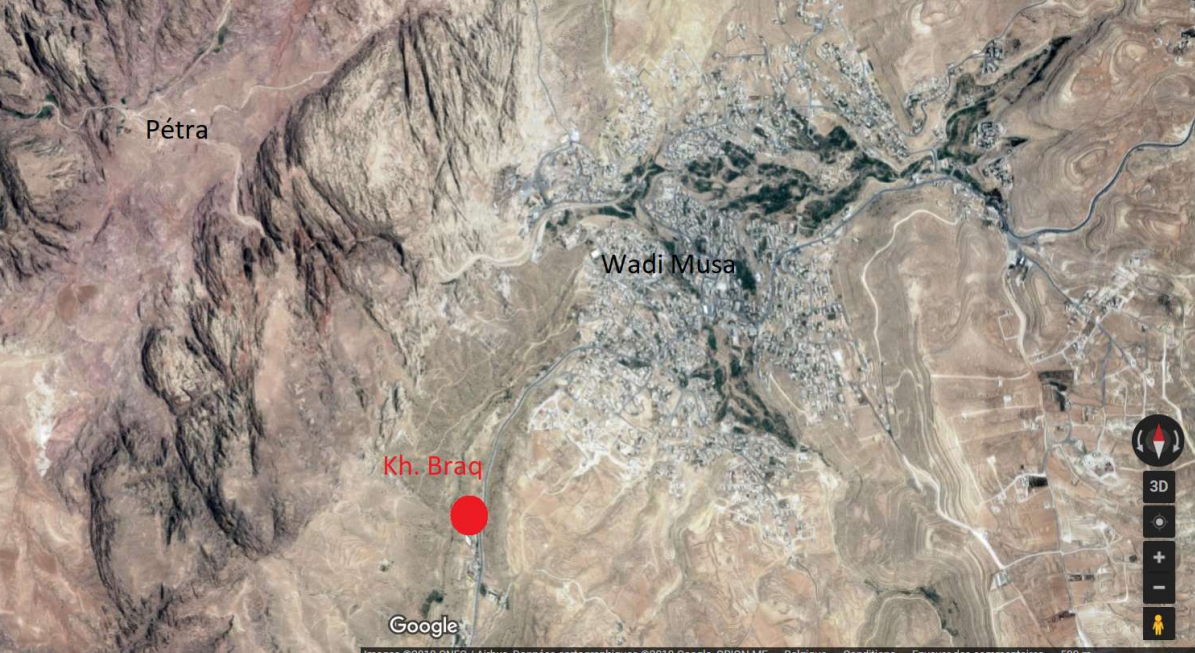
Khirbet Braq (also Khirbat Braq) is an archaeological
site associated with a
Nabataean and Roman-period
sanctuary near
Petra. The site is located
near the perennial spring of Ayn Braq in the limestone
massif of
Jabal Shara, southeast of Petra and south of modern
town of Wadi Musa. Water from the
spring was carried toward Petra in antiquity, and the
presence of this perennial water source appears to have
been an important factor in the establishment of the
sanctuary.
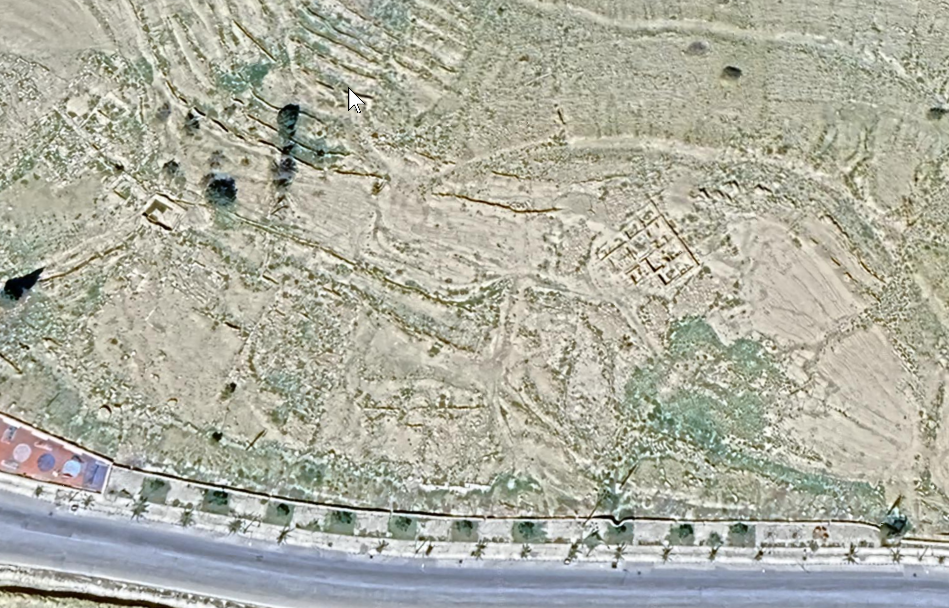
The archaeological complex includes a sanctuary with
a temple and probable
temenos, a monumental western entrance or
propylaea, an area interpreted as a
caravanserai, agricultural terraces,
cisterns, and other structures. The visible remains
are complicated by later construction and reuse,
including terrace walls, canals, cisterns, and buildings
constructed among or from the earlier remains.
Archaeological investigation of Khirbet Braq has so far
been limited. A
rescue excavation conducted by the Jordanian
Department of Antiquities in 1994-1995 investigated an
isolated building in the northwestern part of the site.
This excavation did not constitute a
systematic excavation of the sanctuary as a whole.
In 2018, researchers from the
Université Libre de Bruxelles
and al-Hussein Bin Talal University, in collaboration
with the
Jordanian Department of
Antiquities, conducted a documentation and
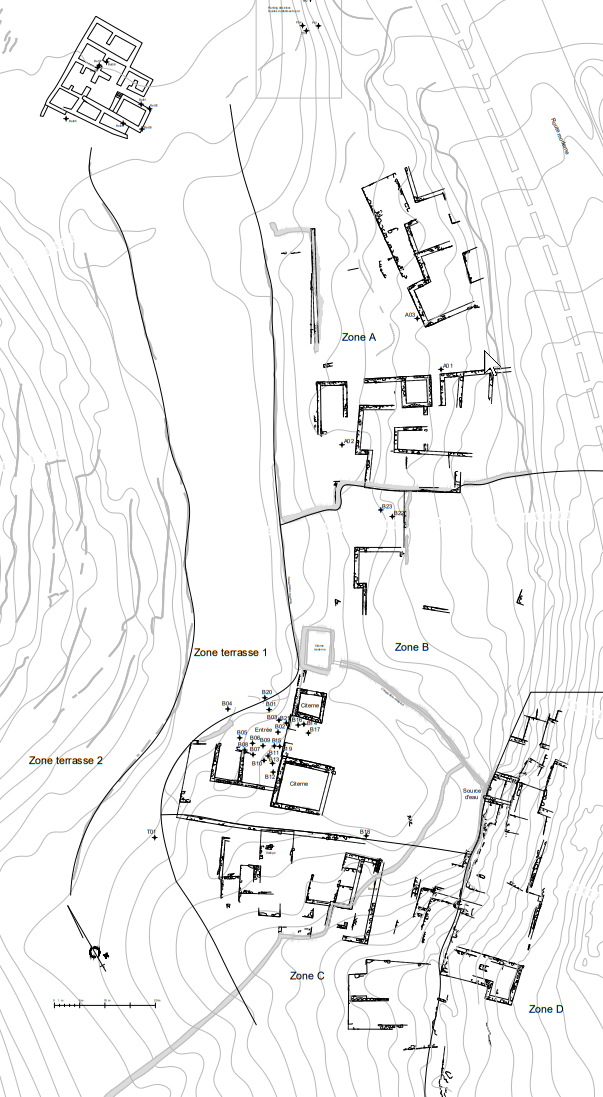
surface survey of the site. The work included a
complete survey of visible remains, documentation of
molded and figured
architectural blocks, and collection of surface
artifacts by zones and
transects. Survey areas included the caravanserai
(Area A), sanctuary temenos (Area B), temple area
(Area C), upper access to the sanctuary east of the
modern road (Area D), and agricultural terraces below
the site (T1 and T2). As of the 2025 report, published
work on Khirbet Braq continues to analyze material
collected during the 2018 survey; no systematic
excavation of the temple and sanctuary complex is
reported.
The site has also been substantially disturbed. The
2018 investigation reports repeated
looting associated with the discovery and commercial
value of high-quality architectural sculpture during the
second half of the 20th century. The sanctuary and
monumental entrance were particularly affected, with
numerous looters' pits penetrating the archaeological
remains. Earlier and later reuse of the ruins as a
source of building stone for canals, cisterns,
terrace walls, and other structures has produced
additional disturbance. Consequently, apparent
destruction, displacement of architectural blocks, or
other possible
archaeoseismic evidence at Khirbet Braq should be
evaluated with particular caution, since looting,
quarrying, reuse, and later construction provide
important
non-seismic mechanisms for disturbing the
remains.
Ceramic material collected during the 2018 surface
survey indicates a long period of activity at Khirbet
Braq. Nabataean material begins around the start of the
first millenium and is followed by substantial Roman and Late Roman assemblages. The ceramic sequence
continues into
the late 4th and first half of the 5th century CE.
Later ceramics indicate renewed or continued use during
the Islamic and Ottoman or early modern periods. No
Hellenistic pottery was identified in the surveyed
assemblage.

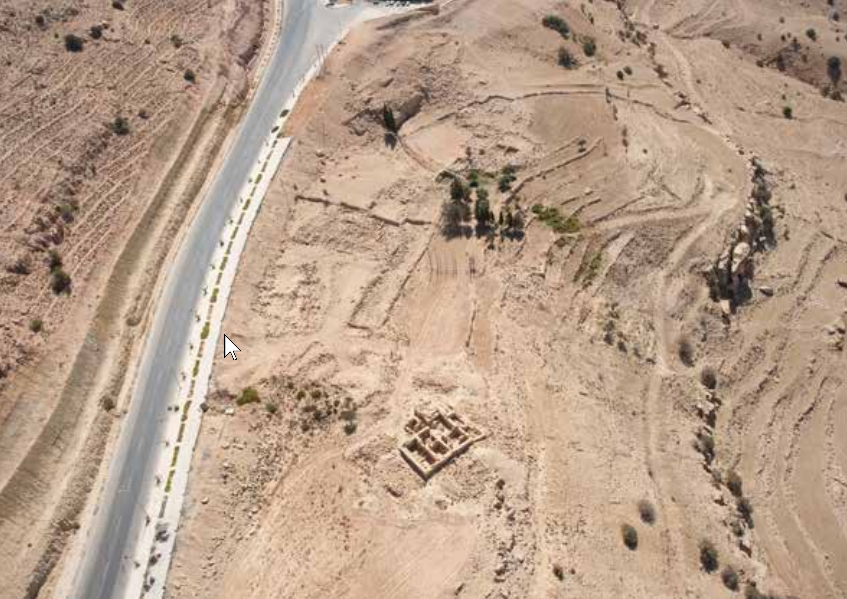 Fig. 3