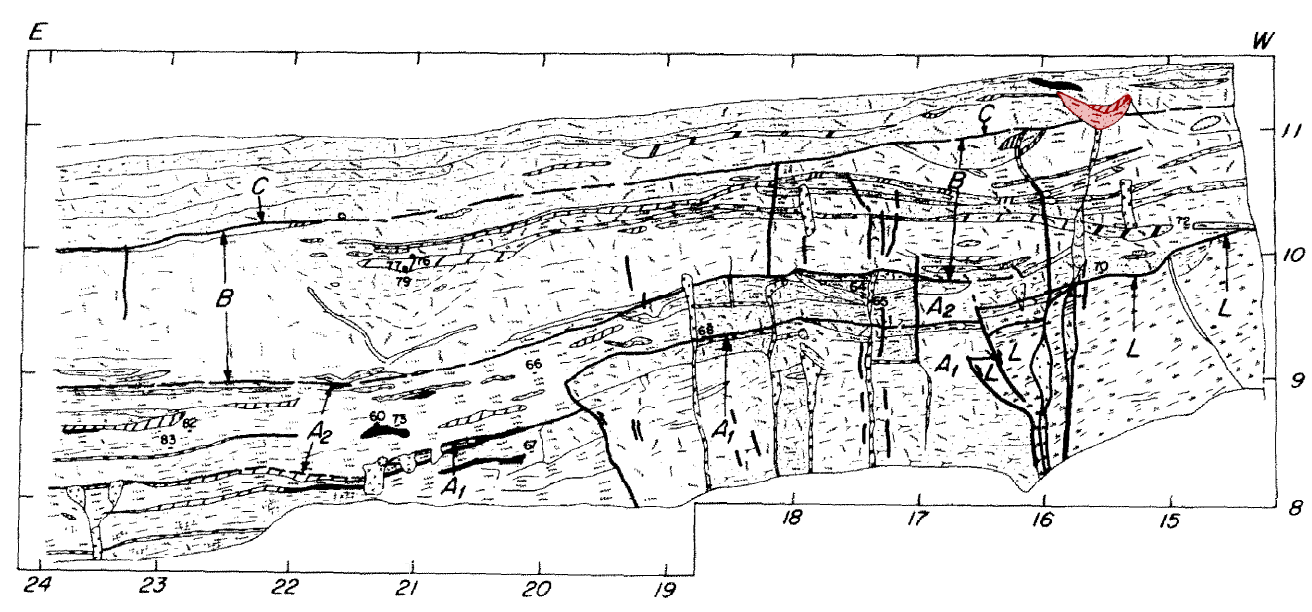
Event C

Reches and Hoexter (1981) identified limited
evidence for a younger Event C in the uppermost
sediments above Unit B, particularly in trench 3, which was
excavated across the
Jericho fault. The deformation is expressed by a
small
bowl-shaped structure with associated cracks,
similar in form to features observed in Unit B but
smaller in scale. These features indicate minor
localized disturbance of recently deposited sediments
and are interpreted as seismic in origin, although
their restricted extent and weak development suggest a
relatively small event compared to Events A and B.
Reches and Hoexter (1981) could not directly date
Event C using
pottery sherds due to the disturbance of the
upper 0.6–1.0 m by human activity and the possibly also due to the scarcity of
diagnostic material. However,
stratigraphic position
indicates that the event post-dates Event B and likely
occurred within the last few hundred years. No clear
correlation with a specific historical earthquake was
established, and the event is interpreted as a minor,
possibly localized seismic episode along the
Jericho fault.