
Tel Taanach
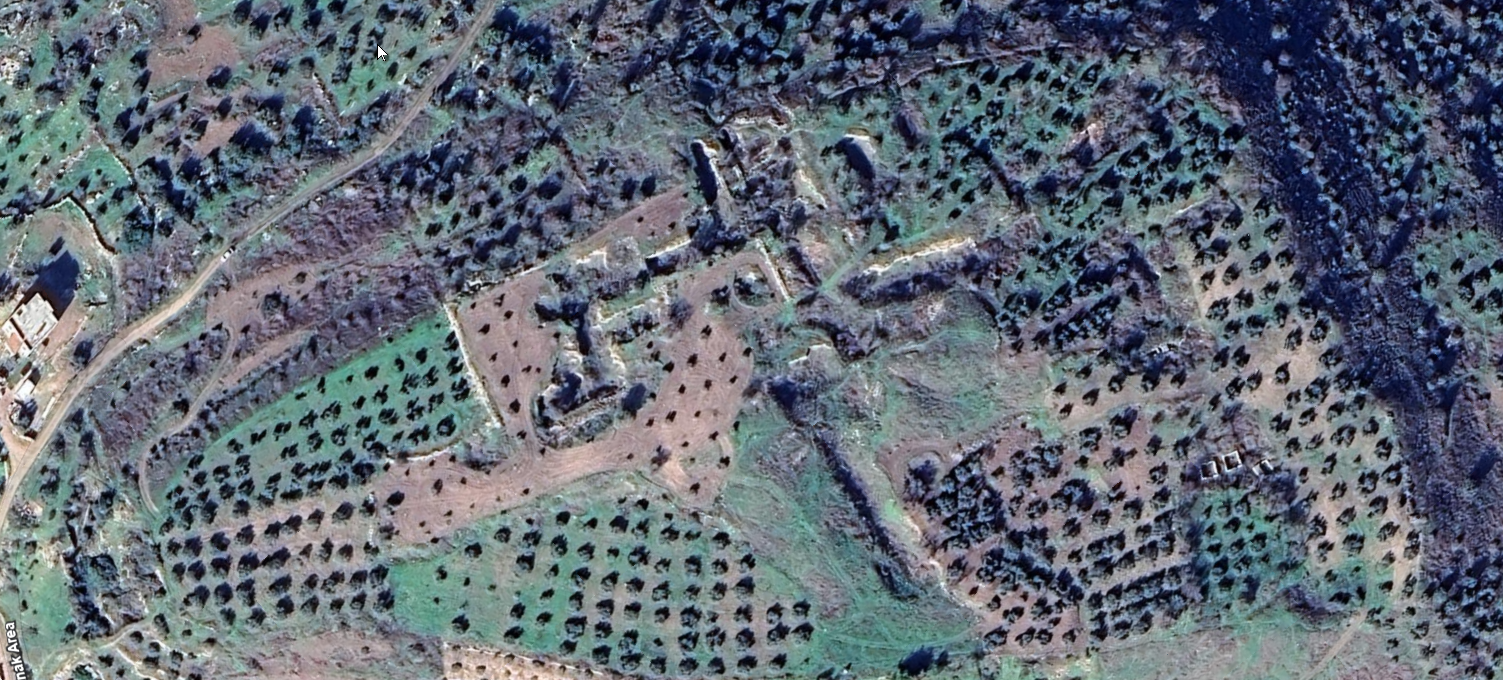 Tel Taanach
click on image to explore this site on a new tab in Google Earth
| Transliterated Name | Source | Name |
|---|---|---|
| Ta'anakh, Taanach | Hebrew | תַּעֲנָךְ |
| Ti'inik, Ti’innik | Arabic | تعنّك |
| Taanach | Greek | Θαναάχ, Θανάκ |
- from Chat GPT 5, 23 February 2026
- from Wikipedia: Tiʿinik (Tel Taʿanach)
There has never been any doubt that biblical Taanach is located at Tell Taʿannek (map reference 171.214). It is an impressive 11-acre mound rising more than 40 m above the Jezreel Valley on the southwest flanks of the Iron Hills, 8 km (5 mi.) southeast of Megiddo. The maximum north–south limit of this pear-shaped mound is 340 m. Its widest east–west limit is 110 m. Taanach lies between Megiddo and Ibleam on a northwest–southeast route. Unlike them and Jokneam, it does not guard a major pass at the head of the Jezreel Valley. By the tenth century BCE, Taanach was an Israelite administrative and religious center. It may have served the same function during the Bronze Age.
In nonbiblical literary sources, the earliest reference to Taanach is in the fifteenth-century BCE Karnak inscription describing Thutmose III's first military campaign into Asia. To reach the enemy encamped at Megiddo, one of the three routes to the Jezreel Plain was a road along Wadi Abu Nar, past modern Yaʿbad, through the Burgin Pass, which debouches into the plain 4 km (2.5 mi.) south of Taanach. Both Thutmose III in 1468 BCE and Shishak I in 918 BCE list Taanach as a city captured by their forces. J. A. Knudtzon's restoration of "Taanach" (Ta-ah-[nu-ka]) in an early fourteenth- century BCE Amarna letter (248:18) is unlikely on both archaeological and paleographic grounds. Eusebius' Onomasticon (100, 7–10) indicates that in the third century CE Taanach was a "very large village," 3 Roman miles from Legio-Maximianopolis (near Megiddo).
In biblical tradition, Taanach first achieved eminence as the site of the battle of Israel, mustered by Deborah and Barak, against the Canaanites led by Sisera (Judges 5:19). Although the king of Taanach was reported as one of the thirty-one kings defeated by Joshua (Joshua 12:21) and the city was assigned to Issachar and Asher, it was later given to Manasseh (Joshua 17:11; 1 Chronicles 7:29) who, however, failed to occupy Taanach because of the strength of the Canaanites (Judges 1:27). In time, probably not before the tenth century BCE, "When Israel grew strong, they put the Canaanites to forced labor" (Judges 1:28) and occupied (ruled) the site. In the same century, Taanach seems to have become a Levitical city (Joshua 21:25), as well as the headquarters of Baʿana, the son of Ahilud. Ahilud was the administrator of Solomon's fifth district, which included all of the Jezreel and the Beth-Shean valleys, to just beyond the Jordan River (1 Kings 4:12).
Tell Taʿannek was first excavated between 1902 and 1904 by E. Sellin, then of the University of Vienna. In three campaigns (with a total of four months of actual excavation), he opened long trenches on the mound. He was first assisted by G. Schumacher and later, after the discovery of an archive of Akkadian cuneiform tablets (see below), he was joined by F. Hrozný. Sellin's two major reports were published by 1905, and although they lacked adequate plans and photographs of buildings and pottery, he was nevertheless a perceptive observer and prompt reporter. Two years later, H. Thiersch critically reviewed the results.
The second excavation at the site was the work of a joint American expedition of the American Schools of Oriental Research and the Graduate School of Concordia Seminary, St. Louis, Missouri, directed by P. W. Lapp. In three major seasons, totaling almost six months altogether in 1963, 1966, and 1968, four areas in the southwest quadrant of the mound were excavated. The aim of the excavations was to clarify the fortifications, domestic and industrial installations, public buildings, and cultic practices.
- Tel Taanach in Google Earth
Tel Taanach
click on image to explore this site on a new tab in Google Earth - Tel Taanach on govmap.gov.il
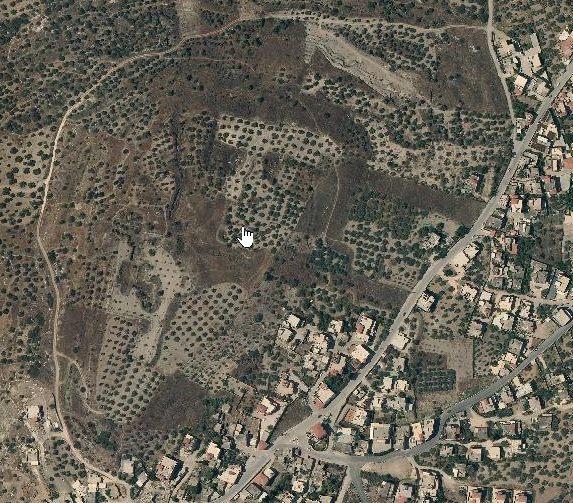 Tel Taanach
click on image to explore this site on a new tab in govmap.gov.il
- Tel Taanach Site Plan
from Stern et al. (1993 v.4)
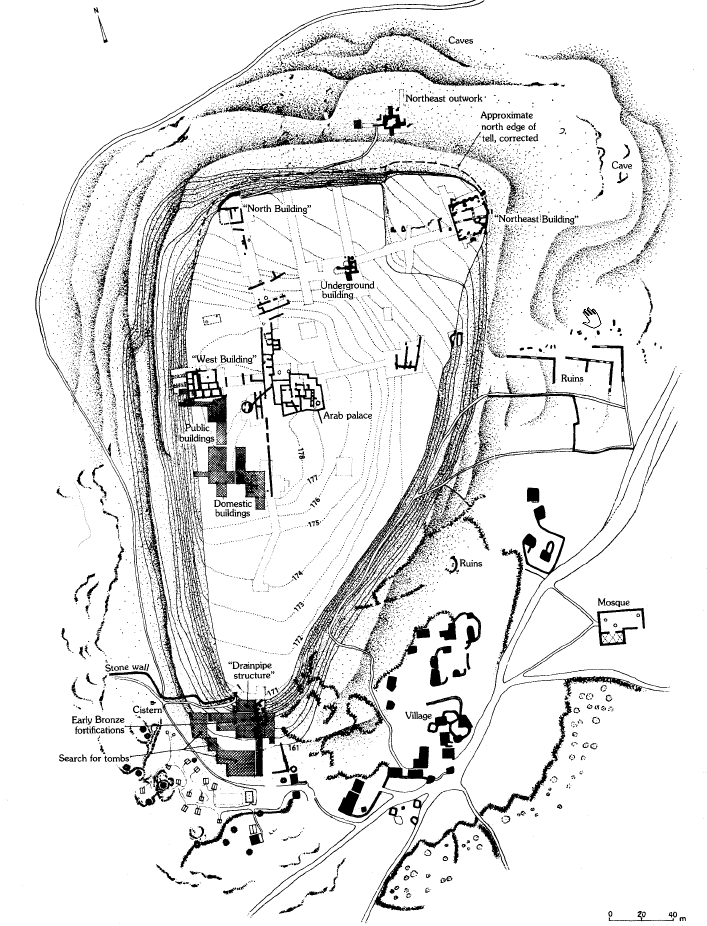 Plan of the mound and principal remains
click on image to open in a new tab
Stern et al. (1993 v.4)
- Tel Taanach Site Plan
from Stern et al. (1993 v.4)
Plan of the mound and principal remains
click on image to open in a new tab
Stern et al. (1993 v.4)
- from Meehl (1995)
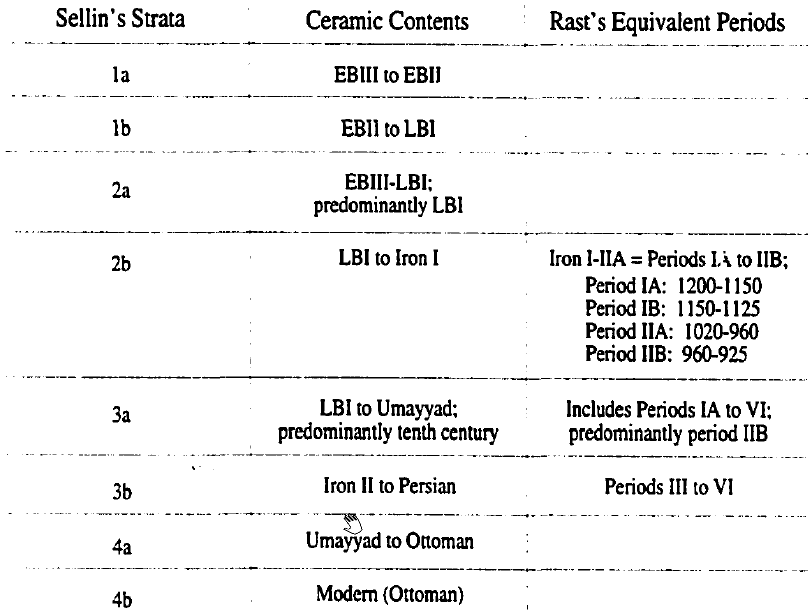 Fig. 49
Tell Ta'annek Periodization
click on image to open in a new tab
Meehl (1995)
- from Meehl (1995)
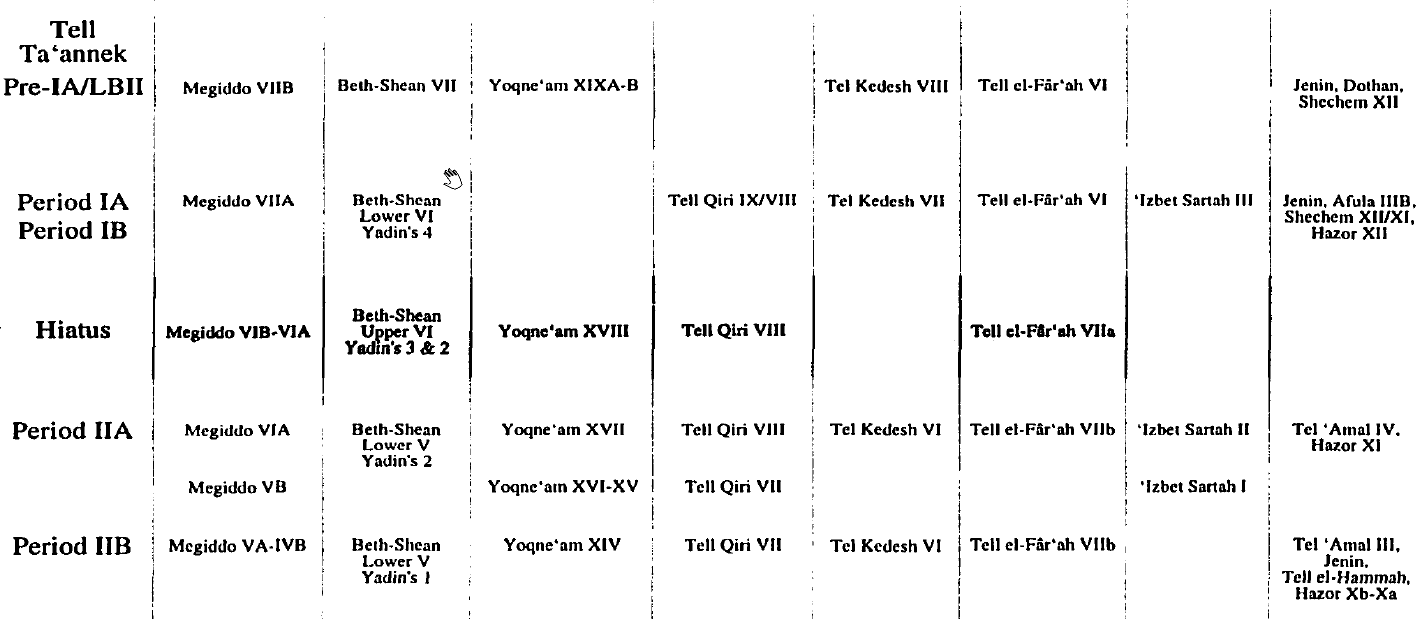 Fig. 51
Comparitive Stratigraphy of Tell Ta'annek and Related Sites
click on image to open in a new tab
Meehl (1995)
| Stratum | Period | Date | Description |
|---|---|---|---|
| I | Late Bronze Age | 15th–14th c. BCE | Includes the cuneiform archives, the archive building, and subterranean structures, followed by construction of the West Building. |
| II | Late Bronze–Iron Age | 13th–9th c. BCE | Includes the east fortress, associated outbuildings, and most of the burials identified in Sellin’s excavation. |
| III | Iron Age | 8th–6th c. BCE | Destruction of Stratum II buildings; installation of the cult stand; period marked by Greek influence. |
| IV | Medieval (Arab) | 11th–12th c. CE | Arab fortress-palace constructed on the central plateau of the mound. |
Meehl, M. W. (1995). A Stratigraphic Analysis of the Unpublished Early Iron Age Materials from Tell Taʿanek in Light of Recent Jezreel Valley Excavations
(Ph.D. diss.), Baltimore, MD.
Meehl, M. W. (1999). Tell Taannek 1963 - 1968 1 A stratigraphic analysis of the unpublished early iron age materials from Tell Taannek in the light of recent Jezreel Valley excavations
, Palestine Inst. of Archaeology, Birzeit Univ, Birzeit, 1999
Sellin, E. (1904) Tell Ta'annek (Denkschriften der Kaiserlichen Akademie der Wissenschaften, Philosophisch-Historische Klasse 50/4), Vienna
Frick, Frank S. (1978) Tell Taannek 1963-1968, Vol. IV, No. 2: The Iron Age Cultic Structure
Friend, G. (1998) Tel Taʿannek 1963–1968
(Excavations and Surveys, Palestinian Institute of
Archaeology), III: The Artifacts, 2: The Loom
Weights, Birzeit
Frick, F. S. (2000) Tel Taʿannek 1963–1968,
IV: Miscellaneous, 2: The Iron Age Cultic
Structure, Birzeit
Sellin, E. (1902) Mitteilungen and Nachrichten des Deutschen Palästina-Vereins, 13–19, 33–36
Sellin, E. (1903) Mitteilungen and Nachrichten des Deutschen Palästina-Vereins, 1–4
Sellin, E. (1905) Mitteilungen and Nachrichten des Deutschen Palästina-Vereins, 33–37
Sellin, E. (1902) PEQ 34: 301–304
Sellin, E. (1903) PEQ 35: 34
Sellin, E. (1904) PEQ 36: 98, 187, 297, 388–391
Sellin, E. (1905) PEQ 37: 176, 284
Sellin, E. (1906) PEQ 38: 115–120
Sellin, E. (1902) RB 11: 596–597
Sellin, E. (1903) RB 12: 646–647
Sellin, E. (1905) RB 14: 114–118, 270–271
Sellin, E. (1906) RB 15: 287–292
Sellin, E. (1905) Eine Nachlese auf dem Tell Taʿannek in Palästina, Vienna
Thiersch, H. (1907) Archäologischer Anzeiger, Beiblatt zum Jahrbuch des kaiserlich-Deutschen archäologischen Institut 22, cols. 311–357
Vincent, L. H. (1907) Canaan d'apres l'Exploration recente, Paris, 52–63, 181–182
Mader, A. E. (1912) Biblische Zeitschrift 10: 351–362
Lods, M. (1934) Revue de l'histoire des Religions, 129–147
Aharoni, Y. LB, 156–157
Lapp, P. W. (1964) BASOR 173: 4–44
Lapp, P. W. (1967) BASOR 185: 2–39
Lapp, P. W. (1969) BASOR 195: 2–49
Lapp, P. W. (1967) BA 30: 2–27
Lapp, P. W. (1964) RB 71: 240–246
Lapp, P. W. (1968) RB 75: 93–98
Lapp, P. W. (1969) RB 76: 580–586
Lapp, P. W. (1975) The Tale of the Tell, Pittsburgh, 91–103
Biran, A. (1969) CNI 20/3–4: 41–43
Glock, A. E. (1975) BASOR 219: 9–28
Rast, W. E. (1981) Taanach I (Review), PEQ 113: 136–137
Rast, W. E. (1989) EI 20: 166–173
Liphschitz, N. and Waisel, Y. (1980) IEJ 30: 132–136
Stech-Wheeler, T. et al. (1981) AJA 85: 245–268, 481
Pennels, E. (1983) BA 46: 57–61
Fowler, M. D. (1984) ZDPV 100: 30–34
Hestrin, R. (1987) Phoenicia and the East Mediterranean in the First Millennium B.C. (Studia Phoenicia 5, ed. E. Lipinski), Leuven, 61–77
Weippert (1988) Ortsregister
Gustavs, A. (1927) ZDPV 50: 1–18
Gustavs, A. (1928) ZDPV 51: 169–218
Albright, W. F. (1944) BASOR 94: 12–27
Malamat, A. (1961) Scripta Hierosolymitana 8: 218–227
Hillers, D. (1964) BASOR 173: 45–50
Weippert, M. (1967) ZDPV 83: 82–83
Cross, F. M., Jr. (1968) BASOR 190: 41–46
Glock, A. E. (1971) BASOR 204: 17–30
Glock, A. E. (1975) BASOR 219: 9–28
Glock, A. E. (1983) Berytus 31: 57–66
Rainey, A. F. (1977) Israel Oriental Studies: 33–64
Rainey, A. F. (1981) EI 15: 61–66
Der Manuelian, P. (1987) Studies in the Reign of Amenophis II (Hildesheimer Ägyptologische Beiträge 26), Hildesheim, 83–90
Meehl, M. W. (1995) A Stratigraphic Analysis of the
Unpublished Early Iron Age Materials from Tell
Taʿanek in Light of Recent Jezreel Valley
Excavations (Ph.D. diss.), Baltimore, MD
Friend, G. (1998) Tel Taʿannek 1963–1968
(Excavations and Surveys, Palestinian Institute of
Archaeology), III: The Artifacts, 2: The Loom
Weights, Birzeit
Frick, F. S. (2000) Tel Taʿannek 1963–1968,
IV: Miscellaneous, 2: The Iron Age Cultic
Structure, Birzeit
Review of Tel Taʿannek 1963–1968,
BASOR 329 (2003), 81–82
Zarzecki-Peleg, A. (2005) Tel Megiddo during
the Iron Age I and IIA–IIB: The Excavations of
the Yadin Expedition at Megiddo and Their
Contribution for Comprehending the History of
the Site and Other Contemporary Sites in
Northern Israel, 1–2 (Ph.D. diss.),
Jerusalem (English abstract)
ABD 6 (1992), 287–290
Tushingham, A. D. (1992) BASOR 286: 15–18
Daviau, P. (1993) Houses, Sheffield,
207–209, 391
Beck, P. (1994) From Nomadism to Monarchy,
Jerusalem, 352–381
Beck, P. (2002) Imagery and Representation,
Tel Aviv, 392–422
Nigro, L. (1994) ZDPV 110: 168–180
Nigro, L. (2004) Archéologie dans l'Empire
Ottoman autour de 1900: entre politique,
économie et science, Brussel, 215–229
Rast, W. E. (1994) Scripture and Other
Artifacts, Louisville, KY, 355–365
Shamma, A. Z. (1994) Backdirt 2: 10
Taylor, J. G. (1994) BAR 20/3: 52–61,
90–91
Levin, M. (1995) ASOR Newsletter 45/2: 28
Ziadeh-Seely, G. (1995) Antiquity 69/266:
999–1009
Ziadeh-Seely, G. (1995) Levant 27:
209–245
Ziadeh-Seely, G. (1999) Archaeology,
History and Culture in Palestine and the
Near East, Atlanta, GA, 127–150
Ziadeh-Seely, G. (2002) A Historical
Archaeology of the Ottoman Empire, New
York, 79–92
Ezzughayyar, A. & al-Zawahra, M. (1997)
Archaeozoologia 8: 71–87
Glock, A. E. (1997) OEANE 5, 149
Ziese, M. (1997) ASOR Newsletter 47/2: 54;
47/3: 16
Finkelstein, I. (1998) Levant 30:
167–174
Finkelstein, I. (1998) TA 25: 208–218
Lemche, N. P. (1998) BASOR 310:
19–24
Blakely, S. (1999) ASOR Newsletter
49/1: 17–19
Lapp, N. L. (1999) Archaeology, History
and Culture in Palestine and the Near
East, Atlanta, GA, 151–163
Rainey, A. F. (1999) IEJ 26:
153*–162*
Bietak, M. & Kopetzky, K. (2000)
Synchronisation, Wien, 122–123
Hadley, J. M. (2000) The Cult of Asherah
in Ancient Israel and Judah, Cambridge
Naʿaman, N. (2000) UF 32: 373–383
Naʿaman, N. (2004) IEJ 54: 92–99
Knauf, E. A. (2001) The Land That I Will
Show You, Sheffield, 119–134
Niemann, H. M. (2002) VT 52: 93–102
Niemann, H. M. (2003) UF 35:
430–434
Horowitz, W. et al. (2002) JAOS 122:
760–761
Bonfil, R. (2003) Tel Qashish, Jerusalem,
319–326
Marquez Rowe, I. (2003) A History of
Ancient Near Eastern Law 1, Leiden,
737–743
Goren, Y. et al. (2004) Inscribed in
Clay, Tel Aviv, 246–247
Kreuzer, S. (2004) Protokolle zur Bibel
13: 107–130