Araban is a town and district in Gaziantep Province
in southeastern Turkey, situated in the northern
borderlands between Anatolia, Syria, and upper
Mesopotamia. It lies on the Araban Çayı, a tributary
on the right bank of the Euphrates, between Kaisun
and Dülük, in a corridor long shaped by movement
between the Euphrates basin, northern Syria, and
the Anatolian interior. In modern administrative
terms it is a district center, but historically its
importance derives from its control of routes and
river crossings within this frontier landscape.
The wider Araban area preserves evidence of earlier
occupation and long-term regional significance.
Classical and Late Antique associations have been
proposed for the district and its environs, and the
region is notable for the Roman mausoleums of
Araban, indicating substantial monumental activity
in the Roman imperial period. Pleiades associates
the broader historical zone with forms such as
Araban, Arban, Oraba, Horaba, and Castellum Arabum,
suggesting that the name and its variants preserve
an older geographical memory within the northern
Syrian–Mesopotamian frontier.
In the medieval period, Araban, often referred to as
Raban, functioned as a fortified Byzantine frontier
citadel controlling both the river crossing and the
road linking Ranculat to Marash. At the time of the
foundation of the County of Edessa, it belonged to
the Armenian ruler Kogh Vasil (Basil the Robber),
together with the nearby stronghold of Kaisun. In
1112, following a dispute with Tancred, prince of
Antioch, the fortress was briefly taken and then
returned. After the deaths of both rulers that same
year, control passed to Vasil Dgh'a, who sought
alliances with regional powers, including Aq Sonqor
Bursuqi. Baldwin of Bourg seized the site in 1115,
and it later changed hands again, being taken by
Sultan Masʿūd in 1150.
The later history of the site reflects the turbulent
political conditions of the region. The fortress was
burned during the Mongol incursions of the 13th
century, subsequently returned for a time to the
Armenian kingdom, and eventually came again under
Muslim rule. These episodes underscore its enduring
strategic value within a contested frontier zone.

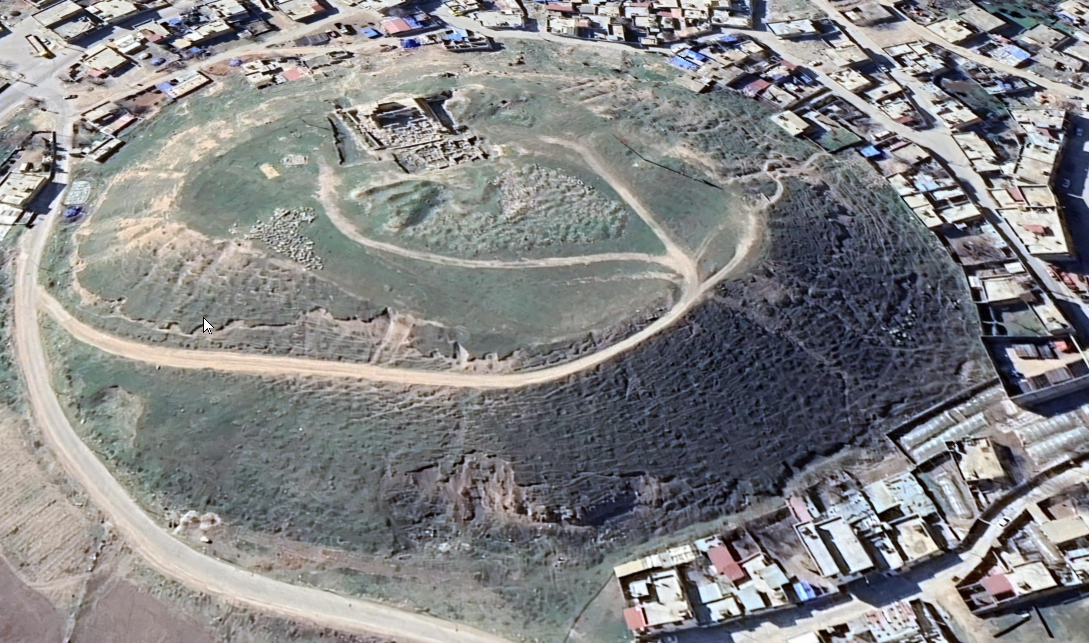 Raban
Raban
