Open this page in a new tab

Historical Palestine

Palestine

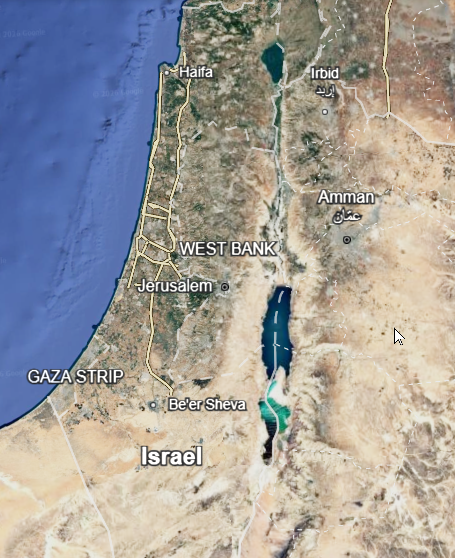
click on image to explore in a new tab in Google Earth


Names
Transliterated Name Source Name
Palestine Modern English
Palaistinē Ancient Greek Παλαιστίνη
Palaestina Latin Palaestina
Syria Palaestina Roman Latin / Provincial Name Syria Palaestina
Palaestina Prima Late Roman / Byzantine Παλαιστίνη Πρώτη
Palaestina Secunda Late Roman / Byzantine Παλαιστίνη Δευτέρα
Palaestina Tertia Late Roman / Byzantine Παλαιστίνη Τρίτη
Palaestina Salutaris Late Roman / Byzantine Παλαιστίνη Σαλουταρία
Filastin Arabic فلسطين
Filasṭīn Classical Arabic / Scholarly Transliteration فلسطين
Jund Filastin Early Islamic / Arabic جند فلسطين
Jund Filasṭīn Early Islamic / Scholarly Transliteration جند فلسطين
Palestina Medieval Latin Palestina
Palestine British Mandate / English
Filasṭīn Modern Arabic فلسطين
Introduction
Introduction

Palestine is a historical region of the southern Levant whose geographical and administrative meaning has changed considerably through time. The name long predates the modern political boundaries of the region and has been used in different periods as a geographical designation, a Roman and Byzantine provincial name, an Early Islamic administrative district, and a modern territorial and political name. Consequently, references to "Palestine" in historical sources must be interpreted according to the geographical and administrative terminology of the period in which the source was composed.

The Greek geographical name Palaistinē was already in use in Classical Antiquity. Under Roman rule, the region initially included the province of Judaea. During the second century CE, the provincial name Syria Palaestina came into use. Its capital was Caesarea Maritima, and the province included much of the southern Levant.

During Late Antiquity, Roman and Byzantine administrative reforms divided the region among several provinces bearing the name Palestine. Palaestina Prima, governed from Caesarea Maritima, included Judaea, Samaria, and much of the southern coastal plain. Palaestina Secunda, governed from Scythopolis (Beth Shean), encompassed Galilee, the Jezreel Valley, and portions of the Jordan Valley and Transjordan. Palaestina Tertia, also known as Palaestina Salutaris, extended across the Negev and into parts of southern Transjordan and Sinai. Thus, "Palestine" in Late Antique sources can refer either broadly to the region or more specifically to one or more of these administrative provinces.

Following the Muslim conquest of the Levant in the seventh century CE, the Arabic name Filastin continued the older geographical name. Much of Byzantine Palaestina Prima became Jund Filastin, one of the principal military and administrative districts of Bilad al-Sham. Lydda initially served as an administrative center before the establishment of Ramla in the early eighth century CE, after which Ramla became the capital of the district. Northern areas, including much of Galilee and the Jordan Valley, belonged instead to Jund al-Urdunn. The boundaries of Early Islamic Filastin therefore did not correspond exactly with either Byzantine Palestine or modern political boundaries.

During the Crusader, Ayyubid, Mamluk, and Ottoman periods, Palestine remained an important geographical designation, although it generally did not correspond to a single continuous administrative province. Under Ottoman rule the territory was divided among changing districts and provinces, including the districts centered on Jerusalem, Nablus, and Acre. The name nevertheless continued to be used geographically for the southern Levant.

Following the collapse of the Ottoman Empire after World War I, Palestine acquired a more precisely defined territorial meaning under the British Mandate for Palestine. The political geography of the region changed substantially after the termination of the Mandate in 1948 and again after the 1948 and 1967 Arab-Israeli wars. The modern use of "Palestine" therefore exists alongside a much older historical and geographical terminology.

For the purposes of the Dead Sea Earthquake Catalog, "Palestine" should therefore be understood according to the historical context of the source being discussed. Ancient, Byzantine, Syriac, Arabic, and medieval authors could use Palestine, Palaestina, or Filastin for different geographical or administrative territories. A statement that an event occurred "in Palestine" consequently should not be assumed to refer to modern political boundaries without additional geographical information from the source.

Aerial Views
Aerial Views

Aerial Views

  • Syria in Google Earth

Textual Chronology
16 January 749 CE Sabbatical Year Earthquakes - Holy Desert Quake South

Discussion

Discussion

17 January 749 CE Sabbatical Year Earthquakes - Holy Desert Quake North

Discussion

Discussion

Second Al-Aqsa Earthquake - 754-785 CE - possibly 775-785 CE

Discussion

Discussion

Textual Seismic Effects
16 January 749 CE Sabbatical Year Earthquakes - Holy Desert Quake South

  • Seismic Effects follow Williams (2024) in partitioning effects between the Holy Desert N, Holy Desert S, and Talking Mule Earthquake.
Effect                                                      Location Image(s) Description
  • Collapsed Walls
  • Fatalities (Collapsed Walls)
Palestine
  • "In the 6th year of Constantine, there was a great earthquake in Palestine, by the Jordan, and in all of Syria; in the month of January at the 4th hour. An innumerable multitude perished - many tens of thousands. Churches and Monasteries collapsed. The worst was in the wilderness of the Holy City (Jerusalem)." – Paul the Deacon

  • "Anno Mundi 6238, divine incarnation year 738. In the 6th year of Constantine there was a powerful earthquake in Palestine, by the Jordan, and in all of Syria in January, at the 4th hour. Thousands died, an innumerable multitude perished, churches and monasteries collapsed, and it was worst in the desert of the Holy City." – Anastasius Bibliothecarius

  • "[A.M. 6238, AD 745/6] II In this year there was a great earthquake in Palestine, by the Jordan and in all of Syria on 18 January, in the 4th hour. Numberless multitudes perished, churches and monasteries collapsed, especially those in the desert of the Holy City. IIa

    II In the same year a pestilence that had started in Sicily and Calabria travelled like a spreading fire all through the 14th indiction1 to Monobasia2, Hellas, and the adjoining islands, thus scourging in advance the impious Constantine and restraining his fury against the Church and the holy icons, even though he remained unrepentant like Pharaoh of old. This disease of the bubonic plague spread to the Imperial City in the 15th3 indiction. All of a sudden, without visible cause, there appeared many oily crosslets upon men's garments, on the altar cloths of churches, and on hangings. The mysteriousness of this presage inspired great sorrow and despondency among the people. Then God's wrath started destroying not only the inhabitants of the City, but also those of all its outskirts. Many men had hallucinations and, being in ecstasy, imagined to be in the company of certain strangers of terrible aspect who, as it were, addressed in friendly fashion those they met and conversed with them. Taking note of their conversation, they later reported it. They also saw the same men entering houses, killing some of the inmates, and wounding others with the sword. Most of what they said came to pass just as they had seen it.

    In the spring of the 1st indiction4 the plague intensified and in the summer it flared up all at once so that entire households were completely shut up and there was no one to bury the dead. Because of extreme necessity a way was devised of placing planks upon animals saddled with four paniers each5 and so removing the dead or piling them likewise one upon the other in carts. When all the urban and suburban cemeteries had been filled as well as empty cisterns and ditches, and many vineyards had been dug up and even the orchards within the old walls6 to make room for the burial of human bodies, only then was the need satisfied7. When every household had been destroyed by this calamity on account of the impious removal of the holy icons by the rulers, straight away the fleet of the Hagarenes sailed from Alexandria to Cyprus, where the Roman fleet happened to be. The strategos of the Kibyraiots fell upon them suddenly in the harbour of Keramaia8 and seized the mouth of the harbour. Out of 1,000 dromones9 it is said that only three escaped. IIb
    Footnotes

    a Cf. Agapios, 261 (Jan.): earthquake in Palestine, esp. at Tiberias, where more than 100,000 were killed.

    Mich. Syr. ii. 509-10; Chr. 1234, 254. 33 ff. (without date): damage at Damascus, Tiberias, Mabbug, and elsewhere.

    Ps.-Dion. Chron. 42-3, AG 1059: Chalcedonian bishop of Mabbug crushed with his flock.

    b Cf. Nik. 67. 4-43,- 68. 3-11. Kleinchronik, 1. 17 (Schreiner, i. 45) abbreviates Theoph. as regards the plague.


    1 AD 745/6.

    2 Monemvasia on the east coast of the Peloponnese.

    3 dB mistakenly prints '5th'.

    4 AD 747/8. This is the date given for the plague in Kleinchronik, 2. 4 (Schreiner, i. 47).

    5 Reading Sia £AIA V aayp novp.4vu v vno TETpaKavdr/Xov. For the meaning of this expression see I. Rochow, Klio, 69 (1987), 571-2.

    6 The Constantinian walls.

    7 On the plague see also Theodore Studites, Laud. Platonis, PG 99: 805D. Nik. Antirrh. Ill, PG 100: 496B-D, adds that the emperor betook himself during the plague to the suburbs of Nicomedia. So also Geo. Mon. 754 and Epist. ad Theophilum, PG 95: 364B.

    8 Situation unknown. See Sir George Hill, A History of Cyprus, i (Cambridge, 1940); 262 n. 5; L. Philippou, KvnpiaKai Sirovhal, 6 (1942), 1-5, who believes the battle did not take place in Cyprus. According to Nik. the conflict was initiated by Constantine, who sent a fleet against the Arabs.

    9 Thirty in Anast., probably correctly.

    " – Theophanes

  • "1. In the reign of Copronymus, an earthquake occurred in Palestine and the Jordan and all the Syrian land. And many tens of thousands, innumerable people indeed, are dead, and churches and monasteries are fallen.

    And at the same time a pestilential disease, starting from Sicily and Calabria and spreading like a fire, crossed to Greece and the islands. ...12.

    Footnotes

    12 Earthquake in Levant and plague at Cpl. in 747; cf. Nic. 62. 24-64. 9; Theoph. 422. 25-424. 3; Cedr. ii. 7. 17-9. 1.

    GC is closer to Theophanes than to Nicephorus in that it records an earthquake in the Levant before turning to the plague, but both the other two have more information than is preserved in GC (including an exact date for the earthquake in Theophanes). The earthquake is not mentioned by Nicephorus, but he regularly omitted information that was available in the chronicle source which he shared with Theophanes. This common source did record some major events in the near east, including the earthquake of 750 (Nic. 64. 22-65. 7, Theoph. 426. 16-26; see below on GC 13), so that it could have contained a reference to the earthquake of 747. Theophanes also had an independent eastern chronicle source, which has parallels with Syriac chronicles down to 746, and contained further information probably added by a writer in Palestine c.780 (see E. W. Brooks, 'The Sources of Theophanes and the Syriac Chroniders', BZ xv, 1906, 578-87), but the example of the 750 earthquake shows that not all eastern information in Byzantine chronicles should be traced to it.

    GC 12, as it stands, cannot have been the common source of Theophanes and Nicephorus because of their fuller treatment (cf. Whitby, 'Chronographer' 11-12). However, GC's account of the plague is disordered when compared with the other versions, in that it mentions the burial arrangements for the victims before the apparition of oily crosses on the garments of the afflicted, and it does not contain any of the anti-iconoclast interpretations of the plague included by the orthodox authors. One must assume, therefore, either (i) that it is an inaccurate derivation from Theophanes by an excerptor who deliberately eliminated Theophanes' anti-iconoclast interpretation of the plague, although this would run counter to the excerptor's use of the epithet Copronymus for Constantine; or (ii) that it is an inaccurate and abbreviated version of the common source used by Theophanes and Nicephorus, the distortions being caused by the excerptor's belief that he was running out of space on folio 242r (cf. p.192 above). We find the latter assumption easier, but for the alternative, see Mango, Nicephorus' 546-7.

    Note by Williams: Copronymus or Copronym is a play on words with the name of Constantine combining the greek words κόπρος (kopros) which means feces and ὄνομα (onoma) which means name. The hostility of the authors who use this epithet against "Emperor Poop-onymous" derives from bitter doctrinal disputes within Christendom such as disputes over iconoclasm.

    " – Megas Chronographos

  • "Year 6 - There was a great earthquake in Palestine, by the Jordan and in all of Syria on 18 January at the 4th hour. An innumerable multitude perished - thousands. Churches and Monasteries collapsed. The worst was in the wilderness by the Holy City (Jerusalem)." – George Cedrenus

  • "Earthquake in Palestine." – Minor Chronicles

  • "QAHIR DEMANDS A TRUE HISTORY OF THE CALIPHATE

    The following story originates from Muhammad ibn Ali al-Misri, the historian and native of Khurasan, who was an intimate of Qahir:
    ... It was Mahdi who rebuilt the mosque at Mecca and that of the Prophet at Medina in the form they stand today, and he rebuilt Jerusalem, which had been devastated by earthquakes.
    " – al-Masʿudi

  • "Jerusalem (Baitu-l-Maqdis)

    ... The Masjidu-l-Aqsa4 (the Furthest Mosque) lies at the south-eastern corner of the city. Its foundations were laid by David, each stone being ten cubits, or a little less in length. The stones are chiselled, finely faced, and jointed, and of hardest material. On these foundations ‘Abdu-l-Malik subsequently built,5 using smaller but well-shaped stones and battlements were added above. This mosque was even more beautiful] than that of Damascus,1 but in the days of the ‘Abbäsides an earthquake occurred which threw down most of the main building; all, in fact, except the part around the mihräb. Now when the Caliph of that day2 obtained news of this, he enquired and learned the not all the sums in the treasury would suffice to restore the mosque to its former state. So he wrote to the Governors of the Provinces and to other Commanders, directing that each should undertake the building of a colonnade. The order was carried out, and the edifice rose firmer though less elegant than it had been; and the more ancient portion remained, even like a beauty spot, in the midst of the new.
    Footnotes

    4 So. called from Qur'än xvii.l. The name al-Aqsä originallÿ applied to the whole temple area, but is now generally confined to the building at the south end of the Haram. It was built by order of the caliph ‘Umar, on the site of Justinian’s church of St. Mary.‘ The great sanctuary of Jerusalem is now known as the Mosque of ‘Umar.

    5 The Mosque was commenced in A.D. 683, and completed in three years.

    1 MS. C adds: For during the building of it they had for a rival and as a comparison the great church (the Church of the Holy Sepulchre) belonging to the Christians at Jerusalem, and they built this to be even more magnificent than that other.

    3 Said to have been the caliph al-Mahdi (AD. 774-785); but after the great earthquake, it was al-Ma’mün who restored the buildings of the sanctuary. His name is still rend on a Cufic inscription on the Dome of the Rock.

    " – al‑Maqdisi

  • "But in the days of the Abbasides occurred the earthquakes which threw down most of the main building; all, in fact, except that portion round the Mihrab. Now when the Khalifa of that day obtained news of this, he enquired and learned that the sum at that time in the treasury would in no wise suffice to restore the mosque. So he wrote to the Governors of the Provinces and to other Commanders, that each should undertake the building of a colonnade." – al‑Maqdisi

  • "All these events took place at the time of the first earthquake, in the month of Ramadan of 130. God knows best.
    In that year there was a prodigious earthquake in Sham: we know this from Ibn Jusa, whose source is Muhammad ibn Shaddad ibn Aws al-Ansary, whose source in turn is his grandfather. According to this chain of witnesses it is known that in the year 130 there was the most violent earthquake in Jerusalem. Many of the faithful (Ansars or no) were victims of it. The houses of Shaddad ibn Aws fell on him and his guests; Muhammad ibn Shadda was saved, but he lost his property under the ruins, recovering only the Prophet's sandals. According to another report, Abu Ja'far al-Mansur, the prince of believers, was asked, "O prince of believers, the western and eastern parts of the mosque were damaged during the earthquake of 130: if you would have the damage repaired, that would be very good." The caliph replied that he had no money. Therefore they took off the plates of silver and gold which had covered the doors since the caliphate of Abd al-Malik ibn Marwan and broke it down to the last dinars and drachmas, which financed the rebuilding.
    " – al-Dhahabī

  • "On the authority of 'Abd ar Rahman ibn Muhammad ibn Mansur ibn Thabit, from his father, who had it from his father and grandfather. In the days of 'Abd al Malik, all the gates of the mosque were covered with plates of gold and of silver. But in the reign of the Khalif Al Mansur, both the eastern and the western portions of the mosque had fallen down. Then it was reported to the Khalif, saying,
    O commander of the faithful, verily the earthquake in the year 130 (a.d. 746) did throw down the eastern part of the mosque and the western part also; now, therefore, do thou give orders to rebuild the same and raise it again.
    Khalif replied that as there were no moneys in his treasury, (to supply the lack of coin) they should strip off the plates of gold and of silver that overlaid the gates. So they stripped these off and coined therefrom Dinars and Dirhams, which moneys were expended on the rebuilding of the mosque until it was completed. Then occurred a second earthquake, and the building that Al Mansur had commanded to be built fell to the ground. In the days of the Khalif Al Mahdi, who succeeded him, the mosque was still lying in ruins, which, being reported to him, he commanded them to rebuild the same. And the Khalif said that the mosque had been (of old) too narrow, and of too great length - and (for this reason) it had not been much used by the people — so now (in rebuilding it) they should curtail the length and increase the breadth. Now the restoration of the mosque was completed on the new plan during the days of his Khalifate." – Jamal Ad Din Ahmad

  • "In that year, there was a strong earthquake in Syria which destroyed Jerusalem. The sons of Shaddad ibn Aws died there. The inhabitants were forced to take refuge in the desert, where they stayed for forty days. It is said to have happened in the year 131 (al-Nujum al-Zdhira 1.311)" – Ibn Taghri Birdi

  • "The story of the sacred rock in Jerusalem on the night of the earthquake1a, according to Abu 'Umayr who takes it from 'Jundub who refers to Rustum al-Farisi:
    During the first earthquake, I was asked to give the call to prayer, and I replied that it was none of my business. We asked the same thing when the second happened and I made the same response. At the third shock, I was very scared, I approached the mosque. All the houses were destroyed. One of the guardians of the sacred rock asked me:
    Quickly, go get me some news about my family and I will tell you the miracle!
    I went to find out and brought him some news. So he said to me:
    The dome rose, we could see the starry sky, he rested. We heard strangers giving each other orders: this way, again, a little more, as long as it has not been placed correctly
    According to another version (from 'Ubayd Allah ibn Muhammad al Qaramâny) D amra and according to Rustum himself,:
    There were 10 guards at each gate; when I brought him news of his family, my guardian told me that the dome had been removed, that we had seen the stars and that before my return, we heard rustling, then a voice saying "Put down" three times, and the dome was put back in its place.
    Al Walld ibn Hamâd relates according to Abd-Ar-Rahman ibn Muhammad ibn Al-Mançûr ibn Thâbit who reports the following version that he got from his father and grandfather:
    Abu 'Uthmân led the Ramadan vigil, after the Qyâm prayer (breaking the fast), on the black square. During the vigil, he heard the crash of an earthquake, the cries of distress of people across the city. It was a dark, cold night, full of rain and wind. He heard a voice (without seeing the person) which said:

    Lift it gently, in the name of God and the dome was lifted so as to reveal the stars if one felt even the raindrops on the face, to the call for prayer. Afterwards the voice said Put it down, put it down, for God's sake. And the dome took its place again.
    According to another report1c, Abu Ja'far al-Mançûr the prince of the believers was asked:
    Oh, Prince of Believers, the West and East parts of the mosque have been damaged during the 130 earthquake, if you have us repair this damage, it will be very good
    The caliph replied that he had no money.

    Then the silver and gold plates that covered the doors were removed, since the caliphate of 'Abd-al-Mâlik ibn Marwan, denarii (dinars) and drachmas (dirhems) were minted which were used to finance reconstructions.

    Under the caliphate of Al-Mahdi the second earthquake occurred, which destroyed the repairs that had just been made. The caliph received complaints from Jerusalem townspeople and said:
    This building is in poor condition, it can no longer house anyone, it must be rebuilt, shorter and wider.
    The mosque was therefore rebuilt. Al Mahdi was invested [declared Caliph?] in 158, on 6 Dhulhaidja.
    Footnotes

    1a Al 'Ulimi [Mujir ad-Din], al Uns, 1/237, 238

    1c These are earthquake events between 140 and 158 H. (757-774). See al 'Ulimi, al Uns, 1/282,283.

    " – Mujir al‑Din al‑ʿUlaymi

17 January 749 CE Sabbatical Year Earthquakes - Holy Desert Quake North

  • Seismic Effects follow Williams (2024) in partitioning effects between the Holy Desert North, Holy Desert South, and Talking Mule Earthquakes.
Effect                            Location Image(s) Description(s)
  • Collapsed Walls
  • Fatalities (Collapsed Walls)
Palestine
  • "This earthquake destroyed the city of Tiberius except for house of a man named 'Isa. It overthrew thirty synagogues and wonderful natural things. The thermal baths - that wonderful building - built by Solomon the son of David, collapsed and was destroyed. There was a spring with purgative water and amazing constructions above it, surrounded by hotels (inns) for the sick who sought to be healed. There were clay pots artistically made and arranged. On each pot was written how many times it purged the bowels of those who drank from it. Each person chose a pot according to how much they wanted to drink. All these buildings are gone." - Michael the Syrian

  • "This earthquake destroyed the city of Tiberias, except for the villa of a man named `Isa Galba. It knocked down thirty synagogues of the Jews and some wonderful natural sites there. The baths, a fine structure erected by Solomon the King) collapsed and fell down. There was there a healing spring given by God for the health of men, above which marvellous buildings had been erected and all around it was everything necessary for the use of those who came in search of a purge. They say that placed there were earthen jugs skillfully arranged, on each one of which was written how many times it flushed the stomach of the one who drank it. Thus each person chose a jug according to how much he desired to be purged. All those buildings have now been destroyed and expunged." - Chronicon Ad Annum 1234

  • "many people perished, especially in Tiberias, where more than 100,000 men succumbed" - Agapius of Manbij

  • "rage in fear and dark chaos will capital Tiberias
    ...
    I heard how disaster befell the city and
    the old and young in it have perished" - Ra'ash Shevi'it (רעש שביעית)

Second Al-Aqsa Earthquake - 754-785 CE - possibly 775-785 CE

Effect                                                      Location Image(s) Description
  • Collapsed Walls
Jerusalem
  • "QAHIR DEMANDS A TRUE HISTORY OF THE CALIPHATE

    The following story originates from Muhammad ibn Ali al-Misri, the historian and native of Khurasan, who was an intimate of Qahir:
    ... It was Mahdi who rebuilt the mosque at Mecca and that of the Prophet at Medina in the form they stand today, and he rebuilt Jerusalem, which had been devastated by earthquakes.
    " – al-Masʿudi

  • "Jerusalem (Baitu-l-Maqdis)

    ... The Masjidu-l-Aqsa4 (the Furthest Mosque) lies at the south-eastern corner of the city. Its foundations were laid by David, each stone being ten cubits, or a little less in length. The stones are chiselled, finely faced, and jointed, and of hardest material. On these foundations ‘Abdu-l-Malik subsequently built,5 using smaller but well-shaped stones and battlements were added above. This mosque was even more beautiful] than that of Damascus,1 but in the days of the ‘Abbäsides an earthquake occurred which threw down most of the main building; all, in fact, except the part around the mihräb. Now when the Caliph of that day2 obtained news of this, he enquired and learned the not all the sums in the treasury would suffice to restore the mosque to its former state. So he wrote to the Governors of the Provinces and to other Commanders, directing that each should undertake the building of a colonnade. The order was carried out, and the edifice rose firmer though less elegant than it had been; and the more ancient portion remained, even like a beauty spot, in the midst of the new.
    Footnotes

    4 So. called from Qur'än xvii.l. The name al-Aqsä originallÿ applied to the whole temple area, but is now generally confined to the building at the south end of the Haram. It was built by order of the caliph ‘Umar, on the site of Justinian’s church of St. Mary.‘ The great sanctuary of Jerusalem is now known as the Mosque of ‘Umar.

    5 The Mosque was commenced in A.D. 683, and completed in three years.

    1 MS. C adds: For during the building of it they had for a rival and as a comparison the great church (the Church of the Holy Sepulchre) belonging to the Christians at Jerusalem, and they built this to be even more magnificent than that other.

    3 Said to have been the caliph al-Mahdi (AD. 774-785); but after the great earthquake, it was al-Ma’mün who restored the buildings of the sanctuary. His name is still rend on a Cufic inscription on the Dome of the Rock.

    " – al‑Maqdisi

  • "But in the days of the Abbasides occurred the earthquakes which threw down most of the main building; all, in fact, except that portion round the Mihrab. Now when the Khalifa of that day obtained news of this, he enquired and learned that the sum at that time in the treasury would in no wise suffice to restore the mosque. So he wrote to the Governors of the Provinces and to other Commanders, that each should undertake the building of a colonnade." – al‑Maqdisi

  • "On the authority of 'Abd ar Rahman ibn Muhammad ibn Mansur ibn Thabit, from his father, who had it from his father and grandfather. In the days of 'Abd al Malik, all the gates of the mosque were covered with plates of gold and of silver. But in the reign of the Khalif Al Mansur, both the eastern and the western portions of the mosque had fallen down. Then it was reported to the Khalif, saying,
    O commander of the faithful, verily the earthquake in the year 130 (a.d. 746) did throw down the eastern part of the mosque and the western part also; now, therefore, do thou give orders to rebuild the same and raise it again.
    Khalif replied that as there were no moneys in his treasury, (to supply the lack of coin) they should strip off the plates of gold and of silver that overlaid the gates. So they stripped these off and coined therefrom Dinars and Dirhams, which moneys were expended on the rebuilding of the mosque until it was completed. Then occurred a second earthquake, and the building that Al Mansur had commanded to be built fell to the ground. In the days of the Khalif Al Mahdi, who succeeded him, the mosque was still lying in ruins, which, being reported to him, he commanded them to rebuild the same. And the Khalif said that the mosque had been (of old) too narrow, and of too great length - and (for this reason) it had not been much used by the people — so now (in rebuilding it) they should curtail the length and increase the breadth. Now the restoration of the mosque was completed on the new plan during the days of his Khalifate." – Jamal Ad Din Ahmad

  • "The story of the sacred rock in Jerusalem on the night of the earthquake1a, according to Abu 'Umayr who takes it from 'Jundub who refers to Rustum al-Farisi:
    During the first earthquake, I was asked to give the call to prayer, and I replied that it was none of my business. We asked the same thing when the second happened and I made the same response. At the third shock, I was very scared, I approached the mosque. All the houses were destroyed. One of the guardians of the sacred rock asked me:
    Quickly, go get me some news about my family and I will tell you the miracle!
    I went to find out and brought him some news. So he said to me:
    The dome rose, we could see the starry sky, he rested. We heard strangers giving each other orders: this way, again, a little more, as long as it has not been placed correctly
    According to another version (from 'Ubayd Allah ibn Muhammad al Qaramâny) D amra and according to Rustum himself,:
    There were 10 guards at each gate; when I brought him news of his family, my guardian told me that the dome had been removed, that we had seen the stars and that before my return, we heard rustling, then a voice saying "Put down" three times, and the dome was put back in its place.
    Al Walld ibn Hamâd relates according to Abd-Ar-Rahman ibn Muhammad ibn Al-Mançûr ibn Thâbit who reports the following version that he got from his father and grandfather:
    Abu 'Uthmân led the Ramadan vigil, after the Qyâm prayer (breaking the fast), on the black square. During the vigil, he heard the crash of an earthquake, the cries of distress of people across the city. It was a dark, cold night, full of rain and wind. He heard a voice (without seeing the person) which said:

    Lift it gently, in the name of God and the dome was lifted so as to reveal the stars if one felt even the raindrops on the face, to the call for prayer. Afterwards the voice said Put it down, put it down, for God's sake. And the dome took its place again.
    According to another report1c, Abu Ja'far al-Mançûr the prince of the believers was asked:
    Oh, Prince of Believers, the West and East parts of the mosque have been damaged during the 130 earthquake, if you have us repair this damage, it will be very good
    The caliph replied that he had no money.

    Then the silver and gold plates that covered the doors were removed, since the caliphate of 'Abd-al-Mâlik ibn Marwan, denarii (dinars) and drachmas (dirhems) were minted which were used to finance reconstructions.

    Under the caliphate of Al-Mahdi the second earthquake occurred, which destroyed the repairs that had just been made. The caliph received complaints from Jerusalem townspeople and said:
    This building is in poor condition, it can no longer house anyone, it must be rebuilt, shorter and wider.
    The mosque was therefore rebuilt. Al Mahdi was invested [declared Caliph?] in 158, on 6 Dhulhaidja.
    Footnotes

    1a Al 'Ulimi [Mujir ad-Din], al Uns, 1/237, 238

    1c These are earthquake events between 140 and 158 H. (757-774). See al 'Ulimi, al Uns, 1/282,283.

    " – Mujir al‑Din al‑ʿUlaymi

Textual Intensity Estimates
16 January 749 CE Sabbatical Year Earthquakes - Holy Desert Quake South

  • Seismic Effects follow Williams (2024) in partitioning effects between the Holy Desert N, Holy Desert S, and Talking Mule Earthquake.
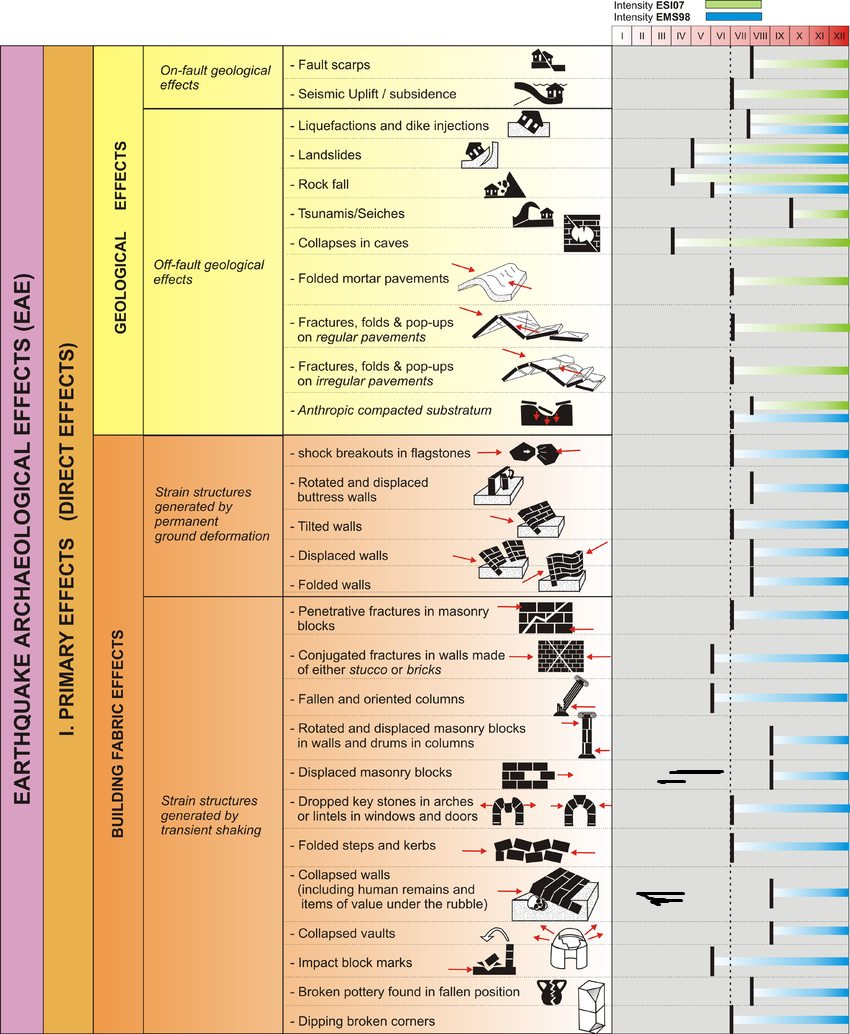
  • Earthquake Archeological Effects chart of Rodríguez-Pascua et al (2013: 221-224)
Effect                                                      Location Image(s) Description Intensity
  • Collapsed Walls
  • Fatalities (Collapsed Walls)
Palestine
  • "In the 6th year of Constantine, there was a great earthquake in Palestine, by the Jordan, and in all of Syria; in the month of January at the 4th hour. An innumerable multitude perished - many tens of thousands. Churches and Monasteries collapsed. The worst was in the wilderness of the Holy City (Jerusalem)." – Paul the Deacon

  • "Anno Mundi 6238, divine incarnation year 738. In the 6th year of Constantine there was a powerful earthquake in Palestine, by the Jordan, and in all of Syria in January, at the 4th hour. Thousands died, an innumerable multitude perished, churches and monasteries collapsed, and it was worst in the desert of the Holy City." – Anastasius Bibliothecarius

  • "[A.M. 6238, AD 745/6] II In this year there was a great earthquake in Palestine, by the Jordan and in all of Syria on 18 January, in the 4th hour. Numberless multitudes perished, churches and monasteries collapsed, especially those in the desert of the Holy City. IIa

    II In the same year a pestilence that had started in Sicily and Calabria travelled like a spreading fire all through the 14th indiction1 to Monobasia2, Hellas, and the adjoining islands, thus scourging in advance the impious Constantine and restraining his fury against the Church and the holy icons, even though he remained unrepentant like Pharaoh of old. This disease of the bubonic plague spread to the Imperial City in the 15th3 indiction. All of a sudden, without visible cause, there appeared many oily crosslets upon men's garments, on the altar cloths of churches, and on hangings. The mysteriousness of this presage inspired great sorrow and despondency among the people. Then God's wrath started destroying not only the inhabitants of the City, but also those of all its outskirts. Many men had hallucinations and, being in ecstasy, imagined to be in the company of certain strangers of terrible aspect who, as it were, addressed in friendly fashion those they met and conversed with them. Taking note of their conversation, they later reported it. They also saw the same men entering houses, killing some of the inmates, and wounding others with the sword. Most of what they said came to pass just as they had seen it.

    In the spring of the 1st indiction4 the plague intensified and in the summer it flared up all at once so that entire households were completely shut up and there was no one to bury the dead. Because of extreme necessity a way was devised of placing planks upon animals saddled with four paniers each5 and so removing the dead or piling them likewise one upon the other in carts. When all the urban and suburban cemeteries had been filled as well as empty cisterns and ditches, and many vineyards had been dug up and even the orchards within the old walls6 to make room for the burial of human bodies, only then was the need satisfied7. When every household had been destroyed by this calamity on account of the impious removal of the holy icons by the rulers, straight away the fleet of the Hagarenes sailed from Alexandria to Cyprus, where the Roman fleet happened to be. The strategos of the Kibyraiots fell upon them suddenly in the harbour of Keramaia8 and seized the mouth of the harbour. Out of 1,000 dromones9 it is said that only three escaped. IIb
    Footnotes

    a Cf. Agapios, 261 (Jan.): earthquake in Palestine, esp. at Tiberias, where more than 100,000 were killed.

    Mich. Syr. ii. 509-10; Chr. 1234, 254. 33 ff. (without date): damage at Damascus, Tiberias, Mabbug, and elsewhere.

    Ps.-Dion. Chron. 42-3, AG 1059: Chalcedonian bishop of Mabbug crushed with his flock.

    b Cf. Nik. 67. 4-43,- 68. 3-11. Kleinchronik, 1. 17 (Schreiner, i. 45) abbreviates Theoph. as regards the plague.


    1 AD 745/6.

    2 Monemvasia on the east coast of the Peloponnese.

    3 dB mistakenly prints '5th'.

    4 AD 747/8. This is the date given for the plague in Kleinchronik, 2. 4 (Schreiner, i. 47).

    5 Reading Sia £AIA V aayp novp.4vu v vno TETpaKavdr/Xov. For the meaning of this expression see I. Rochow, Klio, 69 (1987), 571-2.

    6 The Constantinian walls.

    7 On the plague see also Theodore Studites, Laud. Platonis, PG 99: 805D. Nik. Antirrh. Ill, PG 100: 496B-D, adds that the emperor betook himself during the plague to the suburbs of Nicomedia. So also Geo. Mon. 754 and Epist. ad Theophilum, PG 95: 364B.

    8 Situation unknown. See Sir George Hill, A History of Cyprus, i (Cambridge, 1940); 262 n. 5; L. Philippou, KvnpiaKai Sirovhal, 6 (1942), 1-5, who believes the battle did not take place in Cyprus. According to Nik. the conflict was initiated by Constantine, who sent a fleet against the Arabs.

    9 Thirty in Anast., probably correctly.

    " – Theophanes

  • "1. In the reign of Copronymus, an earthquake occurred in Palestine and the Jordan and all the Syrian land. And many tens of thousands, innumerable people indeed, are dead, and churches and monasteries are fallen.

    And at the same time a pestilential disease, starting from Sicily and Calabria and spreading like a fire, crossed to Greece and the islands. ...12.

    Footnotes

    12 Earthquake in Levant and plague at Cpl. in 747; cf. Nic. 62. 24-64. 9; Theoph. 422. 25-424. 3; Cedr. ii. 7. 17-9. 1.

    GC is closer to Theophanes than to Nicephorus in that it records an earthquake in the Levant before turning to the plague, but both the other two have more information than is preserved in GC (including an exact date for the earthquake in Theophanes). The earthquake is not mentioned by Nicephorus, but he regularly omitted information that was available in the chronicle source which he shared with Theophanes. This common source did record some major events in the near east, including the earthquake of 750 (Nic. 64. 22-65. 7, Theoph. 426. 16-26; see below on GC 13), so that it could have contained a reference to the earthquake of 747. Theophanes also had an independent eastern chronicle source, which has parallels with Syriac chronicles down to 746, and contained further information probably added by a writer in Palestine c.780 (see E. W. Brooks, 'The Sources of Theophanes and the Syriac Chroniders', BZ xv, 1906, 578-87), but the example of the 750 earthquake shows that not all eastern information in Byzantine chronicles should be traced to it.

    GC 12, as it stands, cannot have been the common source of Theophanes and Nicephorus because of their fuller treatment (cf. Whitby, 'Chronographer' 11-12). However, GC's account of the plague is disordered when compared with the other versions, in that it mentions the burial arrangements for the victims before the apparition of oily crosses on the garments of the afflicted, and it does not contain any of the anti-iconoclast interpretations of the plague included by the orthodox authors. One must assume, therefore, either (i) that it is an inaccurate derivation from Theophanes by an excerptor who deliberately eliminated Theophanes' anti-iconoclast interpretation of the plague, although this would run counter to the excerptor's use of the epithet Copronymus for Constantine; or (ii) that it is an inaccurate and abbreviated version of the common source used by Theophanes and Nicephorus, the distortions being caused by the excerptor's belief that he was running out of space on folio 242r (cf. p.192 above). We find the latter assumption easier, but for the alternative, see Mango, Nicephorus' 546-7.

    Note by Williams: Copronymus or Copronym is a play on words with the name of Constantine combining the greek words κόπρος (kopros) which means feces and ὄνομα (onoma) which means name. The hostility of the authors who use this epithet against "Emperor Poop-onymous" derives from bitter doctrinal disputes within Christendom such as disputes over iconoclasm.

    " – Megas Chronographos

  • "Year 6 - There was a great earthquake in Palestine, by the Jordan and in all of Syria on 18 January at the 4th hour. An innumerable multitude perished - thousands. Churches and Monasteries collapsed. The worst was in the wilderness by the Holy City (Jerusalem)." – George Cedrenus

  • "Earthquake in Palestine." – Minor Chronicles

  • "QAHIR DEMANDS A TRUE HISTORY OF THE CALIPHATE

    The following story originates from Muhammad ibn Ali al-Misri, the historian and native of Khurasan, who was an intimate of Qahir:
    ... It was Mahdi who rebuilt the mosque at Mecca and that of the Prophet at Medina in the form they stand today, and he rebuilt Jerusalem, which had been devastated by earthquakes.
    " – al-Masʿudi

  • "Jerusalem (Baitu-l-Maqdis)

    ... The Masjidu-l-Aqsa4 (the Furthest Mosque) lies at the south-eastern corner of the city. Its foundations were laid by David, each stone being ten cubits, or a little less in length. The stones are chiselled, finely faced, and jointed, and of hardest material. On these foundations ‘Abdu-l-Malik subsequently built,5 using smaller but well-shaped stones and battlements were added above. This mosque was even more beautiful] than that of Damascus,1 but in the days of the ‘Abbäsides an earthquake occurred which threw down most of the main building; all, in fact, except the part around the mihräb. Now when the Caliph of that day2 obtained news of this, he enquired and learned the not all the sums in the treasury would suffice to restore the mosque to its former state. So he wrote to the Governors of the Provinces and to other Commanders, directing that each should undertake the building of a colonnade. The order was carried out, and the edifice rose firmer though less elegant than it had been; and the more ancient portion remained, even like a beauty spot, in the midst of the new.
    Footnotes

    4 So. called from Qur'än xvii.l. The name al-Aqsä originallÿ applied to the whole temple area, but is now generally confined to the building at the south end of the Haram. It was built by order of the caliph ‘Umar, on the site of Justinian’s church of St. Mary.‘ The great sanctuary of Jerusalem is now known as the Mosque of ‘Umar.

    5 The Mosque was commenced in A.D. 683, and completed in three years.

    1 MS. C adds: For during the building of it they had for a rival and as a comparison the great church (the Church of the Holy Sepulchre) belonging to the Christians at Jerusalem, and they built this to be even more magnificent than that other.

    3 Said to have been the caliph al-Mahdi (AD. 774-785); but after the great earthquake, it was al-Ma’mün who restored the buildings of the sanctuary. His name is still rend on a Cufic inscription on the Dome of the Rock.

    " – al‑Maqdisi

  • "But in the days of the Abbasides occurred the earthquakes which threw down most of the main building; all, in fact, except that portion round the Mihrab. Now when the Khalifa of that day obtained news of this, he enquired and learned that the sum at that time in the treasury would in no wise suffice to restore the mosque. So he wrote to the Governors of the Provinces and to other Commanders, that each should undertake the building of a colonnade." – al‑Maqdisi

  • "All these events took place at the time of the first earthquake, in the month of Ramadan of 130. God knows best.
    In that year there was a prodigious earthquake in Sham: we know this from Ibn Jusa, whose source is Muhammad ibn Shaddad ibn Aws al-Ansary, whose source in turn is his grandfather. According to this chain of witnesses it is known that in the year 130 there was the most violent earthquake in Jerusalem. Many of the faithful (Ansars or no) were victims of it. The houses of Shaddad ibn Aws fell on him and his guests; Muhammad ibn Shadda was saved, but he lost his property under the ruins, recovering only the Prophet's sandals. According to another report, Abu Ja'far al-Mansur, the prince of believers, was asked, "O prince of believers, the western and eastern parts of the mosque were damaged during the earthquake of 130: if you would have the damage repaired, that would be very good." The caliph replied that he had no money. Therefore they took off the plates of silver and gold which had covered the doors since the caliphate of Abd al-Malik ibn Marwan and broke it down to the last dinars and drachmas, which financed the rebuilding.
    " – al-Dhahabī

  • "On the authority of 'Abd ar Rahman ibn Muhammad ibn Mansur ibn Thabit, from his father, who had it from his father and grandfather. In the days of 'Abd al Malik, all the gates of the mosque were covered with plates of gold and of silver. But in the reign of the Khalif Al Mansur, both the eastern and the western portions of the mosque had fallen down. Then it was reported to the Khalif, saying,
    O commander of the faithful, verily the earthquake in the year 130 (a.d. 746) did throw down the eastern part of the mosque and the western part also; now, therefore, do thou give orders to rebuild the same and raise it again.
    Khalif replied that as there were no moneys in his treasury, (to supply the lack of coin) they should strip off the plates of gold and of silver that overlaid the gates. So they stripped these off and coined therefrom Dinars and Dirhams, which moneys were expended on the rebuilding of the mosque until it was completed. Then occurred a second earthquake, and the building that Al Mansur had commanded to be built fell to the ground. In the days of the Khalif Al Mahdi, who succeeded him, the mosque was still lying in ruins, which, being reported to him, he commanded them to rebuild the same. And the Khalif said that the mosque had been (of old) too narrow, and of too great length - and (for this reason) it had not been much used by the people — so now (in rebuilding it) they should curtail the length and increase the breadth. Now the restoration of the mosque was completed on the new plan during the days of his Khalifate." – Jamal Ad Din Ahmad

  • "In that year, there was a strong earthquake in Syria which destroyed Jerusalem. The sons of Shaddad ibn Aws died there. The inhabitants were forced to take refuge in the desert, where they stayed for forty days. It is said to have happened in the year 131 (al-Nujum al-Zdhira 1.311)" – Ibn Taghri Birdi

  • "The story of the sacred rock in Jerusalem on the night of the earthquake1a, according to Abu 'Umayr who takes it from 'Jundub who refers to Rustum al-Farisi:
    During the first earthquake, I was asked to give the call to prayer, and I replied that it was none of my business. We asked the same thing when the second happened and I made the same response. At the third shock, I was very scared, I approached the mosque. All the houses were destroyed. One of the guardians of the sacred rock asked me:
    Quickly, go get me some news about my family and I will tell you the miracle!
    I went to find out and brought him some news. So he said to me:
    The dome rose, we could see the starry sky, he rested. We heard strangers giving each other orders: this way, again, a little more, as long as it has not been placed correctly
    According to another version (from 'Ubayd Allah ibn Muhammad al Qaramâny) D amra and according to Rustum himself,:
    There were 10 guards at each gate; when I brought him news of his family, my guardian told me that the dome had been removed, that we had seen the stars and that before my return, we heard rustling, then a voice saying "Put down" three times, and the dome was put back in its place.
    Al Walld ibn Hamâd relates according to Abd-Ar-Rahman ibn Muhammad ibn Al-Mançûr ibn Thâbit who reports the following version that he got from his father and grandfather:
    Abu 'Uthmân led the Ramadan vigil, after the Qyâm prayer (breaking the fast), on the black square. During the vigil, he heard the crash of an earthquake, the cries of distress of people across the city. It was a dark, cold night, full of rain and wind. He heard a voice (without seeing the person) which said:

    Lift it gently, in the name of God and the dome was lifted so as to reveal the stars if one felt even the raindrops on the face, to the call for prayer. Afterwards the voice said Put it down, put it down, for God's sake. And the dome took its place again.
    According to another report1c, Abu Ja'far al-Mançûr the prince of the believers was asked:
    Oh, Prince of Believers, the West and East parts of the mosque have been damaged during the 130 earthquake, if you have us repair this damage, it will be very good
    The caliph replied that he had no money.

    Then the silver and gold plates that covered the doors were removed, since the caliphate of 'Abd-al-Mâlik ibn Marwan, denarii (dinars) and drachmas (dirhems) were minted which were used to finance reconstructions.

    Under the caliphate of Al-Mahdi the second earthquake occurred, which destroyed the repairs that had just been made. The caliph received complaints from Jerusalem townspeople and said:
    This building is in poor condition, it can no longer house anyone, it must be rebuilt, shorter and wider.
    The mosque was therefore rebuilt. Al Mahdi was invested [declared Caliph?] in 158, on 6 Dhulhaidja.
    Footnotes

    1a Al 'Ulimi [Mujir ad-Din], al Uns, 1/237, 238

    1c These are earthquake events between 140 and 158 H. (757-774). See al 'Ulimi, al Uns, 1/282,283.

    " – Mujir al‑Din al‑ʿUlaymi
  • VIII+
  • VIII+
This evidence requires a minimum Intensity of VIII (8) when using the Earthquake Archeological Effects chart of Rodríguez-Pascua et al (2013: 221-224).

17 January 749 CE Sabbatical Year Earthquakes - Holy Desert Quake North

  • Seismic Effects follow Williams (2024) in partitioning effects between the Holy Desert North, Holy Desert South, and Talking Mule Earthquake.
  • Earthquake Archeological Effects chart of Rodríguez-Pascua et al (2013: 221-224)
Effect                            Location Image(s) Description(s) Intensity
  • Collapsed Walls
  • Fatalities (Collapsed Walls)
Palestine
  • "This earthquake destroyed the city of Tiberius except for house of a man named 'Isa. It overthrew thirty synagogues and wonderful natural things. The thermal baths - that wonderful building - built by Solomon the son of David, collapsed and was destroyed. There was a spring with purgative water and amazing constructions above it, surrounded by hotels (inns) for the sick who sought to be healed. There were clay pots artistically made and arranged. On each pot was written how many times it purged the bowels of those who drank from it. Each person chose a pot according to how much they wanted to drink. All these buildings are gone." - Michael the Syrian

  • "This earthquake destroyed the city of Tiberias, except for the villa of a man named `Isa Galba. It knocked down thirty synagogues of the Jews and some wonderful natural sites there. The baths, a fine structure erected by Solomon the King) collapsed and fell down. There was there a healing spring given by God for the health of men, above which marvellous buildings had been erected and all around it was everything necessary for the use of those who came in search of a purge. They say that placed there were earthen jugs skillfully arranged, on each one of which was written how many times it flushed the stomach of the one who drank it. Thus each person chose a jug according to how much he desired to be purged. All those buildings have now been destroyed and expunged." - Chronicon Ad Annum 1234

  • "many people perished, especially in Tiberias, where more than 100,000 men succumbed" - Agapius of Manbij

  • "rage in fear and dark chaos will capital Tiberias
    ...
    I heard how disaster befell the city and
    the old and young in it have perished" - Ra'ash Shevi'it (רעש שביעית)
  • VIII+
  • VIII+
This evidence requires a minimum Intensity of VIII (8) when using the Earthquake Archeological Effects chart of Rodríguez-Pascua et al (2013: 221-224).

Second Al-Aqsa Earthquake - 754-785 CE - possibly 775-785 CE

  • Earthquake Archeological Effects chart of Rodríguez-Pascua et al (2013: 221-224)
Effect                                                      Location Image(s) Description Intensity
  • Collapsed Walls
Jerusalem
  • "QAHIR DEMANDS A TRUE HISTORY OF THE CALIPHATE

    The following story originates from Muhammad ibn Ali al-Misri, the historian and native of Khurasan, who was an intimate of Qahir:
    ... It was Mahdi who rebuilt the mosque at Mecca and that of the Prophet at Medina in the form they stand today, and he rebuilt Jerusalem, which had been devastated by earthquakes.
    " – al-Masʿudi

  • "Jerusalem (Baitu-l-Maqdis)

    ... The Masjidu-l-Aqsa4 (the Furthest Mosque) lies at the south-eastern corner of the city. Its foundations were laid by David, each stone being ten cubits, or a little less in length. The stones are chiselled, finely faced, and jointed, and of hardest material. On these foundations ‘Abdu-l-Malik subsequently built,5 using smaller but well-shaped stones and battlements were added above. This mosque was even more beautiful] than that of Damascus,1 but in the days of the ‘Abbäsides an earthquake occurred which threw down most of the main building; all, in fact, except the part around the mihräb. Now when the Caliph of that day2 obtained news of this, he enquired and learned the not all the sums in the treasury would suffice to restore the mosque to its former state. So he wrote to the Governors of the Provinces and to other Commanders, directing that each should undertake the building of a colonnade. The order was carried out, and the edifice rose firmer though less elegant than it had been; and the more ancient portion remained, even like a beauty spot, in the midst of the new.
    Footnotes

    4 So. called from Qur'än xvii.l. The name al-Aqsä originallÿ applied to the whole temple area, but is now generally confined to the building at the south end of the Haram. It was built by order of the caliph ‘Umar, on the site of Justinian’s church of St. Mary.‘ The great sanctuary of Jerusalem is now known as the Mosque of ‘Umar.

    5 The Mosque was commenced in A.D. 683, and completed in three years.

    1 MS. C adds: For during the building of it they had for a rival and as a comparison the great church (the Church of the Holy Sepulchre) belonging to the Christians at Jerusalem, and they built this to be even more magnificent than that other.

    3 Said to have been the caliph al-Mahdi (AD. 774-785); but after the great earthquake, it was al-Ma’mün who restored the buildings of the sanctuary. His name is still rend on a Cufic inscription on the Dome of the Rock.

    " – al‑Maqdisi

  • "But in the days of the Abbasides occurred the earthquakes which threw down most of the main building; all, in fact, except that portion round the Mihrab. Now when the Khalifa of that day obtained news of this, he enquired and learned that the sum at that time in the treasury would in no wise suffice to restore the mosque. So he wrote to the Governors of the Provinces and to other Commanders, that each should undertake the building of a colonnade." – al‑Maqdisi

  • "On the authority of 'Abd ar Rahman ibn Muhammad ibn Mansur ibn Thabit, from his father, who had it from his father and grandfather. In the days of 'Abd al Malik, all the gates of the mosque were covered with plates of gold and of silver. But in the reign of the Khalif Al Mansur, both the eastern and the western portions of the mosque had fallen down. Then it was reported to the Khalif, saying,
    O commander of the faithful, verily the earthquake in the year 130 (a.d. 746) did throw down the eastern part of the mosque and the western part also; now, therefore, do thou give orders to rebuild the same and raise it again.
    Khalif replied that as there were no moneys in his treasury, (to supply the lack of coin) they should strip off the plates of gold and of silver that overlaid the gates. So they stripped these off and coined therefrom Dinars and Dirhams, which moneys were expended on the rebuilding of the mosque until it was completed. Then occurred a second earthquake, and the building that Al Mansur had commanded to be built fell to the ground. In the days of the Khalif Al Mahdi, who succeeded him, the mosque was still lying in ruins, which, being reported to him, he commanded them to rebuild the same. And the Khalif said that the mosque had been (of old) too narrow, and of too great length - and (for this reason) it had not been much used by the people — so now (in rebuilding it) they should curtail the length and increase the breadth. Now the restoration of the mosque was completed on the new plan during the days of his Khalifate." – Jamal Ad Din Ahmad

  • "The story of the sacred rock in Jerusalem on the night of the earthquake1a, according to Abu 'Umayr who takes it from 'Jundub who refers to Rustum al-Farisi:
    During the first earthquake, I was asked to give the call to prayer, and I replied that it was none of my business. We asked the same thing when the second happened and I made the same response. At the third shock, I was very scared, I approached the mosque. All the houses were destroyed. One of the guardians of the sacred rock asked me:
    Quickly, go get me some news about my family and I will tell you the miracle!
    I went to find out and brought him some news. So he said to me:
    The dome rose, we could see the starry sky, he rested. We heard strangers giving each other orders: this way, again, a little more, as long as it has not been placed correctly
    According to another version (from 'Ubayd Allah ibn Muhammad al Qaramâny) D amra and according to Rustum himself,:
    There were 10 guards at each gate; when I brought him news of his family, my guardian told me that the dome had been removed, that we had seen the stars and that before my return, we heard rustling, then a voice saying "Put down" three times, and the dome was put back in its place.
    Al Walld ibn Hamâd relates according to Abd-Ar-Rahman ibn Muhammad ibn Al-Mançûr ibn Thâbit who reports the following version that he got from his father and grandfather:
    Abu 'Uthmân led the Ramadan vigil, after the Qyâm prayer (breaking the fast), on the black square. During the vigil, he heard the crash of an earthquake, the cries of distress of people across the city. It was a dark, cold night, full of rain and wind. He heard a voice (without seeing the person) which said:

    Lift it gently, in the name of God and the dome was lifted so as to reveal the stars if one felt even the raindrops on the face, to the call for prayer. Afterwards the voice said Put it down, put it down, for God's sake. And the dome took its place again.
    According to another report1c, Abu Ja'far al-Mançûr the prince of the believers was asked:
    Oh, Prince of Believers, the West and East parts of the mosque have been damaged during the 130 earthquake, if you have us repair this damage, it will be very good
    The caliph replied that he had no money.

    Then the silver and gold plates that covered the doors were removed, since the caliphate of 'Abd-al-Mâlik ibn Marwan, denarii (dinars) and drachmas (dirhems) were minted which were used to finance reconstructions.

    Under the caliphate of Al-Mahdi the second earthquake occurred, which destroyed the repairs that had just been made. The caliph received complaints from Jerusalem townspeople and said:
    This building is in poor condition, it can no longer house anyone, it must be rebuilt, shorter and wider.
    The mosque was therefore rebuilt. Al Mahdi was invested [declared Caliph?] in 158, on 6 Dhulhaidja.
    Footnotes

    1a Al 'Ulimi [Mujir ad-Din], al Uns, 1/237, 238

    1c These are earthquake events between 140 and 158 H. (757-774). See al 'Ulimi, al Uns, 1/282,283.

    " – Mujir al‑Din al‑ʿUlaymi
  • VIII+
This evidence requires a minimum Intensity of VIII (8) when using the Earthquake Archeological Effects chart of Rodríguez-Pascua et al (2013: 221-224).

Notes and Further Reading
References
Wikipedia pages

Palestine (region)


Syria Palaestina


Palaestina Prima


Palaestina Secunda


Palaestina Salutaris


Jund Filastin