
Open this page in a new tab

Nawa

Nawa

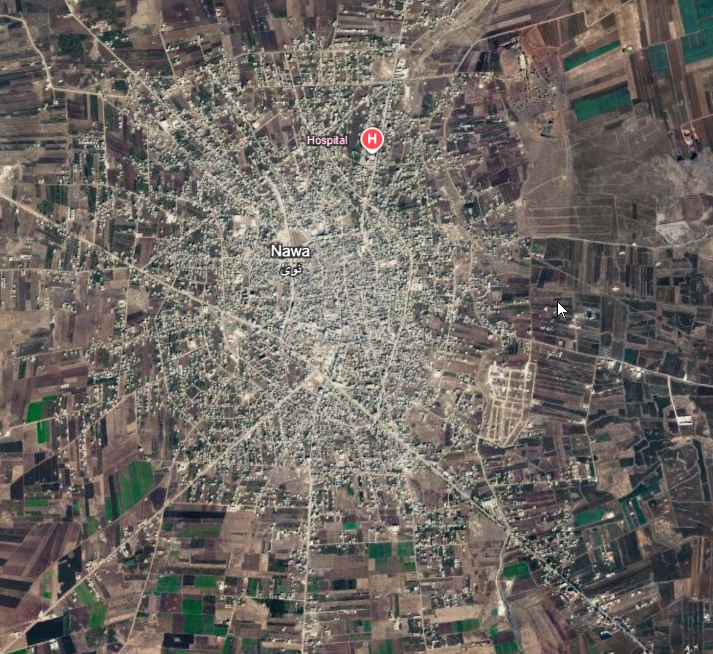
click on image to explore this site in a new tab in Google Earth


Names
Transliterated NameSourceName
NawaModern English
NawāArabicنوى
NeveBordeaux Pilgrim, Antonine Itinerary, Chronicon Ad Annum 1234
NavehRoman and Byzantine sources
NinvehEusebius
NeveHebrew (Mosaic of Rehob, Midrash Rabba)נוה
NinvehHebrew (Midrash Rabba)נינוה
NawiOttoman tax registers (1596)
Introduction
Introduction

Nawa (Arabic: نوى; Nawā) is a historic city in the Hauran region of southern Syria. It lies in the northwestern part of the Hauran Plain, approximately 30 km northwest of Daraa and about 75 km southwest of Damascus. The city occupies an agriculturally productive basaltic landscape between the Hauran Plain and the foothills of the Golan region.

Nawa was an important settlement during the Roman, Byzantine, and early Islamic periods. In antiquity it supported Jewish and Christian communities and later became an episcopal see. During the early Islamic period, medieval geographers described Nawa as the principal city of the Hauran and noted the fertility of its surrounding grain-producing lands. The settlement was also associated with the biblical figure Job, and a nearby shrine and mosque were traditionally identified with him.

Nawa remained an administrative and agricultural center under Umayyad, Abbasid, Mamluk, and Ottoman rule. Extensive basalt ruins recorded by 19th- and early-20th-century travelers attest to the size and longevity of the ancient settlement.

Aerial Views
Aerial Views

Aerial Views

  • Nawa in Google Earth

Textual Chronology
January 749 CE Sabbatical Year Earthquakes

Discussion

Discussion

Textual Seismic Effects
January 749 CE Sabbatical Year Earthquakes

Effect                                                      Location Image(s) Description
  • Collapsed Walls
Nawa
  • "Meanwhile there was an earthquake at Damascus 'which lasted for days and shook her like leaves on trees'. In Beit Qoubayê (?), there was a fortress that had been built at great expense by Al-Hajjaj ibn Yusuf. It was overthrown from top to bottom and more than 80 people suffocated inside. Many in the city itself perished. Myriads of people died in Ghautah and Dareya. Bosrah, Nawa, Der'at, and Ba'albek were swallowed up completely." – Michael the Syrian

  • "On the insurrections and ruin which happened at this time in the West, and the fall of the city of Ghouta. For in the year 1060 of the Greeks, 134 of the Arabs, great upheaval afflicted the world.

    And there was an earthquake at Damascus and in the whole surrounding area, which lasted for days, and in which the area trembled and was shaken. It also [affected] Beth Cubaye, a citadel which had been built by Hagag the son of Joseph with much effort and at great expense. This was overturned and was destroyed down to its foundations, and more than eighty people were killed and buried in the middle of it. And in the same city many people died. Likewise in Gutah [a suburb] of Dareya, countless people died in this earthquake. Bosra and Neve (sic.) were razed to their foundations. And a great part of Baalbek collapsed, and the springs of water there became like blood." – Chronicon Ad Annum 1234

Textual Intensity Estimates
January 749 CE Sabbatical Year Earthquakes

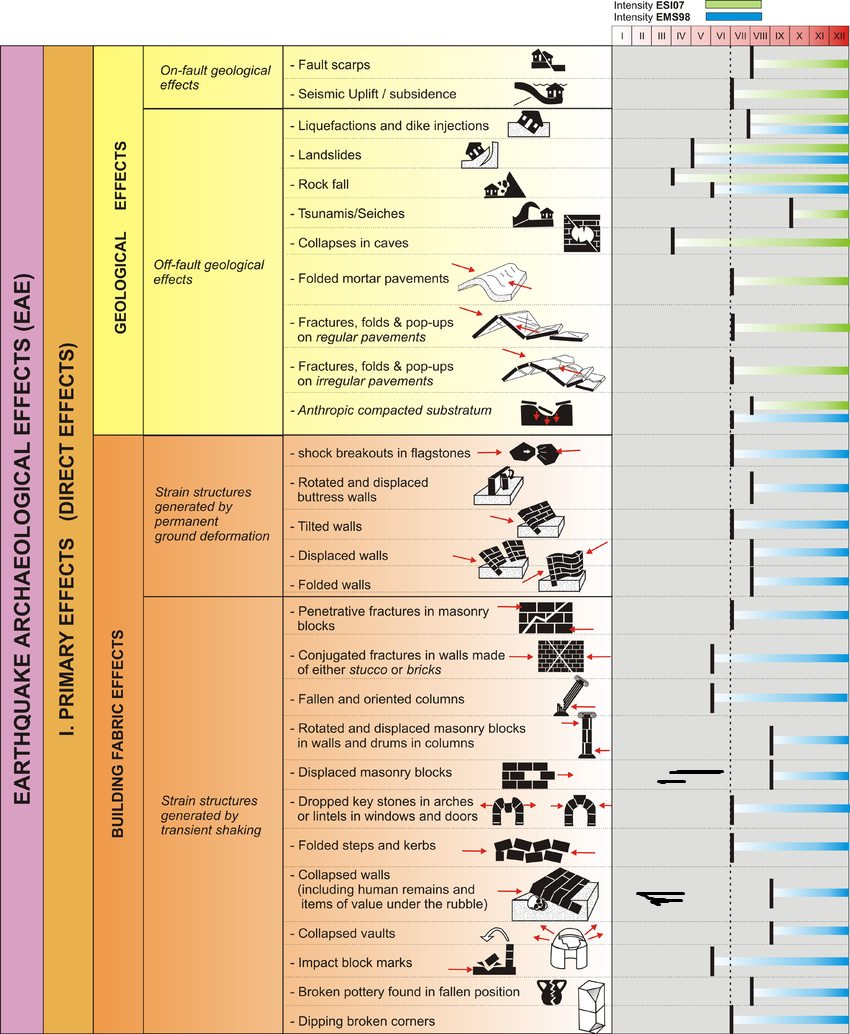
  • Earthquake Archeological Effects chart of Rodríguez-Pascua et al (2013: 221-224)
Effect                                                      Location Image(s) Description Intensity
  • Collapsed Walls
Nawa
  • "Meanwhile there was an earthquake at Damascus 'which lasted for days and shook her like leaves on trees'. In Beit Qoubayê (?), there was a fortress that had been built at great expense by Al-Hajjaj ibn Yusuf. It was overthrown from top to bottom and more than 80 people suffocated inside. Many in the city itself perished. Myriads of people died in Ghautah and Dareya. Bosrah, Nawa, Der'at, and Ba'albek were swallowed up completely." – Michael the Syrian

  • "On the insurrections and ruin which happened at this time in the West, and the fall of the city of Ghouta. For in the year 1060 of the Greeks, 134 of the Arabs, great upheaval afflicted the world.

    And there was an earthquake at Damascus and in the whole surrounding area, which lasted for days, and in which the area trembled and was shaken. It also [affected] Beth Cubaye, a citadel which had been built by Hagag the son of Joseph with much effort and at great expense. This was overturned and was destroyed down to its foundations, and more than eighty people were killed and buried in the middle of it. And in the same city many people died. Likewise in Gutah [a suburb] of Dareya, countless people died in this earthquake. Bosra and Neve (sic.) were razed to their foundations. And a great part of Baalbek collapsed, and the springs of water there became like blood." – Chronicon Ad Annum 1234
  • VIII+
This evidence requires a minimum Intensity of VIII (8) when using the Earthquake Archeological Effects chart of Rodríguez-Pascua et al (2013: 221-224).

Notes and Further Reading
References
Wikipedia pages

Nawa


Hauran


Daraa Governorate


Bosra