
Open this page in a new tab

Magdal

Magdal

click on image to explore this site on a new tab in Google Earth


Names
Transliterated Name Language Name
Magdal Semitic (general / toponymic root)
Magdala Aramaic / Syriac (generic form) ܡܓܕܠܐ
Dur-Katlimmu Akkadian Dūr-Katlimmu
Dūr Katlimmu Akkadian (variant translit.)
Magdalu Akkadian (possible related form)
Tell Sheikh Hamad Modern Arabic / archaeological تل الشيخ حمد
Tell Shaykh Ḥamad Arabic (scholarly translit.) تل الشيخ حمد
Tal Shaykh Hamad English / archaeological usage
Introduction
Introduction

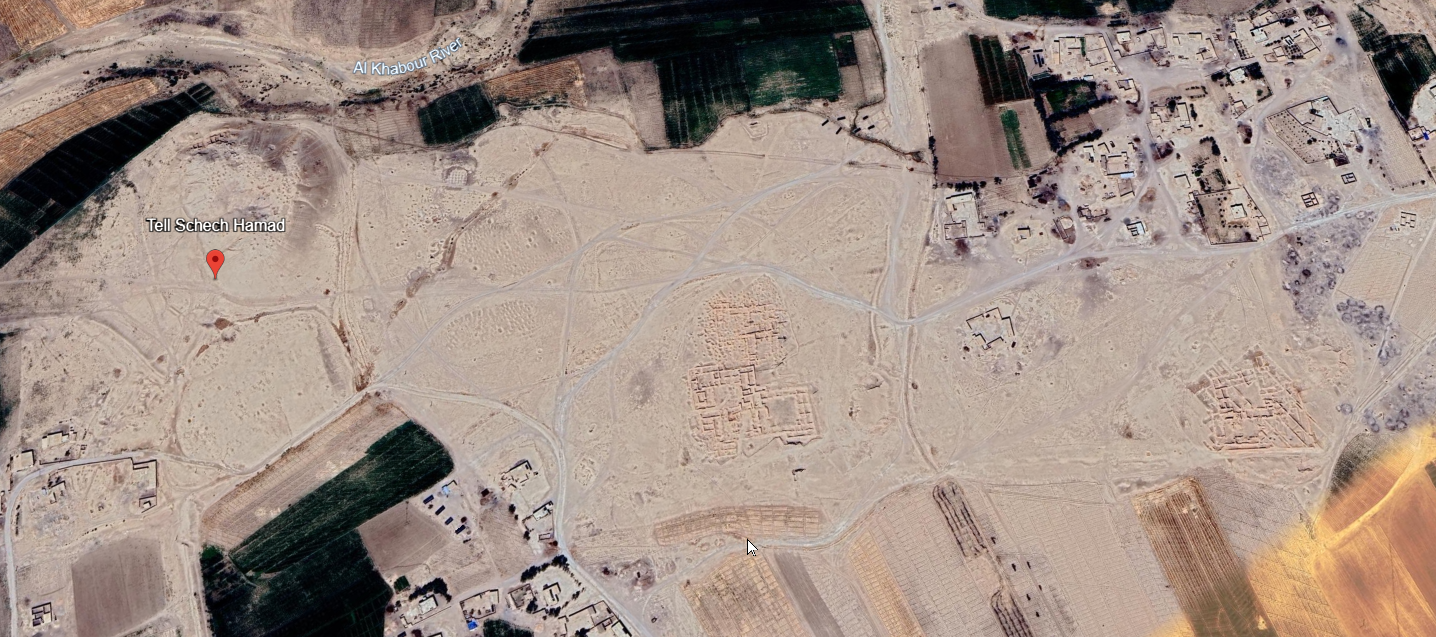
Magdal, often associated with the site of Tell Sheikh Hamad in northeastern Syria, lies along the middle course of the Khabur River, a major tributary of the Euphrates that has long supported dense settlement in the Jazira. The tell corresponds to the ancient city of Dur-Katlimmu, an important Assyrian administrative center that flourished in the Late Bronze and Iron Ages before continuing into later historical periods.

The strategic position of the site along the Khabur made it a key node in communication and control between northern Mesopotamia and the western Euphrates corridor. During the Neo-Assyrian period, Dur-Katlimmu functioned as a provincial capital, with substantial architectural remains and textual archives attesting to its administrative and economic role within the Assyrian imperial system.

In Late Antiquity and the early medieval period, the wider Khabur basin, including the area of Magdal, became integrated into the cultural and ecclesiastical landscape of Syriac Christianity. Sources compiled in the Gorgias Encyclopedic Dictionary and the works of Barsoum indicate that the region supported networks of settlements, monasteries, and agricultural communities tied to riverine resources. Arabic geographical works such as those of Yāqūt al-Ḥamawī continue to emphasize the fertility and strategic importance of this landscape within the Jazira.

Aerial Views
Aerial Views

Aerial Views

Normal Size

  • Magdal in Google Earth

Magnified

  • Magdal in Google Earth

Notes and Further Reading
References
Wikipedia pages

Tell Sheikh Hamad