
Open this page in a new tab

Daraat

Daraat

click on image to explore this site in a new tab in Google Earth


Names
Transliterated NameSourceName
Daraat, Daraa, Dar'a, Dara'aModern English
DarʿāArabicدرعا
Der'at, Der'a, DeraaOlder European transliterations
Adhri'at, AdhriʿatMedieval Arabicأذرعات
Edrei, Edre'iBiblical / Hebrew traditionאֶדְרֶעִי
AdraaGreek and Roman sourcesἈδράα
Adraa, AdrahaLate Roman and Byzantine sources
AnastasiopolisByzantineἈναστασιούπολις
AtharaaEgyptian (New Kingdom)
Introduction
Introduction

Daraat (Daraa) (Arabic: درعا; Darʿā) is a historic city in southwestern Syria and the administrative capital of Daraa Governorate. It lies in the southern Hauran, approximately 13 km north of the border with Jordan and about 90 km south of Damascus. The city occupies a basaltic agricultural plain near the upper drainage of the Yarmouk River.

The settlement is commonly associated with ancient Edrei and was known in Classical and Late Antique sources as Adraa and, for a period, Anastasiopolis. Its position on routes connecting Damascus, the Hauran, northern Jordan, and Palestine contributed to its importance as a regional market, administrative center, and transportation hub.

Daraat remained an important settlement through the Roman, Byzantine, early Islamic, Mamluk, and Ottoman periods. Medieval Arabic geographers referred to it as Adhri'at and described it as a principal town of the Hauran.

Aerial Views
Aerial Views

Aerial Views

  • Daraat in Google Earth

Textual Chronology
January 749 CE Sabbatical Year Earthquakes

Discussion

Discussion

Textual Seismic Effects
January 749 CE Sabbatical Year Earthquakes

Effect                                                      Location Image(s) Description
  • Collapsed Walls
Daraat
  • "Meanwhile there was an earthquake at Damascus 'which lasted for days and shook her like leaves on trees'. In Beit Qoubayê (?), there was a fortress that had been built at great expense by Al-Hajjaj ibn Yusuf. It was overthrown from top to bottom and more than 80 people suffocated inside. Many in the city itself perished. Myriads of people died in Ghautah and Dareya. Bosrah, Daraat, Der'at, and Ba'albek were swallowed up completely." – Michael the Syrian

  • "On the insurrections and ruin which happened at this time in the West, and the fall of the city of Ghouta. For in the year 1060 of the Greeks, 134 of the Arabs, great upheaval afflicted the world.

    And there was an earthquake at Damascus and in the whole surrounding area, which lasted for days, and in which the area trembled and was shaken. It also [affected] Beth Cubaye, a citadel which had been built by Hagag the son of Joseph with much effort and at great expense. This was overturned and was destroyed down to its foundations, and more than eighty people were killed and buried in the middle of it. And in the same city many people died. Likewise in Gutah [a suburb] of Dareya, countless people died in this earthquake. Bosra and Neve (sic.) were razed to their foundations. And a great part of Baalbek collapsed, and the springs of water there became like blood." – Chronicon Ad Annum 1234

Textual Intensity Estimates
January 749 CE Sabbatical Year Earthquakes

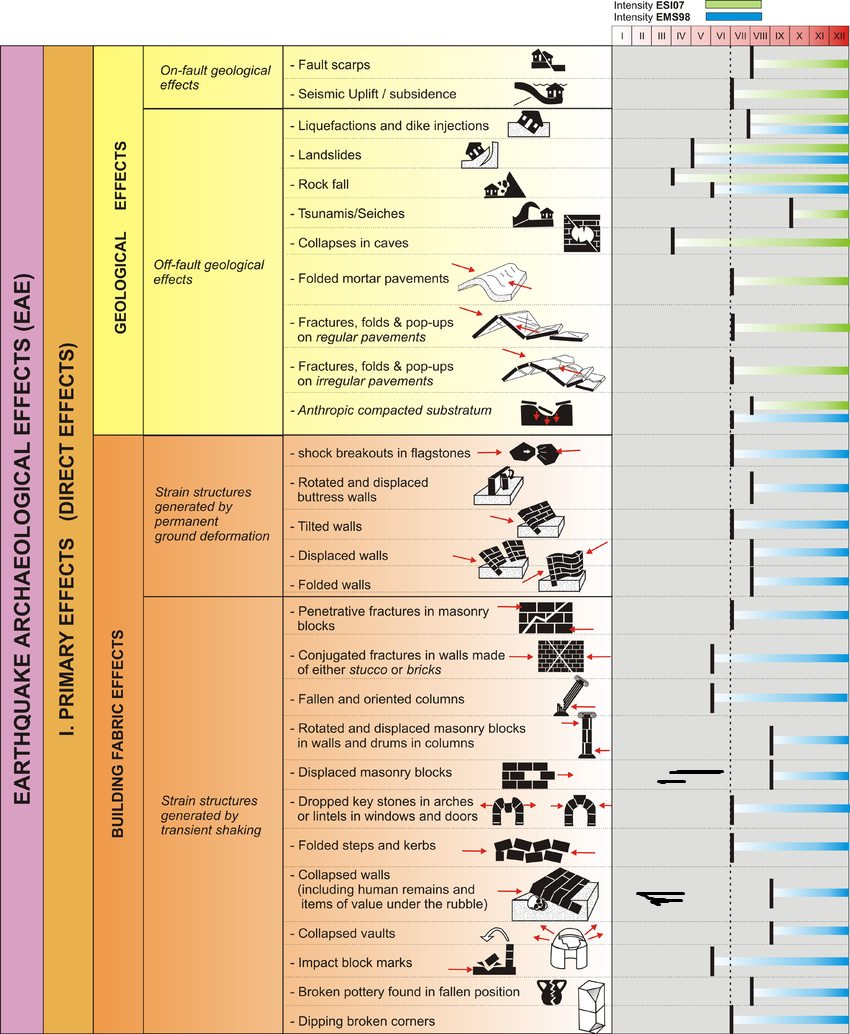
  • Earthquake Archeological Effects chart of Rodríguez-Pascua et al (2013: 221-224)
Effect                                                      Location Image(s) Description Intensity
  • Collapsed Walls
Daraat
  • "Meanwhile there was an earthquake at Damascus 'which lasted for days and shook her like leaves on trees'. In Beit Qoubayê (?), there was a fortress that had been built at great expense by Al-Hajjaj ibn Yusuf. It was overthrown from top to bottom and more than 80 people suffocated inside. Many in the city itself perished. Myriads of people died in Ghautah and Dareya. Bosrah, Daraat, Der'at, and Ba'albek were swallowed up completely." – Michael the Syrian

  • "On the insurrections and ruin which happened at this time in the West, and the fall of the city of Ghouta. For in the year 1060 of the Greeks, 134 of the Arabs, great upheaval afflicted the world.

    And there was an earthquake at Damascus and in the whole surrounding area, which lasted for days, and in which the area trembled and was shaken. It also [affected] Beth Cubaye, a citadel which had been built by Hagag the son of Joseph with much effort and at great expense. This was overturned and was destroyed down to its foundations, and more than eighty people were killed and buried in the middle of it. And in the same city many people died. Likewise in Gutah [a suburb] of Dareya, countless people died in this earthquake. Bosra and Neve (sic.) were razed to their foundations. And a great part of Baalbek collapsed, and the springs of water there became like blood." – Chronicon Ad Annum 1234
  • VIII+
This evidence requires a minimum Intensity of VIII (8) when using the Earthquake Archeological Effects chart of Rodríguez-Pascua et al (2013: 221-224).

Notes and Further Reading
References
Wikipedia pages

Daraa


Hauran


Daraa Governorate


Yarmouk River