Circesium, also known as Qarqisiya, was an important
frontier city and fortress at the confluence of the
Euphrates and Khabur rivers in eastern Syria. Its
position at the meeting point of two major waterways
gave it strategic value for communication, defense,
and trade, and made it a key stronghold on the Roman
Empire's eastern frontier. In Late Antiquity it was
one of the best known fortified places in this
border zone, and later it remained significant in
the early Islamic period because it lay between
Syria and Iraq.
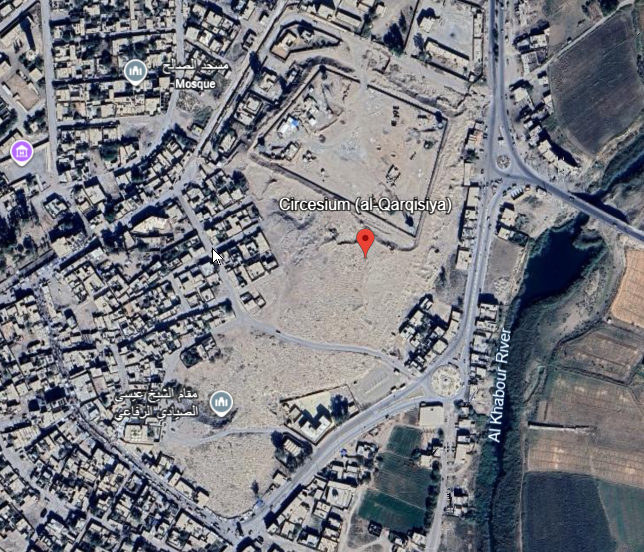
The site is generally identified with or near modern
al-Busayra. Ancient and medieval forms of the name
include Circesium, Qerqusion, and al-Qarqisiya,
reflecting its long use in Greek, Latin, Syriac,
and Arabic traditions. Syriac reference works place
it among the important settlements of the Euphrates-
Khabur region, while later Arabic geographical
traditions also remembered its strategic setting at
the river junction.
Roman emperors strengthened Circesium as a defensive
outpost against the Sasanians, and it is especially
associated with Late Roman and Byzantine military
history. Procopius described it as the farthest
fortress of the Romans, and later sources indicate
that it continued to serve as a notable garrisoned
site. Because of this position, Circesium belongs
not only to the history of northern Mesopotamia and
the Syrian Jazira, but also to the broader history
of imperial frontier organization along the eastern
limes.

 Circesium