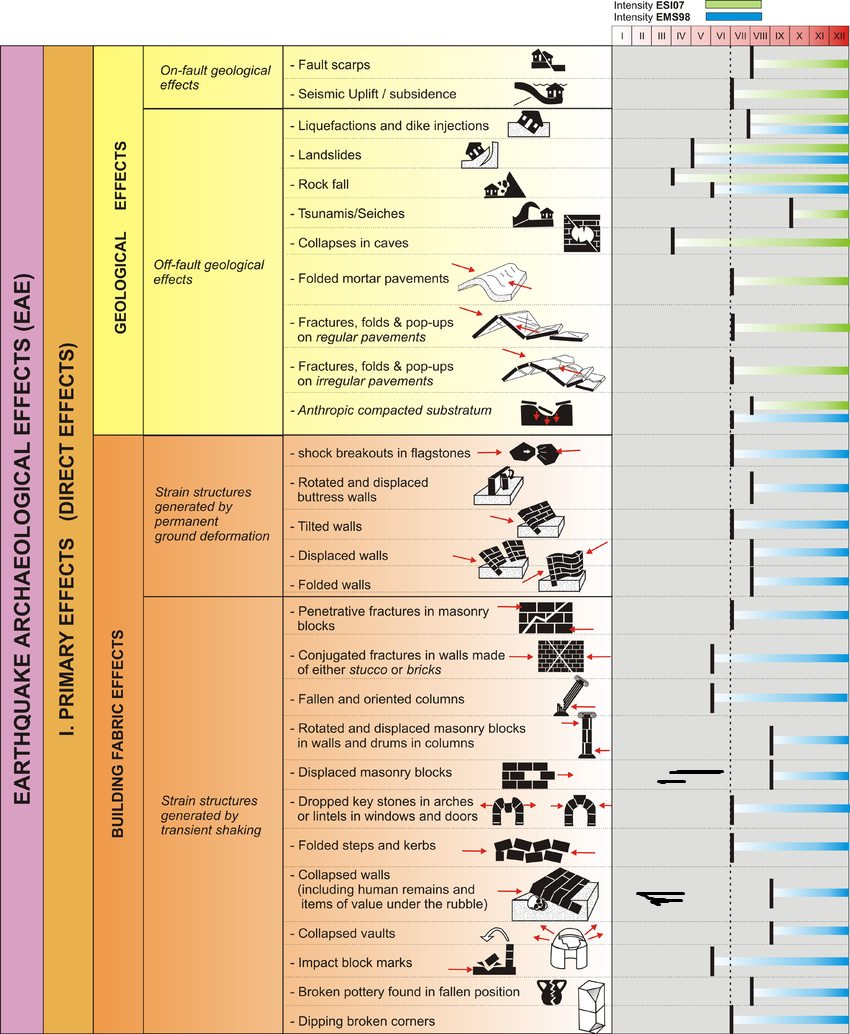
- Collapsed Walls
- Fatalities (due to collapsed walls)
|
Upper Khabur River |
|
- "755-756 The year one thousand and sixty-seven: In the month of Adar (March),
on the third day — a Tuesday — a powerful, terrible and dreadful earthquake
took place in the middle of the night in the land of the
Jazira. Three villages
on the Khabur collapsed, and many people perished inside them, like grapes
in a wine press. Many other places were also destroyed by this earthquake,
brought on by the great number of our sins:
The earth shall totter exceedingly,
the earth shall shake violently,
and it shall sway like a hut.
This is what our sins are able to do: to shake the ground beneath us!" –
Pseudo-Dionysius of Tell-Mahre
- "[A.M. 6248, AD 755/6]
II In this year, on 9 March, there occurred a considerable earthquake in
Palestine and Syria.IIa
Theodore [I],
patriarch of Antioch, was exiled
because of the malice of the Arabs, having been accused of frequently
communicating Arab affairs by letter to the emperor Constantine. And
so,
Salim1
himself banished him to the land of Moab which was his
native country. The same Salim decreed that no new churches should
be built, that crosses should not be displayed and that Christians
should not discourse with Arabs on matters of religion. II He invaded the
Roman country2 with a force of 80,000 and, when he had come to
Cappadocia, he heard that
Constantine was taking up arms against
him. Taking fright, he returned empty-handed without causing any
damage, except that he took a few Armenians who had joined him. IIb.
Footnotes
a Ps.-Dion. Chron. 63
records an earthquake in Mesopotamia on 3 Mar. AG 1067.
b Cf.
Agapios, 278, with different details.
1
Salih b. 'Ali. He was governor of Egypt down to
AH 140 (757/8).
In AH 141 (758/9) he was appointed over
Qinnasrin (Chalkis),
Emesa, and Damascus:
Tabari, Williams, i. 28, 31, 36, 44.
His measures against the Christians, including the patriarch of Antioch, would thus appear to date from 758/9.
2 Salih led two expeditions to rebuild
Melitene, the first in
AH 138 (755/6),
the second the following year (which is probably the one meant here). On
the latter occasion he entered Byzantine territory by the
pass of Adata:
Tabari, Williams, i. 29, 32.
Cf. Brooks, 'Abbasids', 733.
” -
Theophanes
|
|

 Euphrates River (left to the west) and Khabur River (right)