Pool Collapse Earthquake

Excavations at Birkat al-Hamra revealed a massive collapse
deposit adjacent to the eastern dam wall (W114) and northern
pool wall (W185), extending up to 3 m from the walls and
reaching 1.5 m above the Umayyad plaster floor.
The deposit contained numerous stones of varying sizes,
architectural fragments, gray-black clay, and brown
alluvial sediment. After the collapse, there was a sediment influx that buried
the pool floor.
Dating evidence from the collapse deposit includes
Umayyad pottery, with some forms continuing into the
early Abbasid period, an extensive assemblage of
glass vessels overwhelmingly dated to the Umayyad
period, and Umayyad post-reform coins. No later
coins were recovered. The absence of significant
Abbasid material in the basal collapse deposit
supports abandonment near the beginning of the
Abbasid period. Berko & Szanton (2026:60-63)
attribute the destruction to the 749 CE earthquake.
The archaeological assemblage constrains the collapse to the late Umayyad or
early Abbasid, although it does not
establish the precise year of destruction.

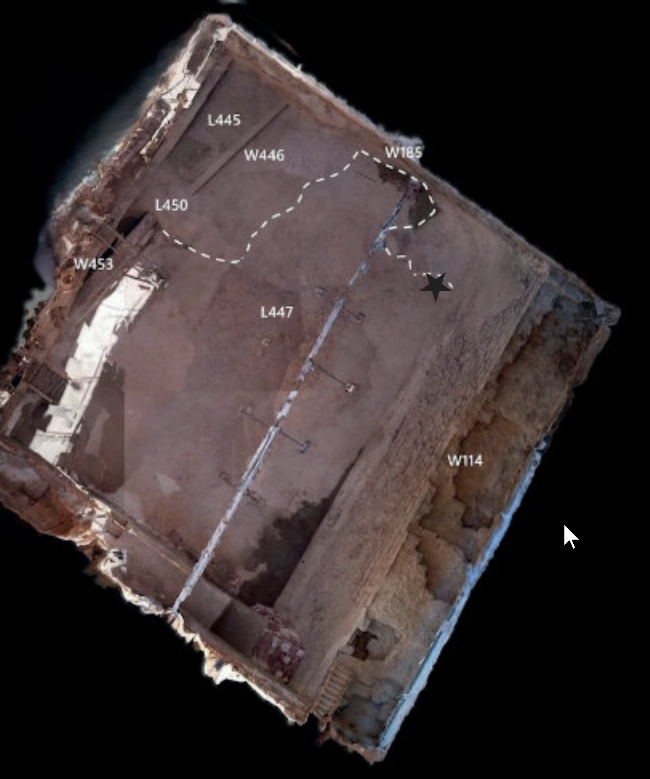
Fig. 8